Sterilization and aseptic technique form the foundation of surgical safety — autoclaving, ETO gas, and H₂O₂ plasma are the three pillars of sterilization, each with specific indications based on instrument type.
"Scrubbing for 10 minutes is mandatory" — wrong! It's 5 min for first case, 3 min for subsequent cases. The longer scrub time concept is outdated.
Let's talk about the non-negotiable foundation of surgery — asepsis. Think of it as a hierarchy: at the very top,
sterilization completely eliminates every single microbe
, whether through steam autoclaving at 121-134°C, ethylene oxide gas for heat-sensitive instruments, or hydrogen peroxide plasma for your delicate endoscopic kit. One rung down, disinfection kills pathogenic organisms but doesn't guarantee total elimination — that's what glutaraldehyde and peracetic acid are for, reserved for semi-critical items that don't need full sterilization.
Sterilization Methods Comparison
Method
Temp/Pressure
Time
Best For
Cannot Use On
Autoclave (steam)
121°C/15 psi or 134°C/30 psi
15-30 min
Surgical instruments, drapes, gowns
Heat-sensitive items, plastics, electronics
Ethylene Oxide (ETO)
37-55°C
2-6h + 12h aeration
Endoscopes, electrical equipment, cameras
None — needs long aeration time
Hydrogen Peroxide Plasma
<50°C
28-75 min
Heat-sensitive instruments, scopes
Cellulose/linen (absorbs H2O2), long lumens
Gamma Radiation
Ambient
Variable
Disposables, sutures, implants (industrial)
Not for hospital use (industrial only)
Surgical Scrub
The surgical scrub remains a critical component, with chlorhexidine gluconate (4%) or povidone-iodine (7.5%) providing rapid broad-spectrum antimicrobial activity.
Chlorhexidine demonstrates superior residual activity and is preferred for most clean-contaminated cases.
The timed scrub technique (5 minutes for the first case, 3 minutes for subsequent cases) or the counted-brush-stroke technique (20 strokes per surface) ensures adequate reduction of transient and resident skin flora. Alcohol-based hand rubs (70% ethanol or isopropanol with emollients) are equally effective and associated with reduced dermatitis.
Scrub Agent
Onset
Residual Activity
Spectrum
Preferred For
Chlorhexidine 4%
Rapid
Superior (6+ hours)
Broad (gram+, gram−, viruses)
Most clean-contaminated procedures
Povidone-Iodine 7.5%
Moderate
Limited (1-3 hours)
Broad (includes spores)
Contaminated/dirty cases
Alcohol 70%
Fastest
None (no residual)
Excellent bactericidal
Hand rub between cases
Gowning, Gloving, and the Sterile Field
Surgical gowning and gloving establish a sterile barrier.
Double gloving reduces the risk of inner glove perforation from 51% to 7% and is recommended for high-risk procedures (orthopaedic, trauma, HIV-positive patients).
The sterile field must be maintained with constant vigilance:
only the top surface of a draped table is considered sterile, items below the waist or above the shoulder level are contaminated, and the edge of any sterile drape (within 1 inch) is considered non-sterile.
Operating Room Environment
Operating room environment parameters include positive-pressure ventilation (>15 air changes per hour, with at least 3 fresh air changes), HEPA filtration (99.97% efficiency at 0.3 μm), temperature maintained at 20-23°C, and humidity at 30-60%. Laminar airflow systems reduce bacterial counts in orthopaedic and transplant surgery. Traffic in and out of the OR should be minimized, as each opening of the door reduces positive pressure and increases particle counts.
Surgical Site Infection Prevention
Surgical site infection (SSI) prevention bundles include preoperative showers with chlorhexidine, appropriate hair removal (clippers, not razors —
razors cause microabrasions that harbor bacteria
), prophylactic antibiotics within 60 minutes before incision (120 minutes for vancomycin), perioperative normothermia (
core temperature >36°C — hypothermia causes vasoconstriction and impaired neutrophil function
), glucose control (perioperative hyperglycemia >180 mg/dL increases SSI risk), and appropriate wound closure techniques. The CDC classification of surgical wounds (Class I Clean, Class II Clean-Contaminated, Class III Contaminated, Class IV Dirty-Infected) determines postoperative infection risk and guides antibiotic management.
CDC Wound Classification — NEET PG High-Yield
Class
Definition
Infection Rate
Prophylaxis
Example
I — Clean
No infection, no viscus entry
1-3%
Not routinely indicated
Hernia repair, breast biopsy, thyroidectomy
II — Clean-Contaminated
Controlled entry into viscus
5-8%
Single dose preop
Cholecystectomy, colectomy, gastrectomy
III — Contaminated
Spillage/acute inflammation no pus
15-20%
Preop + 24h postop
Perforated diverticulitis, trauma <4h
IV — Dirty-Infected
Established infection at surgery
25-40%
Therapeutic (not prophylactic)
Abscess drainage, perforation with peritonitis
High-Yield NEET PG Facts
Chlorhexidine-alcohol reduces SSI by 40% compared to povidone-iodine per WHO guidelines
Preoperative nasal mupirocin for S. aureus carriers reduces SSI in cardiothoracic and orthopaedic surgery
Most common SSI organism: Staphylococcus aureus (20-30%)
Hyperglycemia >180 mg/dL increases SSI risk by 2-3x
MRSA SSI: requires vancomycin — cefazolin does NOT cover MRSA
SSI Prevention: "SHAM" — Shower (preop chlorhexidine), Hair removal (clippers, not razors), Antibiotics (within 60 min), Metabolic control (glucose, temperature)
OR Environment: "HEPA 3-15-99" — 3 fresh air changes, 15 total air changes per hour, HEPA 99.97% at 0.3 μm
Common NEET PG trap: "Scrubbing for 10 minutes is mandatory." This is wrong — 5 min for first case, 3 min for subsequent cases. The longer scrub time concept is outdated.
A 45-year-old undergoes elective inguinal hernia repair. What CDC wound class is this and is antibiotic prophylaxis indicated?
Class I (Clean). No entry into the respiratory, GI, or GU tract. Routine antibiotic prophylaxis is NOT indicated for clean cases unless the consequences of infection are catastrophic (e.g., prosthetic implant — some guidelines recommend prophylaxis when mesh is used due to consequences of mesh infection).
A 52-year-old diabetic undergoes elective cholecystectomy. The surgeon uses chlorhexidine-alcohol skin prep, administers cefazolin 2g IV 30 minutes before incision, maintains core temperature >36°C with forced-air warming, and keeps glucose <180 mg/dL. Wound is closed with subcuticular monocryl. This SSI prevention bundle reduces her infection risk from a baseline of 5-8% to <2%.
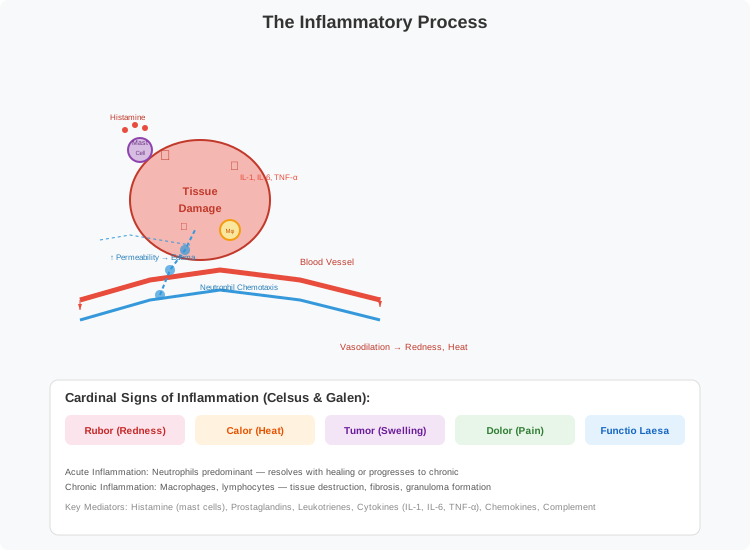
The cascade of inflammation in surgical wound healing showing neutrophil and macrophage recruitment phases.
Wound Healing and Surgical Wound Management
Phases of Wound Healing
Wound healing follows a predictable cascade of overlapping phases: haemostasis (immediate to minutes), inflammation (1-7 days), proliferation (3-21 days), and remodelling (21 days to 2 years). Haemostasis begins with platelet aggregation and degranulation, releasing platelet-derived growth factor (PDGF), transforming growth factor-beta (TGF-β), and vascular endothelial growth factor (VEGF). The coagulation cascade generates fibrin, forming a provisional matrix scaffold.
Inflammatory Phase
The inflammatory phase features neutrophil infiltration within 24-48 hours, serving as the primary antibacterial defence. Macrophages appear at 48-96 hours and are the master regulators of wound healing — they phagocytose debris, secrete cytokines (IL-1, TNF-α, PDGF, TGF-β, FGF), and coordinate the transition to the proliferative phase. Lymphocytes arrive later and modulate collagen synthesis and remodelling.
The presence of macrophages is absolutely essential for progression to the proliferative phase; their depletion results in complete arrest of wound healing.
Proliferative Phase
The proliferative phase encompasses three key processes: angiogenesis (new capillary formation driven by hypoxia-inducible factor 1α and VEGF, creating granulation tissue), fibroplasia (fibroblast migration and proliferation with collagen synthesis — predominantly type III collagen initially), and epithelialisation (keratinocyte migration from wound edges and residual adnexal structures). Wound contraction, mediated by myofibroblasts expressing α-smooth muscle actin, reduces wound surface area by up to 80% in secondary healing.
Remodelling Phase
Remodelling involves the gradual replacement of type III collagen with type I collagen, increased cross-linking (mediated by lysyl oxidase), and a reduction in cellularity and vascularity.
The wound achieves approximately 20% of its final tensile strength by week 3, 60% by 3 months, and a maximum of 80% of unwounded skin strength by 12-18 months.
Collagen turnover in a scar continues for years, with a net balance between metalloproteinase-mediated degradation and continued synthesis.
Phases of Wound Healing — NEET PG Mnemonic Table
Phase
Timing
Dominant Cell
Key Events
Collagen
Haemostasis
Immediate — minutes
Platelets
PDGF, TGF-β, VEGF release; fibrin clot forms
None
Inflammation
Day 1-7
Neutrophils (day 1-3) → Macrophages (day 3+)
Debridement, cytokine secretion, transition signal
None
Proliferation
Day 3-21
Fibroblasts, Myofibroblasts
Granulation tissue, angiogenesis, Type III collagen
infection (delays all phases of healing); tissue ischaemia (inadequate oxygen delivery impairs oxidative killing and collagen synthesis); foreign bodies; haematoma (creates a medium for bacterial growth and mechanically separates wound edges); radiation therapy (causes endarteritis obliterans and decreased fibroblast function)
Key Vitamins and Minerals in Wound Healing
Nutrient
Role
Deficiency Effect
Daily Requirement (Postop)
Vitamin C (Ascorbic Acid)
Prolyl and lysyl hydroxylase cofactor — cross-linking
Vitamin C is the single most important vitamin for wound healing — it is an essential cofactor for prolyl hydroxylase and lysyl hydroxylase, enzymes required for collagen cross-linking. Without vitamin C, collagen is structurally weak (poor tensile strength).
Contaminated wounds, bites, wounds with delayed presentation
Moderate
Secondary intention
Heals by granulation (weeks)
Infected wounds, chronic ulcers, wounds with tissue loss
Highest
Tertiary intention
After granulation tissue forms
Wounds left open initially then closed surgically
Moderate
Wound Dehiscence and Evisceration
Wound dehiscence is separation of the fascial layers (not just skin), occurring in 1-3% of laparotomies, typically between postoperative day 5-10 when sutures are losing tensile strength but wound has not yet gained sufficient intrinsic strength.
Wound dehiscence presents with serosanguinous (pink, blood-tinged) discharge from the wound — the classic "salmon-coloured" or "pink-stained" drainage on the dressing between POD 5-8 is the sentinel sign.
The most common cause is technical error (sutures too close to the fascial edge, too loose, or under tension causing fascial necrosis). Other factors: emergency surgery, wound infection, increased intra-abdominal pressure (ileus, vomiting, COPD, ascites), malnutrition, steroids, and diabetes.
Dehiscence vs Evisceration
Definition
Management
Wound Dehiscence
Fascial separation without bowel protrusion
Open wound care, NPWT, delayed closure when clean
Wound Evisceration
Fascial separation WITH bowel protrusion
SURGICAL EMERGENCY: cover with saline-soaked sterile towels, urgent return to OR
Hypertrophic Scar vs Keloid
Feature
Hypertrophic Scar
Keloid
Growth pattern
Confined to wound borders
Extends beyond original wound margins
Onset
Within weeks of injury
Delayed (months to years)
Natural history
May regress spontaneously
Does NOT regress
Common sites
Over joints, sternum, flexor surfaces
Earlobes, sternum, shoulders, upper back
Histology
Type III > Type I collagen, parallel bundles
Thick, hyalinised collagen bundles (Type I, disorganised)
Vitamin C = single most important vitamin for wound healing (prolyl/lysyl hydroxylase cofactor)
Wound tensile strength: 20% at week 3, 60% at 3 months, max 80% at 12-18 months — wound NEVER regains 100% strength
Sentinel sign of dehiscence: salmon-coloured serosanguinous discharge POD 5-8
Evisceration = SURGICAL EMERGENCY — saline-soaked sterile towels cover, return to OR
Keloid extends beyond wound margins, does NOT regress — hypertrophic scar confined to wound, may regress
Macrophages = master regulators of wound healing — absolutely essential for progression
A 65-year-old woman undergoes emergency laparotomy for perforated appendicitis. On POD 7, she develops serosanguinous discharge from the wound. On examination, the wound edges are separated down to the fascia but no bowel is visible. What is the diagnosis and management?
Wound dehiscence (fascial separation without evisceration). The classic "salmon-coloured" discharge is the hallmark. Management: Open wound care with saline-moistened dressings, negative-pressure wound therapy (NPWT), and delayed reconstruction once the wound is clean and granulating. If bowel were visible, it would be evisceration — a surgical emergency requiring immediate return to the OR with saline-moist sterile towels covering the bowel.
A 58-year-old diabetic smoker undergoes emergency laparotomy for perforated duodenal ulcer. His wound is closed primarily. On day 5, the wound edges show erythema and serosanguinous discharge. Diabetes (HbA1c 9.2%), smoking history (30 pack-years), and intraoperative contamination all contribute to impaired healing. Management includes opening the wound, wound culture, debridement, and negative-pressure wound therapy. Tight glycaemic control and smoking cessation counselling are essential adjuncts to surgical wound care.
The overlapping phases of wound healing: haemostasis, inflammation, proliferation, and remodelling.
Surgical Infections and Antibiotic Prophylaxis
Surgical site infections (SSIs) are the most common healthcare-associated infection in surgical patients, occurring in 2-5% of all surgical procedures and accounting for 15-20% of nosocomial infections.
The pathogenesis follows the interaction between the bacterial inoculum (dose, virulence), the host immune response, and the local wound environment. The critical bacterial load for wound infection is generally >10⁵ organisms per gram of tissue, though lower counts can cause infection in the presence of foreign material (suture, implant) or devitalised tissue.
The most common pathogens are Staphylococcus aureus (20-30%), coagulase-negative staphylococci (15-20%), Enterococcus species (10-15%), Escherichia coli (10-15%), and Pseudomonas aeruginosa (5-10%).
Methicillin-resistant Staphylococcus aureus (MRSA) accounts for 30-50% of S. aureus isolates in some surgical populations, necessitating adjusted prophylactic regimens in high-prevalence settings.
SSI Pathogen by Surgical Site
Surgery Type
Most Common Pathogen
Second Most Common
Clean (hernia, breast, thyroid)
S. aureus (40-50%)
Coagulase-negative staphylococci
Colorectal
E. coli (30%) and Bacteroides fragilis (25%)
Enterococcus spp.
Biliary
E. coli, Klebsiella
Enterococcus, Clostridium
Gastroduodenal
Oral streptococci, Enterobacteriaceae
Anaerobes
Vascular/orthopaedic implant
S. aureus (including MRSA)
Coagulase-negative staphylococci
Antibiotic Prophylaxis Guidelines
Antibiotic prophylaxis is indicated for clean-contaminated procedures, contaminated procedures, and clean procedures where the consequences of infection are catastrophic (cardiac, prosthetic joint, vascular grafting, neurosurgery, breast surgery with implant).
The first dose should be administered within 60 minutes before incision (120 minutes for vancomycin and fluoroquinolones, which require longer infusion times). Redosing is required after 2 half-lives of the antibiotic.
Prophylaxis by Procedure — NEET PG Must-Know
Procedure Type
Recommended Agent(s)
Alternative (Allergy)
Key NEET Fact
Clean (cardiac, ortho, vascular)
Cefazolin 2g IV (3g if >120 kg)
Clindamycin 600-900 mg OR Vancomycin 1g
Cefazolin covers S. aureus + S. epidermidis
Colorectal
Cefoxitin 2g or Cefotetan 2g + Metronidazole 500 mg
Gentamicin + Metronidazole + Amoxicillin
Must cover anaerobes AND gram-negatives
Head and neck (mucosal)
Ampicillin-Sulbactam 3g IV
Clindamycin + Gentamicin
Oral anaerobes + skin flora coverage needed
Biliary (high risk)
Cefazolin 2g IV
Gentamicin + Metronidazole
High risk = age >70, jaundice, acute cholecystitis, prior ERCP
Urologic (bacteriuria)
Ciprofloxacin 400 mg or Ceftriaxone 1g IV
Aztreonam + Metronidazole
Must treat bacteriuria preop (culture at least 7 days prior)
The Surgical Care Improvement Project (SCIP) mandates appropriate selection, timing, and discontinuation of prophylactic antibiotics within 24 hours of surgery completion (48 hours for cardiac surgery).
SIRS, Sepsis, and Septic Shock
The Sepsis-3 definitions (2016) define sepsis as life-threatening organ dysfunction caused by a dysregulated host response to infection.
The quick Sequential Organ Failure Assessment (qSOFA) screening tool identifies patients at risk: altered mental status (GCS <15), respiratory rate ≥22/min, systolic blood pressure ≤100 mmHg — 2 or more criteria predict poor outcomes. Septic shock is defined by vasopressor requirement to maintain MAP ≥65 mmHg and serum lactate >2 mmol/L despite adequate volume resuscitation.
Shock in Surgical Patients
Shock is defined as inadequate tissue perfusion leading to cellular and metabolic dysfunction.
Shock resuscitation endpoints: MAP ≥65 mmHg, urine output ≥0.5 mL/kg/h, lactate clearance (decrease by >20% in 2 hours), ScvO2 ≥70%, and normalization of base deficit. In hemorrhagic shock, balanced blood product resuscitation (1:1:1 PRBC:FFP:platelets per PROPPR trial) is superior to crystalloid-first approaches.
SSI Management: "SOURCE" — Source control (open/debride), Obtain cultures, Use empiric abx, Reduce bacterial load (NPWT), Close when clean, Evaluate nutrition
Sepsis Hour-1 Bundle: "LACTATE" — Lactate (measure, repeat if >2), Antibiotics (broad-spectrum within 1h), Cultures (blood cultures before abx), Tissue perfusion (30 mL/kg crystalloid), Vasopressors (norepinephrine if MAP <65 despite fluids)
A 28-year-old male with acute appendicitis develops hypotension (BP 80/50), tachycardia 120/min, temperature 39°C, WBC 18,000, and lactate 3.8 mmol/L after Ringer's lactate 2L. What type of shock is this and what is the first-line vasopressor?
Distributive (septic) shock — meeting criteria of hypotension despite fluids + lactate >2 mmol/L. First-line vasopressor: Norepinephrine (target MAP ≥65 mmHg). Second-line: Vasopressin 0.03 U/min as add-on therapy per SURVIVING SEPSIS campaign.
The role of negative-pressure wound therapy (NPWT/VAC) in managing infected wounds is well established, promoting granulation tissue formation and reducing bacterial counts through mechanical removal of wound fluid and reduction of oedema.
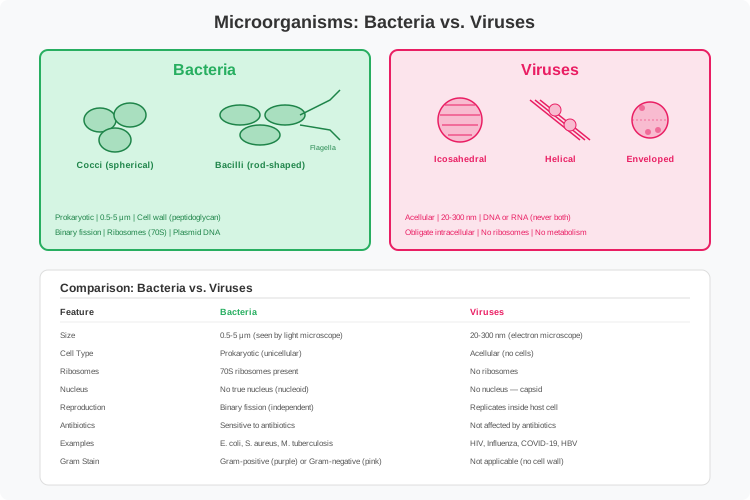
Microscopic appearance of common surgical pathogens including Staphylococcus aureus and Escherichia coli.
The pathophysiology of SIRS and sepsis showing cytokine cascade and microvascular dysfunction.
Fluid, Electrolytes, and Nutritional Support in Surgical Patients
Body Fluid Compartments
Perioperative fluid management requires understanding of body fluid compartments: total body water constitutes 60% of body weight (50% in females, 45% in elderly), distributed as intracellular fluid (40%) and extracellular fluid (20%, of which 75% is interstitial and 25% is intravascular). Maintenance fluid requirements are calculated using the 4-2-1 rule (4 mL/kg/hour for the first 10 kg, 2 mL/kg/hour for the second 10 kg, 1 mL/kg/hour for each kg above 20 kg) or the Holliday-Segar method.
Fluid Compartments — NEET PG Memorisation Table
Compartment
% Body Weight
% TBW
60 kg Adult Volume
Major Cation
Major Anion
Total Body Water (TBW)
60% (M); 50% (F)
100%
36 L
—
—
Intracellular Fluid (ICF)
40%
67%
24 L
K⁺ (150 mmol/L)
Phosphate, Protein
Extracellular Fluid (ECF)
20%
33%
12 L
Na⁺ (140 mmol/L)
Cl⁻ (100 mmol/L), HCO₃⁻
— Interstitial Fluid
15%
75% of ECF
9 L
Na⁺
Cl⁻
— Intravascular (Plasma)
5%
25% of ECF
3 L
Na⁺
Cl⁻, Protein
Maintenance Fluids: 4-2-1 Rule
Body Weight Segment
Rate
Example: 70 kg patient
First 10 kg
4 mL/kg/h
10 × 4 = 40 mL/h
Second 10 kg (11-20 kg)
2 mL/kg/h
10 × 2 = 20 mL/h
Each kg above 20 kg
1 mL/kg/h
50 × 1 = 50 mL/h
TOTAL
110 mL/h ≈ 2640 mL/day
Stress Response and Fluid Shifts
The stress response to surgery induces fluid shifts through increased antidiuretic hormone (ADH), aldosterone, and cortisol secretion. This results in sodium and water retention, making goal-directed fluid therapy essential to avoid both hypovolaemia (which impairs tissue perfusion and increases the risk of acute kidney injury) and hypervolaemia (which causes tissue oedema, impaired wound healing, anastomotic dehiscence, and pulmonary complications).
The concept of "third-space losses" has been largely discredited, and modern ERAS (Enhanced Recovery After Surgery) protocols emphasise restrictive or euvolemic fluid strategies using balanced crystalloid solutions (Hartmann's/Ringer's lactate or Plasma-Lyte) rather than 0.9% saline, which is associated with hyperchloremic metabolic acidosis and acute kidney injury.
Crystalloid Comparison for NEET PG
Solution
Na⁺
K⁺
Cl⁻
Ca²⁺
Buffer
Osmolality
pH
0.9% Normal Saline
154
0
154
0
None
308
5.0-5.5
Ringer's Lactate (Hartmann's)
130
4
109
3
Lactate 28
273
6.5
Plasma-Lyte
140
5
98
0
Acetate 27, Gluconate 23
294
7.4
5% Dextrose
0
0
0
0
None
278
4.5
3% Hypertonic Saline
513
0
513
0
None
1026
5.0
Ringer's Lactate is preferred over 0.9% Saline for resuscitation due to lower chloride load (avoids hyperchloremic metabolic acidosis). 0.9% Saline is NOT "normal" — its chloride (154 mEq/L) is far higher than plasma (100 mEq/L).
Electrolyte Disturbances
Electrolyte disturbances are common in surgical patients. Hyponatraemia (Na <135 mmol/L) is classified by volume status: hypovolaemic (GI losses, diuretics) requires 0.9% saline repletion; euvolemic (SIADH — common postoperatively due to pain, nausea, opioids) requires fluid restriction; and hypervolaemic (heart failure, cirrhosis) requires diuresis.
Hyperkalaemia (K >5.5 mmol/L) requires urgent evaluation and treatment based on severity and ECG changes (peaked T waves, widened QRS).
Treatment includes intravenous calcium gluconate for myocardial membrane stabilisation, insulin-dextrose infusion, beta-agonists (salbutamol nebulised), and potassium-binding resins or haemodialysis for refractory cases.
Surgical Electrolyte Emergencies
Electrolyte
Emergency Value
ECG Change
Immediate Treatment
Surgical Context
Hyperkalaemia
K⁺ >6.5 or any K⁺ >5.5 with ECG change
Peaked T → prolonged PR → loss P → wide QRS → sine wave
Hyponatraemia Correction Rate: "8 in 8" — Maximum correction rate is 8 mmol/L in any 24-hour period. Faster correction can cause central pontine myelinolysis (locked-in syndrome).
Nutritional Support
Nutritional assessment in surgical patients uses the Subjective Global Assessment (SGA) and objective measures including serum albumin (<3.5 g/dL indicates malnutrition but is confounded by inflammation), prealbumin (shorter half-life of 2-3 days, better reflects acute nutritional changes), and the NRS-2002 or MUST screening tools.
Enteral vs Parenteral Nutrition
Parameter
Enteral Nutrition
Parenteral Nutrition
Route
NG/ND/NDJ tube or oral
Central line (PICC or tunnelled catheter)
Gut barrier
Preserved
Atrophy + bacterial translocation risk
Infectious complications
10-15%
25-35% (CLABSI risk)
Cost
1/10th of TPN
10x more expensive
Indications
Functional gut, always preferred
GI failure: obstruction, SBO, high-output fistula, short bowel
Enteral nutrition is always preferred over parenteral nutrition due to preserved gut barrier function, reduced infectious complications, lower cost, and maintained gut-associated lymphoid tissue (GALT).
Even trophic feeding (10-30 mL/hour) provides significant benefits. Parenteral nutrition is indicated when the gut is non-functional (prolonged ileus, bowel obstruction, short bowel syndrome, high-output fistulae).
The concept of immunonutrition — supplementation with arginine, glutamine, omega-3 fatty acids, and nucleotides — has shown benefit in reducing infectious complications in major gastrointestinal surgery and trauma patients.
Blood Transfusion Triggers in Surgery
Patient Category
Restrictive Threshold
NEET PG Note
Stable non-cardiac surgery patient
Hb <7 g/dL
TRICC trial: 7 g/dL threshold as safe as 9-10 g/dL
Active cardiac disease (CAD, MI)
Hb <8 g/dL
Higher threshold for myocardial oxygen demand
Active haemorrhage with shock
No threshold — massive transfusion protocol
1:1:1 PRBC:FFP:Platelets (PROPPR trial)
Maintenance fluids: 4-2-1 rule — first 10 kg at 4 mL/kg/h, second 10 kg at 2 mL/kg/h, remainder at 1 mL/kg/h
ERAS favours balanced crystalloids (RL/Plasma-Lyte) over 0.9% saline
Enteral nutrition > parenteral nutrition whenever gut is functional
Immunonutrition reduces infectious complications in major GI surgery
Hyperkalaemia ECG progression: Peaked T → prolonged PR → loss of P → wide QRS → sine wave → asystole
Na correction: max 8 mmol/L in 24h to avoid central pontine myelinolysis
NEET PG Trap: Prophylactic nasogastric tube decompression after abdominal surgery is NOT routinely recommended. ERAS protocols specifically advise against routine NGT placement — it delays oral intake, does not protect anastomoses, and increases pulmonary complications. Only place NGT for gastroparesis, obstruction, or prolonged ileus.
A 55-year-old man on postoperative day 2 after Whipple procedure develops confusion, Na⁺ 118 mmol/L, and serum osmolality 250 mOsm/kg (low). Urine osmolality is 400 mOsm/kg. What is the diagnosis and management?
SIADH — euvolemic hyponatraemia with inappropriately concentrated urine (urine osmolality >100 mOsm/kg in setting of hyponatraemia). Postoperative pain, nausea, opioids, and stress all trigger ADH release. Management: Fluid restriction (<800 mL/day), treat underlying cause. If symptomatic (seizures/coma), cautious hypertonic saline (3%) at 1-2 mL/kg/h with monitoring — do NOT correct faster than 8 mmol/L/day because of risk of osmotic demyelination syndrome (central pontine myelinolysis — CPM).
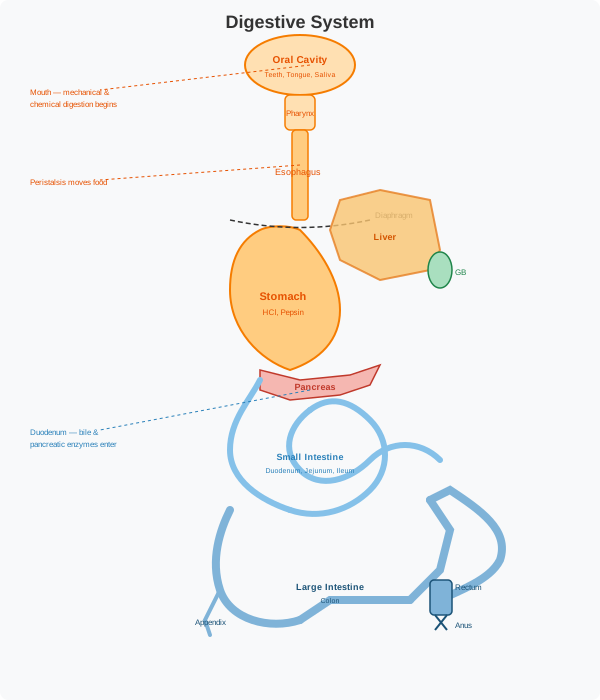
Depiction of gastrointestinal fluid handling relevant to perioperative fluid management.