Postgraduate-level comprehensive notes covering diagnostic imaging modalities, neuroradiology, chest and cardiovascular radiology, abdominal radiology, and musculoskeletal radiology with emphasis on image interpretation and clinical-radiological correlation.
X-ray physics, CT principles, radiation safety, contrast media, and ultrasound/MRI physics — the foundation of all radiology.
Key exam topics:
Five radiographic densities: Air, Fat, Water, Bone, Metal — memorize HU values
ALARA principle and radiation doses for common exams
Contrast media types and safety (iodinated vs gadolinium vs microbubbles)
Most common trap:
CT abdomen-pelvis delivers 8–15 mSv — comparable to 3–5 years of background radiation. Don't forget pediatric and pregnant considerations.
Let's start with the physics. X-rays are ionizing electromagnetic radiation (wavelength 0.01–10 nm), generated when high-speed electrons strike a tungsten target inside an X-ray tube. The cathode emits electrons via thermionic emission, and the rotating anode converts kinetic energy into X-ray photons. Beam quality is controlled by
kVp (determines penetration)
and quantity by
mAs (number of photons)
.
X-Ray Attenuation and tissue densities
X-ray attenuation by tissues follows the Beer-Lambert law, where the intensity of the transmitted beam decreases exponentially with tissue thickness and density. The linear attenuation coefficient varies with the atomic number (Z) and density of the tissue and the energy of the X-ray beam.
The five basic radiographic densities are:
Air (black, lowest attenuation)
Fat (dark gray, slightly higher attenuation)
Water/soft tissue (gray, similar attenuation for most parenchymal organs)
Calcium/bone (white, high attenuation due to higher Z)
Metal (very white, highest attenuation)
The photoelectric effect (dominant at lower keV, proportional to Z^3/E^3) is responsible for the high attenuation of bone and contrast agents.
Compton scattering (dominant at higher keV) contributes to image noise and reduces contrast.
Computed Tomography (CT)
Computed tomography (CT) produces cross-sectional images by rotating an X-ray tube around the patient and measuring attenuation from multiple angles.
The data is reconstructed using filtered back projection or iterative reconstruction algorithms, producing Hounsfield units (HU) that quantitate tissue density:
Air
-1000 HU
Fat
-50 to -100 HU
Water
0 HU
Soft tissue
30-70 HU
Contrast-enhanced tissue
100-300 HU
Bone
300-1000 HU
Metal
>1000 HU
CT attenuation (HU) in ascending order: Air (-1000) → Fat (-100 to -50) → Water (0) → Soft tissue (30-70) → Acute blood (50-80) → Contrast (100-300) → Bone (300-1000) → Metal (>1000). Mnemonic: "Air and Fat Are Dark; Water and Soft tissue are Gray; Contrast and Bone are Bright; Metal is the Whitest."
Modern multidetector CT (MDCT) scanners have 64, 128, 256, or 320 detector rows, allowing rapid volumetric imaging with isotropic voxels, high-resolution multiplanar reformations (MPR), and three-dimensional reconstructions.
The dose-length product (DLP) and CT dose index (CTDIvol) are used for dose reporting.
Radiation Dose and Safety
The ALARA principle (As Low As Reasonably Achievable) guides radiation protection in medical imaging.
Examination
Effective Dose (mSv)
Chest X-ray
0.02-0.1
Mammography
0.4
Lumbar spine X-ray
1.5
CT head
1-2
CT chest
5-8
CT abdomen-pelvis
8-15
CT coronary angiogram
5-15
For comparison, the average annual background radiation is 3 mSv. The risk of carcinogenesis from a single CT scan in adults is low but non-negligible; the lifetime attributable risk of cancer from a CT abdomen-pelvis is estimated at 0.1% for a 20-year-old (BEIR VII report).
Special consideration is given to pediatric patients (higher radiosensitivity, longer lifetime for risk to manifest) and pregnant patients.
Key modality selection guide: CT is best for acute trauma, acute intracranial hemorrhage, lung nodule characterization, and abdominal emergencies. MRI is superior for soft tissue contrast, spinal cord imaging, joint internal derangement, and brain tumor characterization. Ultrasound is first-line for right upper quadrant pain, pelvic imaging, and vascular access guidance. Nuclear medicine is the primary modality for myocardial perfusion, pulmonary embolism (when CTPA is contraindicated), and thyroid disorders.
Contrast Media in Radiology
Contrast agents are substances administered to enhance the visualization of internal structures by altering the attenuation (CT), signal (MRI), or echogenicity (ultrasound) of tissues.
Modality
Contrast Type
Characteristics
CT (iodinated)
Low-osmolar (iohexol, iopamidol) vs iso-osmolar (iodixanol)
Iodine atoms (atomic number 53) absorb X-rays. Nephrotoxicity risk: CI-AKI defined as Cr increase >0.3 mg/dL or >1.5× baseline within 48 hours. Pre-existing CKD (eGFR <30 mL/min) is the strongest risk factor. Prehydration with normal saline or sodium bicarbonate is recommended.
MRI (gadolinium-based)
Linear (gadopentetate, gadodiamide) vs macrocyclic (gadoterate, gadobutrol)
Gadolinium shortens T1 relaxation time (bright on T1). Linear agents associated with NSF (nephrogenic systemic fibrosis) in CKD. Macrocyclic agents are more stable and safer. Group II agents (gadoterate, gadobutrol) have minimal NSF risk.
Ultrasound (microbubbles)
Sulfur hexafluoride (SonoVue)
Microbubbles (1-10 μm) oscillate in the ultrasound beam, producing nonlinear signals. Used for liver lesion characterization, cardiac function, and vesicoureteric reflux (contrast-enhanced voiding urosonography).
Metformin should be withheld for 48 hours after iodinated contrast administration in patients with eGFR <30 mL/min due to risk of lactic acidosis if CI-AKI develops. N-acetylcysteine is no longer recommended for prevention of CI-AKI (ACT trial).
The use of CT and MRI contrast is generally safe in breastfeeding mothers; only a tiny fraction (<0.04% for iodinated, <0.0004% for gadolinium) is excreted in breast milk.
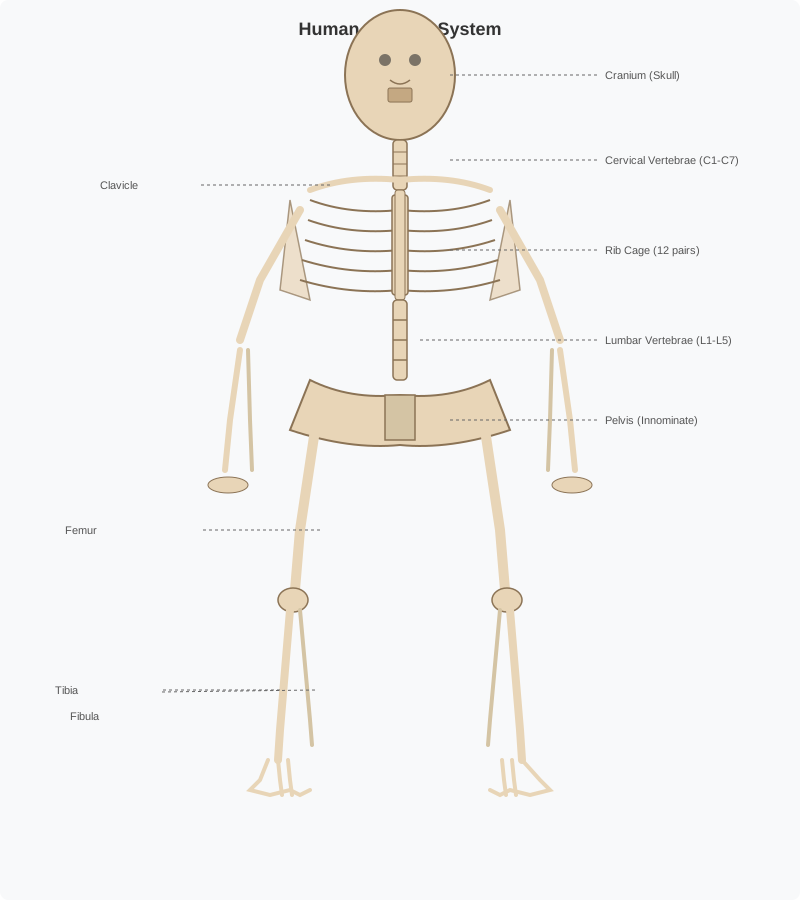
X-ray attenuation characteristics of bone, soft tissue, fat, and air on a skeletal radiograph
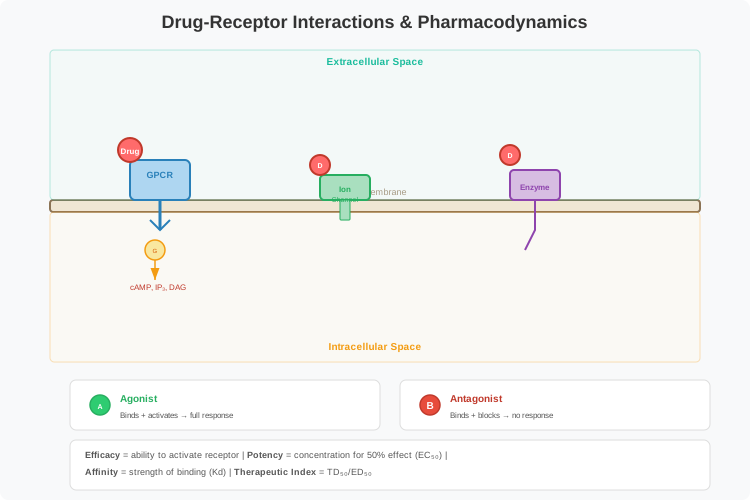
Mechanisms of action of iodinated CT contrast, gadolinium-based MRI contrast, and ultrasound microbubbles
Ultrasound Physics and Applications
Ultrasound uses high-frequency sound waves (1-20 MHz) to produce images based on the reflection of sound at tissue interfaces.
The piezoelectric effect describes how certain crystals (lead zirconate titanate) deform when an electric current is applied, producing sound waves, and conversely generate an electric current when sound waves strike them.
The ultrasound transducer (probe) contains an array of piezoelectric elements that both transmit and receive sound waves. The frequency of the transducer determines the trade-off between resolution and penetration: higher frequencies (10-15 MHz) provide better spatial resolution but less penetration (superficial structures), while lower frequencies (2-5 MHz) provide deeper penetration but lower resolution (deep abdominal and pelvic structures).
Tissue Interactions
The interaction of ultrasound with tissue produces reflection (at interfaces between tissues of different acoustic impedance), refraction (change in direction due to different propagation speeds), scattering (from small structures within tissues), and absorption (conversion to heat, causing tissue heating and potentially cavitation at high intensities).
Acoustic impedance (Z = density x propagation speed) determines the amount of reflection at an interface.
A large impedance difference (e.g., soft tissue-bone, soft tissue-air) produces strong reflections (bright echoes) and may cause acoustic shadowing beyond the interface.
The time-gain compensation (TGC) adjusts for the attenuation of sound with depth, amplifying later-returning echoes to produce a uniform image.
Ultrasound Artifacts
Key artifacts to recognize
Acoustic shadowing
occurs distal to strongly attenuating structures (gallstones, bone, calcifications) and appears as an anechoic region.
Posterior acoustic enhancement
(increased echogenicity distal to a weakly attenuating structure) is seen behind fluid-filled structures (gallbladder, cysts, urinary bladder).
Reverberation artifact
(multiple equally spaced bright lines) occurs when sound reflects between two highly reflective surfaces (e.g., metal needle, diaphragm-air interface).
Mirror image artifact
(a false structure seen on the other side of a strong reflector) is commonly seen with the diaphragm.
Ring-down artifact
(a trail of bright echoes) arises from air bubbles or metal objects.
Anechoic structures (without internal echoes): cysts, blood vessels, bladder, gallbladder. Hypoechoic: darker than surrounding tissue. Hyperechoic: brighter than surrounding tissue.
Doppler Ultrasound
Doppler ultrasound uses the Doppler effect (the change in frequency of reflected sound from moving red blood cells) to assess blood flow.
Color Doppler encodes direction and velocity of flow as colors (typically red toward the transducer, blue away from the transducer), superimposed on the gray-scale image.
Power Doppler displays the amplitude of the Doppler signal, which is more sensitive to low-flow states and less angle-dependent, but does not provide direction or velocity information.
Spectral Doppler displays flow velocity over time (pulsed-wave Doppler gives velocity at a specific location; continuous-wave Doppler gives velocity along the entire beam path).
The resistive index (RI = [peak systolic velocity - end-diastolic velocity]/peak systolic velocity) and pulsatility index (PI) are used to characterize arterial waveforms in native kidneys, transplant organs, and tumors.
Ultrasound physics principles: transducer frequencies, penetration, and resolution relationships
Magnetic Resonance Imaging
Magnetic resonance imaging (MRI) uses a strong magnetic field (1.5-3.0 Tesla for clinical systems, 7-11.4 T for research) and radiofrequency (RF) pulses to generate images based on the magnetic properties of hydrogen protons in water and fat.
When placed in a strong external magnetic field (B0), hydrogen protons align either parallel (low-energy state) or antiparallel (high-energy state) to B0, with a slight excess in the low-energy state creating a net longitudinal magnetization (Mz). An RF pulse at the Larmor frequency (42.58 MHz/Tesla for hydrogen) tips the magnetization into the transverse plane (Mxy).
T1 and T2 Relaxation
When the RF pulse is turned off, two independent relaxation processes occur:
T1 (longitudinal, spin-lattice) relaxation, the recovery of longitudinal magnetization (time constant 300-2000 ms, dependent on tissue's ability to transfer energy to the surrounding lattice)
, and
T2 (transverse, spin-spin) relaxation, the decay of transverse magnetization (time constant 30-150 ms, dependent on local magnetic field inhomogeneities)
.
Sequence characteristics
T1-weighted images (T1WI): short TR (300-800 ms), short TE (10-30 ms). Fluids appear dark, fat appears bright, gadolinium shortens T1 causing enhancement.
T2-weighted images (T2WI): long TR (2000-4000 ms), long TE (80-120 ms). Fluids appear bright, fat appears intermediate to dark.
FLAIR (Fluid-attenuated inversion recovery)
suppresses CSF signal while maintaining T2 weighting — excellent for periventricular and subarachnoid lesions.
STIR (Short tau inversion recovery)
suppresses fat signal — useful for bone marrow edema, soft tissue edema, and fluid collections.
MRI Contrast Agents
Gadolinium-based contrast agents (GBCAs) are paramagnetic agents that shorten T1 relaxation, producing enhancement on T1-weighted sequences.
They are classified as linear (gadopentetate dimeglumine, gadobenate dimeglumine, gadodiamide) and macrocyclic (gadoterate meglumine, gadobutrol, gadoteridol).
Macrocyclic agents are more stable and have a lower risk of nephrogenic systemic fibrosis (NSF)
, a rare but serious complication of linear GBCAs in patients with severe renal impairment, characterized by fibrosis of the skin, joints, and internal organs.
Current practice avoids linear GBCAs in patients with eGFR <30 mL/min/1.73m2.
Gadolinium deposition in the brain (dentate nucleus, globus pallidus) after repeated administrations of linear GBCAs has been documented, though the clinical significance remains unknown.
Comparison of CT and MRI contrast agents
Parameter
Iodinated CT contrast
Gadolinium-based MRI contrast
Mechanism
X-ray attenuation (high atomic number)
T1 shortening (paramagnetic)
Classification
Ionic/non-ionic, monomeric/dimeric
Linear vs macrocyclic
Key adverse effect
Contrast-induced nephropathy (CIN)
Nephrogenic systemic fibrosis (NSF)
Allergic risk
1-3% mild, 0.04% severe
0.04-0.2% overall
Pregnancy
Category B (use if essential)
Category C (use if essential)
Diffusion-Weighted Imaging (DWI)
Diffusion-weighted imaging (DWI) measures the random Brownian motion of water molecules in tissues. The apparent diffusion coefficient (ADC) quantifies diffusion restrictions.
In acute ischemic stroke, cellular swelling (cytotoxic edema) restricts diffusion and appears hyperintense on DWI with a corresponding low ADC value within minutes of symptom onset (much earlier than CT changes).
DWI is also used in tumor characterization (high cellularity restricts diffusion, e.g., lymphoma, high-grade glioma), abscess characterization (restricted diffusion in pus), and differentiation of epidermoid cysts (restricted diffusion) from arachnoid cysts (free diffusion).
Magnetic resonance angiography (MRA)
can be performed without contrast (time-of-flight MRA, phase-contrast MRA) or with contrast (contrast-enhanced MRA, CE-MRA) and provides excellent visualization of the intracranial and extracranial vasculature, aortic and peripheral arteries, and venous structures (MRV).
T1-weighted: Fat is bright, fluid is dark (FFF: Fat is Friendly on T1). T2-weighted: Fluid is bright (FFF: Fluid is Friendly on T2). STIR suppresses fat (look for dark fat signal). FLAIR suppresses fluid (look for dark CSF).
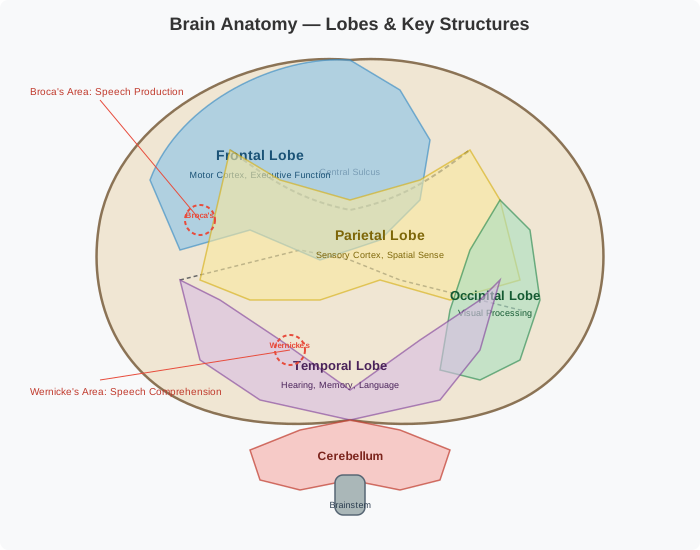
MRI of the brain showing T1-weighted and T2-weighted images with labeled anatomy
Positron Emission Tomography (PET) and Hybrid Imaging
Principles of PET
Positron emission tomography (PET) images the biodistribution of positron-emitting radiotracers. When a positron is emitted from the decaying nucleus, it travels 1–2 mm in tissue before colliding with an electron (annihilation), producing two coincident 511 keV gamma photons travelling in opposite directions (180° apart). PET scanners detect these coincident photon pairs using rings of scintillation detectors (BGO, LSO, or LYSO crystals), allowing three-dimensional reconstruction of radiotracer distribution.
Common PET radiotracers and applications: ¹⁸F-FDG (fluorodeoxyglucose, t½ 110 min): oncology staging/restaging, infection/inflammation; ¹⁸F-NaF (sodium fluoride, t½ 110 min): bone imaging (more sensitive than Tc-99m MDP bone scan); ⁶⁸Ga-DOTATATE/DOTATOC (t½ 68 min): neuroendocrine tumours (somatostatin receptor imaging, superior to ¹¹¹In-octreotide SPECT); ¹⁸F-PSMA (prostate-specific membrane antigen): prostate cancer staging, biochemical recurrence; ¹⁸F-florbetapir/florbetaben (amyloid PET): Alzheimer's disease diagnosis (amyloid plaque detection); ¹⁸F-flortaucipir (tau PET): tau tangle distribution in Alzheimer's and other tauopathies.
FDG-PET/CT in Oncology
FDG-PET/CT exploits the Warburg effect (upregulated aerobic glycolysis in malignant cells) to detect and characterise tumours. The standardised uptake value (SUVmax) is a semi-quantitative measure of FDG uptake, normalised to injected dose and body weight. SUVmax >2.5 in a solitary pulmonary nodule is associated with malignancy (sensitivity ~90%, specificity ~80%).
Key oncological applications: initial staging (lung cancer, lymphoma, melanoma, head and neck cancer, colorectal cancer); restaging/response assessment after chemotherapy or radiotherapy (Deauville criteria 1–5 for lymphoma response on PET, score ≤2 is complete metabolic response); detection of unknown primary (PET/CT identifies the primary in 20–30% of cases); radiation therapy planning (biological target volume delineation); and surveillance.
False-positive FDG uptake: inflammation (granulomas in sarcoidosis, tuberculosis, histoplasmosis), post-treatment changes (radiation pneumonitis, abscess), activated brown fat (SUV in supraclavicular/paravertebral fat, suppressed by beta-blockers and warm environment), and benign tumours (thyroid adenoma). False-negative FDG: mucinous tumours, carcinoid tumours, bronchoalveolar carcinoma/adenocarcinoma in situ (low metabolic activity), and small lesions below the spatial resolution of PET (~5 mm).
PET/MRI and Specialised PET Tracers
PET/MRI hybrid systems combine simultaneous PET and MRI acquisition, offering reduced radiation dose (no CT component), superior soft tissue contrast, multiparametric MRI (DWI, perfusion, spectroscopy) alongside metabolic PET data, and the ability to correct for patient motion. PET/MRI is particularly advantageous for brain, head and neck, liver, pelvic, and paediatric imaging.
Cardiac PET: ⁸²Rb or ¹³N-NH3 for myocardial perfusion imaging (superior to SPECT MPI for absolute quantification of coronary flow reserve); ¹⁸F-FDG for myocardial viability (hibernating myocardium shows preserved FDG uptake but reduced perfusion — the perfusion-metabolism mismatch). Brain PET: ¹⁸F-FDG shows regional hypometabolism in dementia (temporoparietal in Alzheimer's, frontotemporal in FTD, occipital in Lewy body dementia); ¹¹C-PiB or ¹⁸F-florbetapir for amyloid; ¹²³I-FP-CIT SPECT (DaTSCAN) for dopamine transporter imaging in Parkinson's vs essential tremor.
FDG-PET/CT principles: annihilation coincidence detection, SUV measurement, and oncological applications
Nuclear Medicine and Molecular Imaging
Nuclear medicine involves the administration of radiopharmaceuticals (a radionuclide combined with a pharmaceutical) to image physiologic and pathologic processes.
The most commonly used radionuclide is technetium-99m (Tc-99m), which emits gamma rays at 140 keV with a half-life of 6 hours, making it ideal for diagnostic imaging.
Tc-99m is produced from molybdenum-99 (Mo-99) generators. The Anger gamma camera detects the emitted gamma photons using a sodium iodide (NaI[Tl]) scintillation crystal coupled to photomultiplier tubes. The collimator (lead with parallel, converging, diverging, or pinhole holes) determines which photons reach the crystal, providing spatial localization.
Single photon emission computed tomography (SPECT) acquires multiple projections by rotating the gamma camera around the patient, allowing three-dimensional reconstruction.
The most widely used PET tracer is 18F-fluorodeoxyglucose (FDG), a glucose analogue that is taken up by cells via glucose transporters (GLUT-1, GLUT-3) and phosphorylated by hexokinase to FDG-6-phosphate, which cannot be further metabolized and becomes trapped intracellularly.
FDG uptake reflects cellular glucose metabolism, which is increased in malignant tumors (Warburg effect: aerobic glycolysis), inflammation (activated leukocytes and macrophages), and infection.
Standardized uptake value (SUV) is a semi-quantitative measure of FDG uptake normalized to injected dose and body weight.
An SUVmax >2.5 is often used as a threshold suggesting malignancy, though overlap between benign and malignant processes exists.
The Deauville five-point scale (1-5) is the standard for FDG-PET/CT response assessment in Hodgkin and non-Hodgkin lymphoma: score 1 (no uptake), 2 (uptake <= mediastinum), 3 (uptake > mediastinum but <= liver), 4 (uptake moderately > liver), 5 (markedly > liver). Scores 1-2 = complete metabolic response; score 3 = partial metabolic response/deauville 3 is considered inadequate response in some protocols; scores 4-5 = residual disease requiring biopsy or treatment modification.
PET/CT hybrid imaging combines the metabolic information of PET with the anatomic detail of CT, improving both sensitivity and specificity.
The CT component is used for attenuation correction of PET data and for precise anatomic localization of PET abnormalities. PET/MRI is an emerging hybrid modality that combines the high soft tissue contrast of MRI with PET, offering advantages for imaging the brain, head and neck, liver, and pelvis, and reducing radiation exposure compared to PET/CT.
Clinical Applications
Common clinical applications of nuclear medicine include:
myocardial perfusion imaging (MPI, with Tc-99m sestamibi or tetrofosmin, using stress/rest protocols to identify myocardial ischemia)
, bone scintigraphy (Tc-99m MDP/methylene diphosphonate, detects osteoblastic activity for metastases, fractures, infection, and arthritis), ventilation-perfusion (V/Q) lung scanning (Tc-99m DTPA aerosol for ventilation, Tc-99m MAA/macroaggregated albumin for perfusion, used for pulmonary embolism diagnosis in patients with contraindications to CT pulmonary angiography), thyroid imaging (Tc-99m pertechnetate or I-123 for assessing thyroid nodules and function), and
FDG-PET/CT for oncologic staging, restaging, and treatment response assessment (lung cancer, lymphoma, melanoma, head and neck cancer, colorectal cancer, breast cancer, and many others).
Important pitfalls in nuclear medicine: Brown fat (supraclavicular, paraspinal, perirenal FDG uptake) can mimic malignancy and may be reduced by warming the patient or using beta-blockers. Infected/inflamed sites (abscess, sarcoidosis, tuberculosis, post-surgical changes) cause false-positive FDG uptake. Small lesions (<5 mm) may be missed due to partial volume effects. Physiological bowel and renal excretion can obscure adjacent pathology.
FDG-PET/CT image showing physiologic and pathologic glucose metabolism in the brain