Postgraduate-level comprehensive notes covering psychiatric assessment, neurobiology of mental disorders, psychopharmacology, psychotherapies, and clinical management of psychiatric conditions across the lifespan.
A structured psychiatric assessment — history, MSE, suicide risk — is the foundation of every clinical encounter. Diagnostic classification uses DSM-5-TR and ICD-11, while the biopsychosocial model ties it all together.
Key exam topics:
MSE components (appearance through judgment)
Suicide risk assessment — SAD PERSONS vs C-SSRS
Sleep-wake disorders — insomnia, OSA, narcolepsy
Personality disorder clusters (A/B/C)
Most common trap:
Hypoactive delirium is often misdiagnosed as depression in elderly patients. Always screen with CAM.
Psychiatric Assessment
The psychiatric assessment is the cornerstone of clinical psychiatry.
Think of it as the history and physical of mental health — you cannot skip it. It begins with the psychiatric history: identifying data, chief complaints, history of present illness, past psychiatric history, medical and surgical history, family psychiatric history, social history (occupational, interpersonal, forensic aspects), and developmental history. Every piece tells a story.
Sleep-Wake Disorders
Sleep disorders commonly co-occur with psychiatric conditions and must be assessed systematically.
Insomnia disorder: difficulty initiating or maintaining sleep, or early morning awakening, at least 3 nights per week for >3 months, causing significant distress or impairment. CBT-I is first-line treatment.
Hypersomnolence disorder: excessive sleepiness despite adequate sleep duration. Narcolepsy: type 1 with cataplexy (loss of muscle tone triggered by strong emotions, associated with orexin/hypocretin deficiency due to autoimmune destruction of lateral hypothalamic neurons) and type 2 without cataplexy.
Obstructive sleep apnea (OSA) is highly comorbid with depression, anxiety, and PTSD — screening with STOP-Bang questionnaire and polysomnography is essential.
Circadian rhythm sleep-wake disorders: delayed sleep phase type (evening chronotype, common in adolescents), advanced sleep phase type (morning chronotype, elderly), irregular sleep-wake type, and non-24-hour type (common in blind individuals).
Restless legs syndrome (Willis-Ekbom disease) is associated with iron deficiency, renal failure, pregnancy, and dopamine agonist treatment.
Sleep stages: N1 (light sleep, theta waves, 5%), N2 (spindles and K-complexes, 45%), N3 (slow wave/deep sleep, delta waves, 25%), REM (rapid eye movements, low muscle tone, dreaming, 25%). REM sleep increases across the night; N3 decreases. Mnemonic: "Never (N1) Need (N2) Never (N3) REM."
The mental status examination (MSE) is a systematic assessment of the patient's appearance, behavior, speech, mood, affect, thought process, thought content, perception, cognition, insight, and judgment. The MSE is analogous to the physical examination in general medicine and must be performed at every clinical encounter.
Suicide Risk Assessment
Suicide is a major public health problem, accounting for over 700,000 deaths annually worldwide. Clinicians must assess suicide risk at every encounter with patients presenting with depression, psychosis, substance use disorders, or personality disorders.
Risk factors: male sex (3:1 ratio of completed suicide), older age, white ethnicity, unmarried status, unemployment, physical illness, family history of suicide, previous suicide attempts (strongest predictor), psychiatric illness (depression - 50%, bipolar - 20%, schizophrenia - 10%, BPD - 10%), substance use disorders, and access to lethal means.
Protective factors: strong social support, religious affiliation, children in the home, positive therapeutic alliance, and future-oriented thinking. The SAD PERSONS scale (Sex, Age, Depression, Previous attempt, Ethanol, Rational thinking loss, Social support lacking, Organized plan, No spouse, Sickness) provides a structured assessment but has limited predictive validity.
Management of acute suicidality: ensure safety (remove means, consider hospitalization), treat underlying condition, establish crisis plan, provide frequent follow-up. The C-SSRS (Columbia-Suicide Severity Rating Scale) is the gold-standard assessment instrument.
Diagnostic Classification
Diagnostic classification in psychiatry has evolved through the Diagnostic and Statistical Manual of Mental Disorders (DSM-5-TR, published in 2022) and the International Classification of Diseases (ICD-11). The DSM-5-TR uses a multiaxial-like approach through its chapter organization, with specifiers for severity, course, and contextual factors.
Key changes in DSM-5-TR include the reorganization of trauma- and stressor-related disorders, the addition of prolonged grief disorder, and updated specifiers for mood disorders.
ICD-11, adopted by WHO member states, introduces a fully dimensional approach to personality disorders and a streamlined classification of mood disorders.
Biopsychosocial Model
The biopsychosocial model, first articulated by George Engel in 1977, remains the dominant framework in psychiatry.
It posits that biological factors (genetics, neurochemistry, neuroanatomy), psychological factors (personality, coping styles, cognitive schemas), and social factors (family dynamics, cultural context, socioeconomic status) interact to produce mental illness.
A comprehensive formulation integrates these three domains and generates a management plan that addresses each area.
Personality Disorders
A personality disorder is an enduring pattern of inner experience and behavior that deviates markedly from the expectations of the individual's culture, is pervasive and inflexible, has an onset in adolescence or early adulthood, is stable over time, and leads to distress or impairment.
DSM-5-TR organizes personality disorders into three clusters:
Cluster A (odd/eccentric): paranoid, schizoid, schizotypal. Cluster B (dramatic/erratic): antisocial, borderline, histrionic, narcissistic. Cluster C (anxious/fearful): avoidant, dependent, obsessive-compulsive.
The ICD-11 has moved to a fully dimensional model with five personality trait domains (negative affectivity, detachment, dissociality, disinhibition, anankastia) and a severity rating (mild, moderate, severe). Borderline personality disorder (BPD) is characterized by instability in interpersonal relationships, self-image, and affect, with marked impulsivity, fear of abandonment, chronic emptiness, and recurrent suicidal behavior or self-harm.
First-line treatment for BPD is dialectical behavior therapy (DBT), which combines individual therapy, group skills training, phone coaching, and therapist consultation team. Pharmacotherapy targets specific symptom domains (mood stabilizers for affective instability, SSRIs for depression/anxiety, low-dose antipsychotics for cognitive-perceptual symptoms).
BPD criteria ("SUICIDAL" mnemonic): S (Suicidal/self-harm behavior), U (Unstable relationships), I (Impulsivity), C (Chronic emptiness), I (Inappropriate anger), D (Dissociation/stress-related paranoia), A (Abandonment fears), L (Lability of mood/affect). Need ≥5 of 9 criteria.
Cultural Competence
Cultural competence is essential in psychiatric practice.
Culture influences the presentation of symptoms (e.g., somatic presentations of depression in East Asian populations), the interpretation of symptoms, and treatment-seeking behavior.
The Cultural Formulation Interview (CFI) in DSM-5-TR provides a structured approach to incorporating cultural factors into assessment.
The CFI includes domains such as cultural identity, cultural explanations of illness, cultural factors affecting psychosocial environment and functioning, and the cultural elements of the clinician-patient relationship.
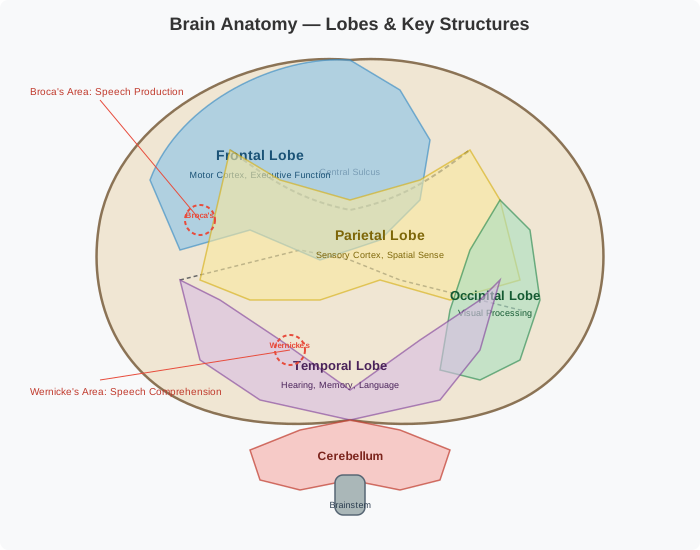
Neuroanatomical regions relevant to psychiatric assessment and diagnosis
Psychopharmacology: Neurotransmitter Systems
Benzodiazepine Pharmacology Comparison
Benzodiazepine
Half-Life (hours)
Onset
Active Metabolite
Key Indications
Special Notes
Diazepam
20-80 (long)
Fast
Yes
Anxiety, alcohol withdrawal, status epilepticus
Preferred for alcohol withdrawal; long-acting
Lorazepam
10-20 (intermediate)
Intermediate
No
Anxiety, status epilepticus, catatonia
Safe in liver disease; reliable IM absorption
Alprazolam
6-12 (short)
Fast
Yes (less active)
Panic disorder, GAD
Highest abuse potential; risk of rebound
Clonazepam
18-50 (long)
Slow-int
No
Panic, seizure, REM sleep behavior disorder
Smooth pharmacokinetics; lower abuse potential
Chlordiazepoxide
5-30 (long)
Slow
Yes
Alcohol withdrawal
Classic agent for alcohol detoxification
Monoamine Systems
The monoamine hypothesis has been central to psychopharmacology for over five decades.
The three major monoamine systems relevant to psychiatry are serotonin (5-HT), norepinephrine (noradrenaline), and dopamine.
Serotonin is synthesized from tryptophan and is involved in mood regulation, appetite, sleep, pain perception, and impulse control. The 5-HT1A receptor is a key autoreceptor, while 5-HT2A receptors are targets of atypical antipsychotics and psychedelics. The serotonin transporter (SERT) is the primary target of SSRIs.
Norepinephrine is synthesized from tyrosine via dopamine and is critical for arousal, attention, vigilance, and the stress response.
Dopamine is synthesized from tyrosine and is involved in reward, motivation, motor control, and the pathophysiology of psychosis.
Dopaminergic Pathways
The four major dopaminergic pathways are:
Mesolimbic pathway (VTA to nucleus accumbens — positive symptoms of schizophrenia and reward processing)
Mesocortical pathway (VTA to prefrontal cortex — negative symptoms and cognitive deficits)
Nigrostriatal pathway (substantia nigra to striatum — motor control and extrapyramidal side effects)
Tuberoinfundibular pathway (hypothalamus to pituitary — regulates prolactin secretion)
D2 receptor blockade is the common mechanism of all antipsychotics.
GABA-Glutamate Balance
The GABA-glutamate balance is increasingly recognized as fundamental to psychiatric disorders.
GABA is the primary inhibitory neurotransmitter, acting through GABA-A (ligand-gated ion channel) and GABA-B (G-protein coupled) receptors.
Benzodiazepines enhance GABA-A receptor function by increasing the frequency of chloride channel opening.
The NMDA receptor hypofunction hypothesis of schizophrenia proposes that reduced NMDA receptor function on GABAergic interneurons leads to disinhibition of glutamatergic neurons, resulting in excitotoxicity and psychotic symptoms.
Ketamine, an NMDA receptor antagonist, produces psychotomimetic effects that model schizophrenia.
Neuroplasticity and Neurotrophic Factors
Brain-derived neurotrophic factor (BDNF) plays crucial roles in the mechanism of action of antidepressants and mood stabilizers.
Chronic stress reduces BDNF expression in the hippocampus, while antidepressants increase BDNF through cAMP-CREB signaling. The neurogenic hypothesis of depression proposes that reduced hippocampal neurogenesis contributes to depressive symptoms and that antidepressants work in part by increasing neurogenesis.
Lithium, the gold-standard mood stabilizer, inhibits glycogen synthase kinase-3 (GSK-3) and modulates inositol monophosphatase.
Valproate increases GABA levels and inhibits histone deacetylases.
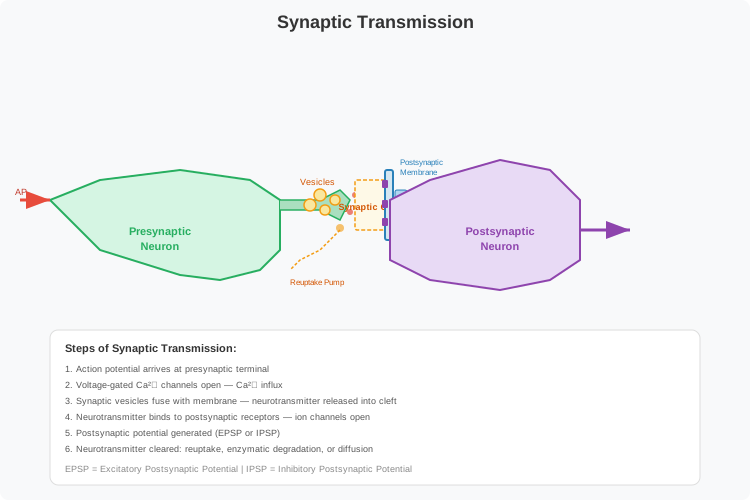
Synaptic neurotransmission and sites of psychotropic drug action
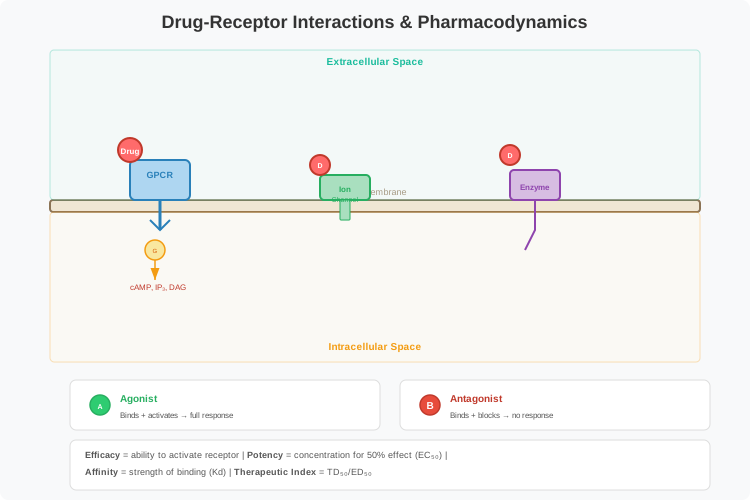
Receptor pharmacology of psychotropic medications
Electroconvulsive Therapy and Neuromodulation
Electroconvulsive Therapy (ECT)
Electroconvulsive therapy (ECT) is the most effective biological treatment in psychiatry, producing a generalised tonic-clonic seizure under general anaesthesia via brief electrical stimulation of the brain. It was first developed by Cerletti and Bini in 1938.
Established indications for ECT: severe major depressive disorder (especially with psychotic features, severe suicidality, food/fluid refusal, or failure to respond to two adequate antidepressant trials), severe mania unresponsive to medication, acute schizophrenia (particularly catatonic or treatment-refractory), neuroleptic malignant syndrome, and Parkinson's disease with severe "on-off" fluctuations.
The exact mechanism of ECT is not fully understood. Proposed mechanisms include: (1) generalised seizure causing downregulation of postsynaptic β-adrenergic receptors and upregulation of 5-HT₁A receptors (similar to antidepressants but faster); (2) increased BDNF and hippocampal neurogenesis; (3) modulation of the HPA axis; (4) anticonvulsant effects (raising the seizure threshold, explaining why bilateral ECT reduces the risk of status epilepticus); (5) antiinflammatory and neuroprotective effects via adenosine and GABA signalling.
Practical Aspects and Side Effects
ECT is administered 2–3 times per week (typically 6–12 sessions for depression; up to 20 for schizophrenia). Electrode placement: bilateral (bitemporal, bifrontal) — more effective, more cognitive side effects; right unilateral (ultrabrief pulse) — fewer cognitive effects, slightly less effective at standard dose.
The only absolute contraindication is raised intracranial pressure (risk of cerebral herniation during ECT-induced mPAP surge). Relative contraindications: recent MI or stroke, severe cardiorespiratory disease, and space-occupying lesions. A common misconception is that pacemakers and prosthetic heart valves are absolute contraindications — they are not.
The most common side effect is transient anterograde and retrograde amnesia (more with bilateral electrode placement); permanent memory loss is rare. Other adverse effects: headache, nausea, post-ictal confusion, cardiovascular (transient hypertension, arrhythmias), myalgia.
Other Neuromodulation Techniques
Repetitive transcranial magnetic stimulation (rTMS): delivers focused magnetic pulses to the dorsolateral prefrontal cortex (DLPFC); high-frequency (10–20 Hz) stimulation of the left DLPFC is excitatory and FDA-approved for MDD and OCD. Deep brain stimulation (DBS): continuous electrical stimulation via implanted electrodes; targets include the subgenual cingulate cortex (Area 25, depression), the nucleus accumbens and anterior limb of internal capsule (OCD), and the subthalamic nucleus (Parkinson's). Vagus nerve stimulation (VNS): implanted device delivering electrical impulses to the left vagus nerve, FDA-approved for treatment-resistant epilepsy and depression.
ECT: most effective Rx in psychiatry; bilateral = more effective but more amnesia; absolute CI = raised ICP; rTMS = left DLPFC for MDD; DBS = Area 25 for refractory depression.
Brain targets for ECT, rTMS, DBS, and VNS in treatment-resistant psychiatric disorders
Psychotherapeutic Modalities
Cognitive Behavioral Therapy (CBT)
Cognitive behavioral therapy (CBT) is one of the most empirically supported psychotherapies.
It is based on the cognitive model developed by Aaron Beck, which proposes that distorted thinking patterns (cognitive distortions) mediate emotional and behavioral responses. Common cognitive distortions include catastrophizing, overgeneralization, all-or-nothing thinking, mind reading, and emotional reasoning. CBT involves identifying these distortions, challenging them through Socratic questioning, and replacing them with more balanced thoughts.
Behavioral activation, a core component of CBT for depression, involves scheduling rewarding activities and breaking the cycle of avoidance.
CBT has established efficacy for major depressive disorder, anxiety disorders, PTSD, OCD, and bulimia nervosa, with effect sizes comparable to medication for mild-to-moderate depression.
Psychodynamic Psychotherapy
Psychodynamic psychotherapy, rooted in the work of Freud, Jung, and their successors, focuses on unconscious processes, defense mechanisms, and the therapeutic relationship.
Key concepts include the therapeutic alliance, transference (the patient's unconscious redirection of feelings from past relationships onto the therapist), countertransference (the therapist's emotional response to the patient), and resistance (unconscious defenses that impede therapy).
Mentalization-based therapy (MBT), developed by Bateman and Fonagy for borderline personality disorder, integrates psychodynamic and attachment theory concepts, focusing on the capacity to understand one's own and others' mental states.
Third-Wave Behavioral Therapies
Dialectical behavior therapy (DBT), developed by Marsha Linehan for borderline personality disorder, combines CBT techniques with mindfulness, distress tolerance, interpersonal effectiveness, and emotion regulation skills.
Acceptance and commitment therapy (ACT) uses acceptance, defusion, and values-based action to increase psychological flexibility.
Mindfulness-based cognitive therapy (MBCT), developed by Teasdale and Segal, combines mindfulness meditation with CBT techniques and is recommended by NICE for preventing relapse in recurrent depression.
Interpersonal Therapy (IPT)
Interpersonal therapy (IPT) was developed by Klerman and Weissman for depression and is based on the theory that interpersonal problems trigger or maintain depressive episodes.
IPT focuses on four interpersonal problem areas: grief (complicated bereavement), role disputes (conflicts with significant others), role transitions (life changes), and interpersonal deficits (social isolation or chronic relationship difficulties).
IPT is structured in three phases: initial phase (assessment and formulation), middle phase (addresses the identified problem area), and termination phase (consolidates gains and prepares for future challenges).
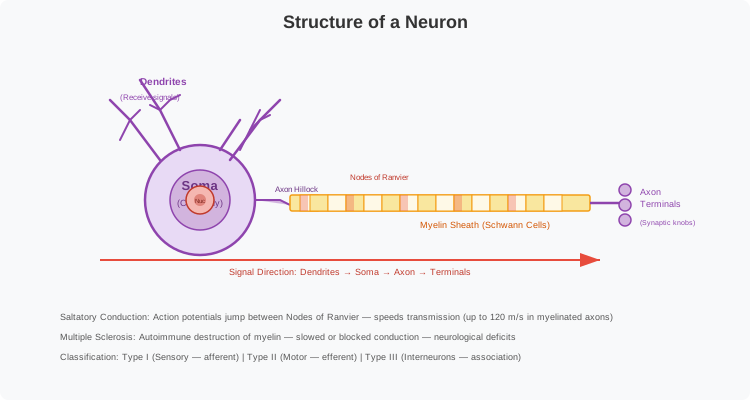
Neural networks underlying cognitive and emotional processing in psychotherapy
General Psychiatry: NEET PG Rapid Revision Compendium
Psychiatric History Taking: NEET PG High-Yield Framework
History Domain
Key Questions
Clinical Pearl
Chief Complaint
"What brings you here today?" — in patient s own words
Always document verbatim; include duration of each complaint
History of Present Illness
Onset (acute/subacute/insidious), precipitating factors, course (episodic/continuous/fluctuating), severity, impact on functioning
Use chronological narrative; include collateral information from family
Past Psychiatric History
Previous diagnoses, hospitalizations (number, dates, voluntary vs involuntary), suicide attempts (methods, lethality, intent), self-harm, medications (doses, duration, response, side effects)
Check old records; medication trials must specify dose + duration to assess adequacy
Medical/Surgical History
Head injury/LOC, seizures, thyroid, diabetes, cardiac, neurological, chronic pain
Many medical conditions cause psychiatric symptoms (e.g., hypothyroidism → depression, hyperthyroidism → anxiety, Cushing → depression/psychosis)
Medication History
Current medications, allergies, adherence
Check for drug interactions; ask specifically about OTC drugs, supplements, herbal remedies (St. John s wort interacts with SSRIs)
Family Psychiatric History
Psychiatric diagnoses, hospitalizations, suicide, substance use in first- and second-degree relatives
Draw a genogram (3 generations); bipolar and schizophrenia have high heritability (60-80%)
Social History
Education, occupation, living situation, relationships, legal issues, trauma history, cultural and religious background
Document ACEs (Adverse Childhood Experiences); trauma history essential for PTSD differential
"Cooperative throughout interview. Psychomotor retardation noted — slow movements, prolonged response latency. No catatonic features."
Speech
Rate (rapid/slow/normal), rhythm, volume (loud/soft), fluency, spontaneity (talkative vs paucity), prosody (monotone vs normal)
"Pressured speech — rapid, difficult to interrupt, increased volume. Normal prosody. No dysarthria."
Mood
Patient s subjective report: "How is your mood?" Document in patient s own words
"Mood: 'depressed,' 'hopeless,' 'like nothing matters anymore' — per patient."
Affect
Range (full/restricted/flat), stability (stable vs labile), appropriateness (congruent vs incongruent with mood/content), intensity
"Affect: restricted range, mood-congruent (tearful when discussing losses), stable throughout interview."
Thought Process
Rate and flow: linear/goal-directed, circumstantial, tangential, flight of ideas, loosening of associations (derailment), word salad, thought blocking, perseveration
"Thought process: linear and goal-directed. No formal thought disorder."
"Thought content: passive death wishes ('I d be better off dead') without active suicidal ideation, plan, or intent. No homicidal ideation. No delusions."
Degree of awareness of illness: (1) complete denial, (2) vague awareness, (3) intellectual insight (acknowledges illness but doesn t apply to behavior), (4) true emotional insight
"Insight: Grade 3 — acknowledges depression and need for treatment intellectually, but minimizes impact on functioning."
Judgment
Ability to make reasoned decisions: test with hypothetical scenarios ("What would you do if you smelled smoke in a cinema?"), assess from history and behavior
"Judgment: Fair — able to articulate reasonable responses to hypothetical scenarios, though recent decision-making impaired by depressive symptoms."
Clinical Pearls: Psychopathology Phenomenology
Phenomenon
Definition
Associated Conditions
NEET PG Trap
Circumstantiality
Overinclusive detail but eventually reaches the goal — patient will answer the question after excessive detail
Anxiety, OCD, obsessive personality traits
vs Tangentiality: never reaches goal (schizophrenia, mania)
Tangentiality
Patient goes off on tangents and never returns to the original point — never answers the question
Schizophrenia, mania, organic brain syndromes
vs Circumstantiality: eventually reaches the goal after detailed detours
Loosening of associations (derailment)
Ideas slip from one track to another without logical connection; speech may become incomprehensible
Schizophrenia (pathognomonic for formal thought disorder)
vs Flight of ideas: connections between topics are UNDERSTANDABLE (though rapid) in mania; in loosening, connections are incomprehensible
Flight of ideas
Rapid, continuous verbalizations with understandable associations between ideas; may be triggered by environmental stimuli
Can be part of catatonic syndrome; differentiate from voluntary mimicry
Verbigeration
Meaningless, stereotyped repetition of words or phrases
Schizophrenia (catatonic type), severe dementia
Differentiated from perseveration by the meaningless quality
Thought disorder mnemonic: "CLAT-FP": Circumstantiality, Loosening of associations, Alogia (poverty of speech), Tangentiality, Flight of ideas, Perseveration. Plus blocking.
Baseline ECG for citalopram if >40 mg dose or CV risk; Na in elderly on SSRIs if symptoms
QTc >500 ms = discontinue; Na <130 = SIADH evaluation; Hyponatremia risk in elderly, especially first 2 weeks
TCAs
ECG (QTc, QRS), serum level (nortriptyline, imipramine, desipramine), orthostatic BP
Baseline ECG; level if non-response or toxicity suspected
QRS >100 ms = risk of heart block/arrhythmia; QTc >500 ms = discontinue; TCA level >500 ng/mL = toxic
Key NEET PG Psychopharmacology Principles
Principle 1 (D2 occupancy and EPS): Therapeutic window for D2 blockade is 65-80%. Below 65%: ineffective. Above 80%: EPS risk (striatal D2 >80% = parkinsonism, dystonia, akathisia). Above 95%: prolactin elevation. Clozapine has D2 occupancy of only 40-60% (explains low EPS and prolactin) but superior efficacy (5-HT2A, D4, noradrenergic mechanisms compensate).
Principle 2 (Antidepressant onset): All antidepressants take 2-4 weeks for initial response and 6-12 weeks for full response. This delay is explained by receptor adaptation: acute SERT/NET blockade → increased synaptic monoamines → desensitization of presynaptic autoreceptors (5-HT1A, alpha-2) → increased neuronal firing → downstream gene expression (BDNF, CREB) → neurogenesis and synaptogenesis.
Principle 3 (Tapering principles): All psychotropics should be tapered, not abruptly discontinued. SSRIs/SNRIs: taper over 4-12 weeks (paroxetine = worst withdrawal, fluoxetine = self-tapering). Benzodiazepines: taper by 10-25% every 1-2 weeks. Antipsychotics: taper over weeks-months (rebound psychosis, cholinergic rebound, withdrawal dyskinesia can occur if stopped abruptly). Mood stabilizers: lithium → rebound mania; valproate/carbamazepine → rebound seizures.
Principle 4 (Polypharmacy pitfalls): Each additional psychotropic increases side effect burden, drug interactions, and cost. Before adding a medication: (1) Optimize current medication (dose, duration), (2) Confirm adherence, (3) Address substance use and psychosocial factors, (4) Consider psychotherapy augmentation before pharmacotherapy augmentation.