Pharmacology
Postgraduate-level comprehensive notes covering general pharmacology, autonomic, cardiovascular, CNS pharmacology, and chemotherapeutic agents.
20 chapters · MBBS / NEET-PG
Chapter 1 of 20
General Pharmacology
General Pharmacology
General Pharmacology — Pharmacology
Pharmacokinetics: Absorption and Distribution
Pharmacokinetics = what the body does to the drug (ADME). Key concepts: bioavailability (IV = 100%, oral varies due to first-pass), Vd (how widely the drug spreads), and transporters like P-gp that pump drugs OUT of the brain. Henderson-Hasselbalch tells you whether a weak acid or base gets absorbed in the stomach vs intestine.
Key exam topics:- Bioavailability: IV = 100%; oral is reduced by first-pass metabolism
- P-gp is an EFFLUX transporter (pumps drugs OUT of brain, contributes to MDR)
- Routes that bypass first-pass: IV, sublingual, transdermal, inhalational, rectal (partial)
Pharmacokinetics: Absorption and Distribution
Pharmacokinetics =
Absorption
Getting the drug from where you put it into the bloodstream. Factors that matter: route of administration, drug formulation, pKa/lipid solubility,
Routes — Quick Reference
Henderson-Hasselbalch — The Ion Trap
Volume of Distribution (Vd)
Transporters — The Bouncers
Membrane transporters control who gets in and who gets kicked out. Here are the ones you need to know:
| Transporter | Family | Location | Key Drugs Affected |
|---|---|---|---|
P-glycoprotein (P-gp, ABCB1) | ABC efflux | Intestine, BBB, liver, kidney, placenta | Digoxin, cyclosporine, vinca alkaloids, tacrolimus, HIV protease inhibitors |
OATP1B1/1B3 | SLCO uptake | Liver (sinusoidal) | Statins (simvastatin, atorvastatin), rifampin, methotrexate |
| OCT2 | SLC22 uptake | Kidney (basolateral) | Metformin, cisplatin, cimetidine |
| OAT1/OAT3 | SLC22 uptake | Kidney (basolateral) | Penicillins, NSAIDs, methotrexate, tenofovir |
| BCRP (ABCG2) | ABC efflux | Intestine, placenta, liver, breast | Methotrexate, rosuvastatin, topotecan, imatinib |
Blood-Brain Barrier
Tight junctions between brain capillary endothelial cells (with help from pericytes and astrocytes).
- ADME = Absorption, Distribution, Metabolism, Excretion
- Bioavailability (F) = fraction reaching systemic circulation unchanged; IV = 100%
- Henderson-Hasselbalch: weak acids absorbed in stomach, weak bases in small intestine
- Vd = Dose/C0; large Vd (>0.6 L/kg) = extensive tissue binding
- Only free (unbound) drug is pharmacologically active
- BBB: only lipid-soluble, non-ionized, <500 Da pass; P-gp efflux limits CNS penetration
Drug Dosage Forms and Routes of Administration
| Route | Bioavailability | Onset | Key Features | First-Pass |
|---|---|---|---|---|
Intravenous (IV) | 100% | Immediate | Complete control over dosing; risk of embolism, infection, extravasation | No |
Intramuscular (IM) | 75-100% | Rapid (aqueous) to slow (depot) | Suitable for moderate volumes; pain, abscess risk; diazepam absorption unreliable | No |
Subcutaneous (SC) | 75-100% | Slow/controlled | Small volumes; insulin, heparin, LMWH; depot formulations (leuprolide) | No |
Oral (PO) | Variable | 30-90 min | Most convenient; subject to first-pass and GI factors; food interactions | Yes |
Sublingual | High | Rapid (1-3 min) | Bypasses first-pass; NTG, buprenorphine; must remain in mouth until dissolved | No |
Transdermal | ~100% (patch) | Slow, sustained | Zero-order kinetics; avoids first-pass; patches: nicotine, fentanyl, scopolamine, clonidine | No |
Inhalational | High | Rapid | Large surface area; rapid absorption; for asthma (beta2-agonists, ICS), general anesthetics | No |
Rectal | ~50% | Variable | Partial bypass of first-pass; useful in vomiting/unconscious patients; unreliable absorption | Partial |
Pharmacokinetics: Metabolism and Excretion
Pharmacokinetics: Metabolism and Excretion
Phase I Reactions (Functionalization)
Phase I reactions introduce or expose a functional group through
| CYP Isoform | % Drugs Metabolized | Key Substrates |
|---|---|---|
CYP3A4 | ~50% (most abundant) | Statins, macrolides, CCBs, benzodiazepines, immunosuppressants |
| CYP2D6 | Polymorphic | β-blockers, antidepressants, antipsychotics, codeine |
| CYP2C9 | — | Warfarin, NSAIDs, phenytoin |
| CYP2C19 | — | Omeprazole, clopidogrel, diazepam |
| CYP1A2 | — | Theophylline, caffeine |
Phase II Reactions (Conjugation)
Phase II reactions couple the drug (or its Phase I metabolite) with an endogenous substrate —
First-Pass Effect
Routes that bypass first-pass metabolism:
Prodrugs
| Prodrug | Activation | Active Metabolite |
|---|---|---|
| Codeine | CYP2D6 O-demethylation | Morphine |
| Enalapril | Hydrolysis | Enalaprilat |
| Levodopa | Decarboxylation | Dopamine |
| Clopidogrel | CYP2C19 | Active thiol metabolite |
Drug Excretion
- Glomerular filtration— only free, unbound drug is filtered (180 L/day in adults)
- Active tubular secretion— via OAT and OCT transporters in proximal tubule; can eliminate protein-bound drugs
- Passive tubular reabsorption— non-ionized lipid-soluble drugs diffuse back; influenced by urinary pH and drug pKa
Key Pharmacokinetic Parameters
- Phase I (CYP450) = oxidation, reduction, hydrolysis; Phase II (UGT, SULT, GST, etc.) = conjugation
- CYP3A4 metabolizes ~50% of drugs; CYP2D6 is polymorphic (codeine metabolism)
- First-pass effect reduces oral bioavailability; bypass with sublingual/IV/transdermal routes
- Prodrugs: codeine → morphine (CYP2D6), enalapril → enalaprilat, L-DOPA → dopamine
- Renal excretion: filtration + secretion − reabsorption
- t½ = 0.693 × Vd / CL; steady state in ~5 half-lives
Therapeutic Drug Monitoring (TDM)
| Drug | Therapeutic Range | Sampling Time | Key Monitoring Parameter |
|---|---|---|---|
Digoxin | 0.5-2.0 ng/mL | ≥6-8 h post-dose (post-distribution) | HR, ECG (arrhythmias), renal function; toxicity: nausea, visual disturbances, arrhythmias |
Lithium | 0.6-1.2 mEq/L (maintenance) | 12 h post-dose (trough) | TSH, renal function; toxicity >1.5 mEq/L: tremor, ataxia, confusion |
Vancomycin | Trough 15-20 mcg/mL (serious infections); 10-15 mcg/mL (routine) | Just before 4th dose (trough) | Renal function, hearing; red man syndrome is infusion-related, not TDM-dependent |
Phenytoin | 10-20 mcg/mL (total); 1-2 mcg/mL (free) | Trough (just before next dose) | Non-linear (zero-order, Michaelis-Menten) kinetics; small dose increase → large concentration change |
Theophylline | 5-15 mcg/mL | Trough | Nausea, tachycardia, seizures >20 mcg/mL; many drug interactions via CYP1A2 |
| Aminoglycosides | Peak: gentamicin 4-10, amikacin 20-30 (mcg/mL); Trough: <1, <4 respectively | Peak (1 h post) + Trough (just before) | Concentration-dependent killing; nephrotoxicity + ototoxicity related to trough levels |
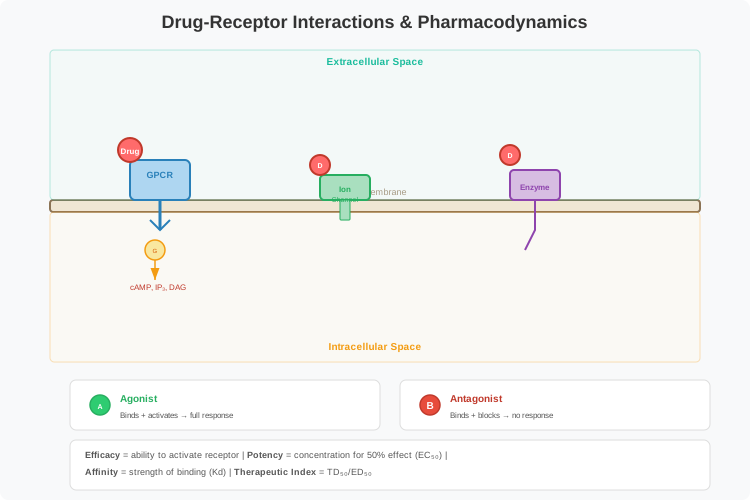
Pharmacodynamics and Drug-Receptor Interactions
Pharmacodynamics and Drug-Receptor Interactions
Key Receptor Parameters
Agonists vs Antagonists
| Type | Definition | Key Feature |
|---|---|---|
Full agonist | Binds and produces maximal response | High intrinsic efficacy |
Partial agonist | Submaximal response even at full occupancy | Low intrinsic efficacy |
Competitive antagonist | Reversible block, parallel rightward shift of D-R curve | Surmountable; Emax unchanged |
Non-competitive antagonist | Covalent/irreversible binding | Insurmountable; Emax reduced |
Inverse agonist | Produces opposite effect at constitutively active receptors | e.g., at GABAA receptors |
Receptor Theory Parameters
- EC50— molar concentration producing 50% of maximal effect (measure of potency)
- Emax— maximal effect (measure of efficacy)
- Therapeutic Index (TI)= TD50/ED50 or TC50/EC50 — ratio of toxic dose to effective dose; a measure of drug safety
Major Receptor Families
1. Ligand-Gated Ion Channels (Ionotropic)
Fast response (milliseconds).
- Nicotinic ACh receptor— Na+/Ca2+ influx → depolarization
- GABAA receptor— Cl- influx → hyperpolarization/inhibition (target of BZDs, barbiturates)
2. G Protein-Coupled Receptors (GPCRs, Metabotropic)
| Gα Subunit | Effector | Second Messenger | Effect |
|---|---|---|---|
Gs | Stimulates adenylyl cyclase | ↑cAMP → PKA | Stimulatory |
Gi | Inhibits adenylyl cyclase | ↓cAMP | Inhibitory |
Gq | Activates phospholipase C | ↑IP3, DAG → ↑Ca2+ | Calcium signaling |
3. Enzyme-Linked Receptors (Receptor Tyrosine Kinases)
Examples: insulin receptor, EGF receptor, growth factor receptors.
Binding activates intrinsic tyrosine kinase activity → autophosphorylation → adaptor proteins (e.g., IRS-1) →
4. Intracellular Nuclear Receptors
Steroid/thyroid hormone receptors, PPARs, vitamin D receptor. Drug-receptor complex translocates to nucleus, binds to
- Pharmacodynamics = what the drug does to the body (vs pharmacokinetics = what the body does to the drug)
- Kd = affinity (lower Kd = higher affinity); intrinsic efficacy = ability to activate receptor
- Competitive antagonist: rightward shift, Emax unchanged; Non-competitive: Emax reduced
- Therapeutic Index = TD50/ED50; narrow TI drugs need TDM (WDLT PA)
- Four receptor families: Ion channels (fast), GPCRs (Gs/Gi/Gq), RTKs (slow), Nuclear (hours-days)
- GPCR Gs → ↑cAMP; Gi → ↓cAMP; Gq → ↑IP3/DAG
Drug Tolerance, Dependence and Desensitization
| Type of Tolerance | Mechanism | Examples |
|---|---|---|
Pharmacokinetic (metabolic) | ↑ Drug metabolism (CYP450 induction) | Barbiturates, carbamazepine, rifampin, alcohol |
Pharmacodynamic | Receptor downregulation or desensitization | β-agonists in asthma (β-receptor desensitization), BZDs, opioids |
Tachyphylaxis | Rapid, acute tolerance — develops within minutes to hours | NTG (requires nitrate-free interval), ephedrine (depletes NE stores) |
Quantal vs Graded Dose-Response Curves
ADME, Adverse Effects and Drug Interactions
ADME, Adverse Effects and Drug Interactions
Adverse Drug Reactions (ADRs)
| Type | Name | Characteristics | Examples |
|---|---|---|---|
A | Augmented | Predictable, dose-dependent (~80% of ADRs) | Dry mouth (antihistamines), paracetamol hepatotoxicity, C. difficile colitis (antibiotics) |
B | Bizarre | Unpredictable, dose-independent; idiosyncratic/allergic | SJS/TEN (carbamazepine, lamotrigine, allopurinol), anaphylaxis (penicillins), drug-induced lupus (procainamide, hydralazine) |
| C | Chronic | Associated with long-term therapy | Corticosteroid-induced osteoporosis, tardive dyskinesia (antipsychotics) |
| D | Delayed | Delayed effects | Carcinogenicity (immunosuppressants), teratogenicity (retinoids, thalidomide, valproate) |
| E | End-of-treatment | Withdrawal syndromes | Abrupt cessation of β-blockers, BZDs, opioids, clonidine |
| F | Failure | Therapy failure | Resistance, tolerance |
Drug Interactions
Pharmacokinetic Interactions
1. Absorption interactions:
- Chelation— tetracyclines with Ca2+/Fe2+/Mg2+-containing antacids
- Altered GI motility — metoclopramide accelerates gastric emptying
- P-gp inhibition— verapamil, amiodarone increase digoxin levels
2. Distribution (protein binding displacement):
- Sulfonamides displace bilirubin in neonates → kernicterus
- Warfarin displaced by phenylbutazone → bleeding
3. Metabolism interactions:
| Type | Drugs | Effect |
|---|---|---|
Enzyme inducers | Rifampin, phenytoin, carbamazepine, phenobarbital, St. John's Wort | ↓ levels of oral contraceptives, warfarin, cyclosporine (CYP3A4 induction) |
Enzyme inhibitors | Azole antifungals, macrolides, cimetidine, amiodarone, grapefruit juice | ↑ levels of many drugs (CYP3A4 inhibition) |
4. Excretion interactions:
- Probenecid inhibits penicillin and methotrexate secretion(used clinically to prolong penicillin action)
- Cimetidine inhibits creatinine and procainamide secretion
Pharmacodynamic Interactions
| Type | Definition | Examples |
|---|---|---|
| Additive/synergistic | Combined effect > individual | BZDs + alcohol (excessive CNS depression), β-blockers + CCBs (bradycardia), ACEi + ARBs (hyperkalemia) |
| Antagonistic | Opposite effects at same receptor | β-blockers + β-agonists, warfarin + vitamin K, naloxone + opioids |
| Potentiation | One drug enhances another's effect without having its own effect | Trimethoprim-sulfamethoxazole (sequential blockade of folate synthesis) |
- ADR types: A (augmented, dose-dependent) through F (failure of therapy)
- Type B includes SJS/TEN (carbamazepine, lamotrigine, allopurinol) and drug-induced lupus (procainamide, hydralazine)
- Enzyme inducers (Rifampin, Phenytoin, Carbamazepine, Phenobarbital) ↓ drug levels; inhibitors (Azoles, Macrolides, Cimetidine, Amiodarone, Grapefruit) ↑ drug levels
- P-gp inhibition by verapamil/amiodarone ↑ digoxin levels
- Protein binding displacement: sulfonamides → kernicterus; warfarin + phenylbutazone → bleeding
- Probenecid inhibits tubular secretion of penicillin and methotrexate
Pharmacogenetics in Drug Interactions
| Gene | Polymorphism | Clinical Consequence |
|---|---|---|
CYP2D6 | Poor metabolizer (PM) (~7% Caucasians); Ultrarapid metabolizer (UM) | PM: ↑ toxicity of TCAs, metoprolol, codeine (no activation → no analgesia). UM: ↑ morphine toxicity from codeine; ↓ efficacy of β-blockers, tamoxifen |
CYP2C9 | *2, *3 variants | ↓ warfarin metabolism → ↑ INR and bleeding risk; require lower warfarin doses; also affects phenytoin, NSAIDs |
CYP2C19 | PM (~3% Caucasians, ~20% Asians) | ↓ activation of clopidogrel → ↑ cardiovascular events; ↑ omeprazole levels → better H. pylori eradication |
TPMT | 0.3% homozygous deficient | Severe myelosuppression with azathioprine/6-MP; dose reduction to 10% required |
UGT1A1 | *28 allele (Gilbert syndrome) | ↑ irinotecan toxicity (neutropenia, diarrhea); ↓ bilirubin glucuronidation |
| G6PD | X-linked deficiency | Hemolysis with oxidant drugs: sulfonamides, dapsone, primaquine, nitrofurantoin, aspirin (high dose) |
| NAT2 | Slow acetylators | ↑ toxicity of isoniazid (peripheral neuropathy), hydralazine (lupus), procainamide (lupus) |
| DPD (DPYD) | DPD deficiency | Severe 5-FU/capecitabine toxicity: mucositis, diarrhea, neutropenia, neurotoxicity; pre-treatment screening recommended |
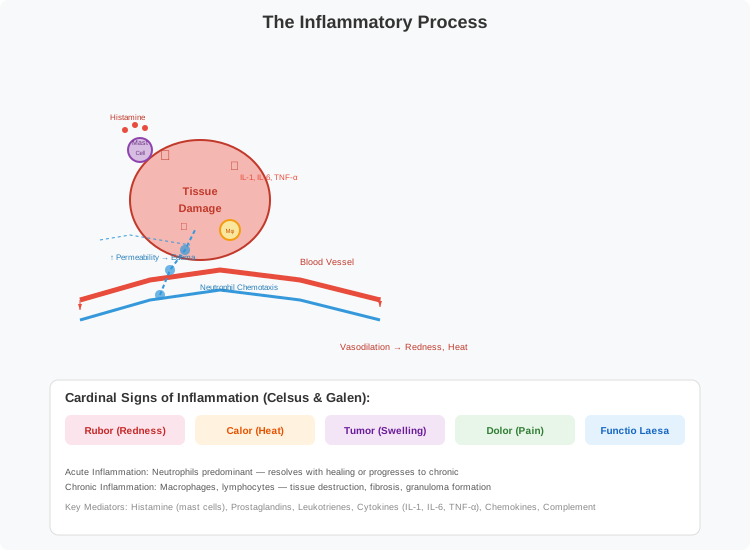
The Inflammation Process and Anti-Inflammatory Drugs
- Vascular phase:Vasodilation (histamine, PGE2, PGI2, NO) → increased blood flow (erythema, heat); increased capillary permeability (histamine, bradykinin, LTC4/D4/E4) → exudation of plasma (edema, swelling)
- Cellular phase:Leukocyte rolling (selectins) → adhesion (integrins) → transmigration (PECAM-1) → chemotaxis (chemokines, LTB4, C5a, fMLP) → phagocytosis and pathogen killing (ROS, lysosomal enzymes)
- Resolution phase:Apoptosis of neutrophils, macrophage clearance of debris, anti-inflammatory mediators (lipoxins, resolvins, protectins, IL-10, TGF-β), tissue repair
| Mediator | Source | Primary Actions | Drugs Targeting |
|---|---|---|---|
Histamine | Mast cells, basophils | Vasodilation, ↑vascular permeability, bronchoconstriction, pruritus | H1 antihistamines (diphenhydramine, loratadine, cetirizine) |
Prostaglandins (PGE2, PGI2) | COX-1/COX-2 in many cells | Vasodilation, pain (sensitize nociceptors), fever, ↑permeability | NSAIDs (aspirin, ibuprofen, naproxen, celecoxib) |
Leukotrienes (LTC4, LTD4, LTE4) | 5-LOX in leukocytes | Bronchoconstriction (SRS-A), ↑permeability, mucus secretion, chemotaxis (LTB4) | Montelukast, zafirlukast (CysLT1 antagonists), zileuton (5-LOX inhibitor) |
TNFα | Macrophages, T cells | Activates endothelium, recruits leukocytes, induces fever (endogenous pyrogen), cachexia, insulin resistance | Infliximab, adalimumab, etanercept, certolizumab, golimumab |
IL-1 | Macrophages, many cells | Fever (endogenous pyrogen), activates lymphocytes and endothelium, acute phase response (CRP, serum amyloid A) | Anakinra (IL-1R antagonist), canakinumab (anti-IL-1β mAb) |
IL-6 | Macrophages, T cells, fibroblasts | Acute phase response (CRP, hepcidin), B cell differentiation, T cell activation, fever | Tocilizumab, sarilumab (anti-IL-6R mAbs) |
Dose-Response Relationships and Drug Safety
Graded Dose-Response Curves
- EC50— concentration producing 50% of maximal effect (index of potency); the lower the EC50, the more potent the drug
- Emax— maximal achievable effect (index of efficacy); independent of potency
- Hill coefficient (n)— reflects the steepness of the curve; n>1 suggests positive cooperativity (e.g., allosteric enzymes, ion channels with multiple binding sites)
Quantal Dose-Response Curves
- ED50— median effective dose (effective in 50% of population)
- TD50— median toxic dose (toxic in 50% of population)
- LD50— median lethal dose (lethal in 50% of population) — used in preclinical studies
- Therapeutic Index (TI)= TD50/ED50 — margin of safety
- Certain Safety Factor (CSF)= TD1/ED99 — more stringent measure of safety
| Therapeutic Index | Example Drugs | Clinical Implication |
|---|---|---|
Narrow (TI <3) | Warfarin, Digoxin, Lithium, Theophylline, Phenytoin, Aminoglycosides, Vancomycin, Cyclosporine | Requires TDM; small dose changes cause large changes in response/toxicity |
Moderate (TI 3-10) | Carbamazepine, Valproate, Procainamide, Methotrexate | TDM recommended but not always mandatory |
Wide (TI >10) | Penicillins, Cephalosporins, SSRIs, Most β-blockers, ACE inhibitors | TDM not routinely required; wide safety margin |
Drug-Receptor Binding and Signal Amplification
Clinical implications of spare receptors:
- Tolerance with irreversible antagonists— many receptors must be blocked before function is impaired (e.g., atropine blocks M3 receptors; significant effects only after >75% occupancy)
- Partial agonists— may act as antagonists in systems with high receptor reserve (buprenorphine at μ-opioid receptors — partial agonist that antagonizes full agonists)
- Desensitization— chronic agonist exposure can reduce receptor number (downregulation) and spare receptor reserve
- Graded D-R curve: EC50 (potency), Emax (efficacy); Quantal curve: ED50, TD50, TI = TD50/ED50
- Narrow TI drugs: WDLT PAVC — require TDM
- Spare receptors: Emax reached at fractional occupancy; partial agonists can act as antagonists
- Hill coefficient >1 = positive cooperativity (steeper curve)
- Potency ≠ Efficacy; clinical efficacy is usually more important than potency
Compartment Models in Pharmacokinetics
| Parameter | One-Compartment | Two-Compartment |
|---|---|---|
| Distribution phase | Instantaneous (not observed) | Rapid α-phase (distribution) |
| Elimination phase | Single monoexponential decline | Slower β-phase (elimination) |
| Volume of distribution | Vd (single value) | Vc (central), Vt (tissue), Vss (steady state) |
| Equation | C(t) = C₀ × e-kt | C(t) = Ae-αt + Be-βt |
Loading Dose and Maintenance Dose
- Digoxin (t½ ~36-48 h) — LD needed for AF rate control
- Amiodarone (t½ ~40-60 days) — large LD followed by maintenance
- Phenytoin — LD for status epilepticus (non-linear kinetics, careful titration)
- Lidocaine — IV LD for ventricular arrhythmias post-MI
- Theophylline — IV LD for acute severe asthma
- One-compartment: monoexponential decline; Two-compartment: biexponential (α distribution, β elimination)
- LD = Vd × Css/F (uses Vd); MD = CL × Css × τ/F (uses CL)
- Drugs needing LD: digoxin, amiodarone, phenytoin, lidocaine, theophylline (long t½)
- Steady state reached in ~5 half-lives regardless of LD
- Renal failure: ↓CL → ↓MD; Vd may be unchanged → LD same
Test your knowledge with practice questions
Practice Pharmacology MCQs →