0 medicos studying live right now
← Back to Notes
🔬

Pathology

Comprehensive NEET PG pathology notes: general pathology (cell injury, inflammation, repair, neoplasia), staging systems (TNM, FIGO, Ann Arbor, Dukes), paraneoplastic syndromes (endocrine, neurologic, dermatologic, hematologic), autopsy findings (MI, stroke, drowning, hanging, poisoning), systemic pathology (hemodynamic, immunopathology, environmental, nutritional), hematopathology (anemias, leukemias, lymphomas, plasma cell), renal pathology (GN, nephrotic/nephritic, tumors), and pediatric/genetic disorders. ~3x expanded with comparison tables, mnemonics, clinical pearls, traps, PYQ, and quick-revise sections.

13 chapters · MBBS / NEET-PG

0 studying Pathology now

Chapter 1 of 13

Cell Injury & Adaptation

15px

Cell Injury & Adaptation

Cell Injury & AdaptationPathology

~0 min readHardPractice 15 MCQs on this chapter →
Chapter 1 of 13

Mechanisms of Cell Injury

In 30 seconds:

Cell injury happens when a stressor overwhelms a cell's adaptive capacity. The main targets are membranes, mitochondria, and DNA, with ATP depletion being the central event driving ischemic damage.

Key exam topics:
  • ATP depletion and Na+/K+ pump failure in ischemia
  • Calcium-mediated cell injury cascade
  • Five cellular adaptations: atrophy, hypertrophy, hyperplasia, metaplasia, dysplasia
Most common trap:

Lipofuscin granules represent adaptive autophagy, not cell death

Cell injury occurs when cells are subjected to a stress severe enough to overwhelm their adaptive capacity.
Think of it as the cell being pushed past its breaking point. The principal targets are the cell membrane, mitochondria, endoplasmic reticulum, and the nucleus. The key mechanisms include ATP depletion, mitochondrial dysfunction, calcium influx, oxidative stress, membrane damage, and protein misfolding.
ATP depletion is central to ischemic injury — the Na+/K+ ATPase fails, leading to cellular swelling and loss of ion gradients.
Mitochondrial damage triggers the intrinsic apoptotic pathway through the release of cytochrome c, which activates caspase-9 and downstream executioner caspases.

Calcium Homeostasis in Cell Injury

Calcium homeostasis is critical: ischemia leads to failure of the Ca2+ ATPase, causing cytosolic calcium to rise.
Elevated intracellular calcium activates:
  • Phospholipases → membrane damage
  • Proteases → cytoskeletal degradation
  • ATPases → further ATP depletion
  • Endonucleases → DNA fragmentation

Oxidative Stress

Oxidative stress from reactive oxygen species (ROS) such as superoxide anion, hydrogen peroxide, and hydroxyl radical causes lipid peroxidation, protein cross-linking, and DNA damage.
ROS are generated during reperfusion of ischemic tissue, by neutrophils during inflammation, and from normal mitochondrial respiration.
A 58-year-old man with acute ST-elevation MI undergoes primary PCI 4 hours after symptom onset. Despite successful revascularization, he develops reperfusion injury with ventricular arrhythmias and further troponin elevation. The mechanism involves mitochondrial permeability transition pore (mPTP) opening, ROS burst from xanthine oxidase and neutrophils, and calcium overload. This illustrates the clinical relevance of oxidative stress in ischemia-reperfusion injury.

Cellular Adaptation

The five types of cellular adaptation: Atrophy (decrease in cell size), Hypertrophy (increase in cell size), Hyperplasia (increase in cell number), Metaplasia (reversible change from one differentiated cell type to another), and Dysplasia (abnormal growth — premalignant). Mnemonic: "A H H M D" — All Happy Healthy Muscles Develop.
Cellular adaptation to stress includes atrophy, hypertrophy, hyperplasia, metaplasia, and dysplasia.
Atrophy results from decreased workload, loss of innervation, diminished blood supply, inadequate nutrition, or loss of endocrine stimulation.
It involves the ubiquitin-proteasome pathway for protein degradation and autophagy (lysosomal digestion of cellular components).
The autophagic vacuoles may be visible as lipofuscin granules — "wear and tear" pigment — this is NOT a sign of cell death but of adaptive autophagy.
Hypertrophy is an increase in cell size due to increased functional demand, seen in cardiac myocytes in hypertension.
It is mediated by mechanical stretch receptors, growth factors (TGF-β, IGF-1), and the activation of signaling pathways including PI3K-Akt and MAPK.
Hyperplasia is an increase in cell number, occurring in tissues capable of mitotic division (epithelia, endocrine glands, liver).
It is driven by growth factors and hormones.
Metaplasia is a reversible change in which one differentiated cell type is replaced by another, often in response to chronic irritation — such as squamous metaplasia of respiratory epithelium in smokers (which predisposes to squamous cell carcinoma).
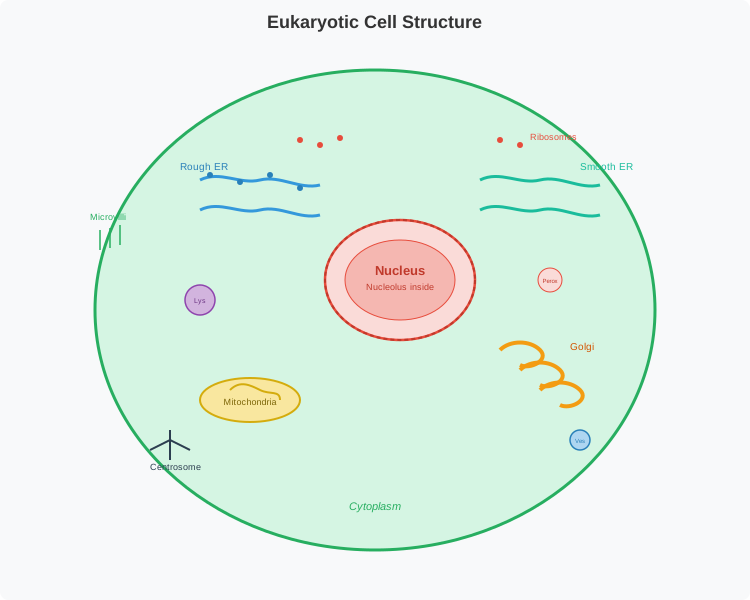
Cellular structure and organelle organization
Diagram illustrating the major organelles and structures involved in cellular injury responses.

Necrosis vs. Apoptosis

Necrosis is the pathological form of cell death resulting from irreversible injury.
It is characterized by ATP depletion, membrane failure, cellular swelling (oncosis), and release of intracellular contents into the surrounding tissue, which triggers inflammation. Nuclear changes include pyknosis (nuclear shrinkage and hyperchromasia), karyorrhexis (fragmentation of the nucleus), and karyolysis (dissolution by DNases). The morphologic types of necrosis include coagulative, liquefactive, caseous, gangrenous, and fat necrosis.

Types of Necrosis

TypeTypical LocationKey Feature
CoagulativeMost solid organs except brainTissue architecture preserved; protein denaturation
LiquefactiveBrain infarcts, bacterial abscessesTissue completely digested; forms liquid cavity
CaseousTuberculosisSoft, friable, cheeselike; granulomatous inflammation
GangrenousLimb with ischemia + infectionCoagulative + superimposed liquefactive
FatAcute pancreatitis, breast traumaLipase breaks down triglycerides; saponification
Coagulative necrosis is typical of ischemic injury in most solid organs except the brain.
The tissue architecture is preserved for days, with loss of nuclei and eosinophilic cytoplasmic staining. It is caused by denaturation of cytoplasmic proteins and lysosomal enzymes.
Liquefactive necrosis occurs in brain infarcts and bacterial abscesses
— the tissue is completely digested by leukocyte enzymes, forming a liquid cavity.
Caseous necrosis is a hallmark of tuberculosis,
producing a soft, friable, cheeselike material with a granular eosinophilic center surrounded by epithelioid macrophages (granulomatous inflammation).
Gangrenous necrosis is not a distinct morphologic pattern but refers to coagulative necrosis of a limb with superimposed liquefactive necrosis from bacterial infection (wet gangrene).
Dry gangrene is coagulative necrosis without infection.
Necrosis types: "CoLiCaGaFa" — Coagulative (solid organs, architecture preserved), Liquefactive (brain, abscesses), Caseous (TB, cheeselike), Gangrenous (limb + infection), Fat (pancreatitis, breast — saponification). Exam tip: brain = liquefactive; TB = caseous; most solid organs = coagulative.
Fat necrosis occurs in acute pancreatitis and breast trauma — lipases break down triglycerides into free fatty acids, which combine with calcium to form chalky white saponification deposits. On gross examination, these appear as white, chalky deposits (fat saponification).

Apoptosis

Apoptosis is programmed cell death — an energy-dependent, controlled process of cell deletion that does not trigger inflammation.
It occurs in physiologic states (embryogenesis, hormone-dependent involution, cell turnover) and pathologic states (DNA damage, viral infection, cytotoxic T cells). The morphologic hallmarks are cell shrinkage, chromatin condensation (margination at the nuclear membrane), cytoplasmic blebbing, and formation of apoptotic bodies that are phagocytosed by macrophages and neighboring cells.
Apoptosis hallmarks: "SCBAB" — Shrinkage, Chromatin condensation, Blebbing, Apoptotic bodies. No inflammation (unlike necrosis).
The process is executed by caspases — initiator caspases (caspase-8, 9, 10) activate executioner caspases (caspase-3, 6, 7) that cleave cellular proteins. The extrinsic pathway is triggered by death receptors (Fas, TNF receptor); the intrinsic pathway is triggered by mitochondrial cytochrome c release, regulated by BCL-2 family proteins (pro-apoptotic BAX, BAK and anti-apoptotic BCL-2, BCL-XL).

Autophagy, Mitophagy, and Programmed Necrosis

Autophagy is a lysosomal pathway that degrades damaged organelles and proteins, providing nutrients and energy during starvation.
It also eliminates intracellular microbes.
Autophagy is impaired in many neurodegenerative diseases (Alzheimer, Parkinson, Huntington) and in aging.
Beclin-1, ATG proteins, and LC3 are key regulators. Three types: macroautophagy (double-membrane autophagosome formation), microautophagy (direct lysosomal engulfment), and chaperone-mediated autophagy (KFERQ motif targeting).

Mitophagy and PINK1/Parkin Pathway

Mitophagy is the selective degradation of damaged mitochondria by autophagy.
PINK1 accumulates on depolarized mitochondria → recruits Parkin (E3 ubiquitin ligase) → ubiquitinates mitochondrial outer membrane proteins → recruits autophagy receptors (p62, NDP52, optineurin) → autophagosome formation.
Mutations in PINK1/Parkin cause autosomal recessive early-onset Parkinson disease.

Necroptosis and Pyroptosis

Programmed forms of necrosis that are tightly regulated but lytic (in contrast to apoptosis).
Necroptosis:
triggered by TNF-α, FasL, or TLR ligands when caspase-8 is inhibited. Mediated by RIPK3 and MLKL.
Pyroptosis:
triggered by inflammasome activation (NLRP3, NLRC4, AIM2) — caspase-1 cleaves gasdermin D, whose N-terminal domain forms membrane pores. Releases IL-1β and IL-18, inducing potent inflammation.
Pyroptosis is important in sepsis, gout, and Alzheimer disease. The NLRP3 inflammasome is activated by urate crystals (gout) and cholesterol crystals (atherosclerosis).
Cell injury and death pathways
Cellular pathways of necrosis and apoptosis highlighting nuclear and mitochondrial changes.

Intracellular Accumulations & Pathologic Calcification

Intracellular accumulations occur when cells are unable to metabolize, transport, or excrete normal or abnormal substances.
These include lipids, proteins, glycogen, and pigments.
Fatty change (steatosis) is the abnormal accumulation of triglycerides in the cytoplasm of hepatocytes, most commonly due to alcohol abuse, diabetes, obesity, or toxins.

Pathogenesis of Fatty Liver

The pathogenesis involves increased fatty acid influx, impaired mitochondrial β-oxidation, decreased apoprotein synthesis, and defective VLDL secretion. Morphologically, the liver is yellow, greasy, and enlarged; microscopically, hepatocytes contain large clear vacuoles that displace the nucleus to the periphery (macrovesicular steatosis).

Hyaline Change

Hyaline change refers to the accumulation of homogeneous, eosinophilic, proteinaceous material within cells or in the extracellular space.
In alcoholic liver disease, Mallory bodies (Mallory-Denk hyaline) are eosinophilic aggregates of cytokeratin intermediate filaments in hepatocytes. In diabetes, hyaline arteriolosclerosis results from plasma protein leakage into the arteriolar wall. In the kidney, hyaline casts in tubules are precipitates of Tamm-Horsfall protein.

Amyloidosis

Amyloidosis is a group of diseases characterized by the extracellular deposition of insoluble, fibrillar proteins (amyloid) that disrupt tissue structure and function.
Amyloid appears as amorphous, eosinophilic, hyaline material on H&E staining. It stains with Congo red (apple-green birefringence under polarized light — the diagnostic hallmark). On electron microscopy, amyloid shows non-branching fibrils 7.5-10 nm in diameter arranged in a β-pleated sheet conformation.
The two most common systemic forms: AL (primary) amyloidosis — derived from immunoglobulin light chains (produced by clonal plasma cells in multiple myeloma), and AA (secondary) amyloidosis — derived from serum amyloid A protein (an acute phase reactant produced in chronic inflammation — rheumatoid arthritis, TB, Crohn's, familial Mediterranean fever).

Organ Involvement in AL Amyloidosis

Kidney: the most common site (50%) — nephrotic syndrome, progressive renal failure. Kidneys are enlarged, firm, and pale ("waxy kidney").
Heart: 30% — restrictive cardiomyopathy, arrhythmias, heart failure. Liver: 20% — hepatomegaly, elevated alkaline phosphatase. Nervous system: peripheral neuropathy, autonomic dysfunction.
Macroglossia (tongue enlargement) and periorbital purpura ("raccoon eyes") are characteristic clinical features of AL amyloidosis.

Diagnosis

Tissue biopsy of abdominal fat pad (aspiration — 80% sensitivity) or bone marrow, rectum, or kidney. Congo red staining with apple-green birefringence is diagnostic. Immunohistochemistry or mass spectrometry typing determines the amyloid protein type. Serum and urine immunofixation electrophoresis identifies monoclonal light chains in AL amyloidosis.

Treatment

AL amyloidosis: chemotherapy targeting the underlying plasma cell clone (bortezomib-based regimens, autologous stem cell transplant for eligible patients). AA amyloidosis: treat the underlying inflammatory disease (anti-TNF therapy, IL-1 inhibitors). Supportive care: diuretics for heart failure, ACE inhibitors for proteinuria, dialysis for renal failure.
Cardiac amyloidosis carries the worst prognosis — median survival of 6 months without treatment, improving to 2-3 years with modern therapy.

Pathologic Calcification

Pathologic calcification involves the abnormal deposition of calcium salts in tissues.
Dystrophic calcification occurs in areas of pre-existing tissue injury (caseous necrosis, atheromatous plaques, damaged heart valves) in the presence of normal serum calcium levels.
Microscopically, basophilic, amorphous, granular deposits are seen, which may become lamellated (psammoma bodies).
Metastatic calcification occurs in normal tissues when serum calcium is elevated, as in hyperparathyroidism, vitamin D intoxication, milk-alkali syndrome, and extensive bone destruction.
Remember: Dystrophic = injured tissue + normal Ca2+; Metastatic = normal tissue + high Ca2+. This is a frequently tested distinction.
It typically affects the kidneys (nephrocalcinosis), lungs, gastric mucosa, and blood vessels — tissues that excrete acid, causing a local alkaline environment that favors calcium precipitation.

Cellular Aging and Free Radical Injury

Cellular aging results from the cumulative effects of genetic and environmental factors that progressively impair cellular function.
The free radical theory of aging proposes that accumulated damage from ROS over time leads to cellular senescence.
ROS are generated by mitochondrial electron transport leakage, peroxisomal fatty acid oxidation, inflammatory cell activity, and environmental agents (radiation, chemicals).
The antioxidant defense system includes enzymatic scavengers (superoxide dismutase, catalase, glutathione peroxidase) and non-enzymatic antioxidants (vitamin E, vitamin C, glutathione, β-carotene).

Cellular Senescence and SASP

Cellular senescence is a stable form of cell cycle arrest that occurs in response to stress, DNA damage, or telomere shortening.
Senescent cells remain metabolically active and secrete a complex mixture of pro-inflammatory cytokines, chemokines, growth factors, and matrix metalloproteinases — the Senescence-Associated Secretory Phenotype (SASP).
SASP factors include IL-6, IL-8, TNF-α, and MMPs. While senescence is tumor-suppressive (prevents proliferation of damaged cells), the SASP can promote chronic inflammation, tissue dysfunction, and paradoxically stimulate cancer progression in neighboring cells.
The accumulation of senescent cells with age contributes to age-related diseases — a target of senolytic drugs (e.g., dasatinib + quercetin, navitoclax) that selectively eliminate senescent cells.

Telomere Shortening

Telomere shortening is another fundamental mechanism — each cell division shortens the chromosomal telomeres, and when they reach a critically short length, the cell enters replicative senescence (the Hayflick limit).
Telomerase, an enzyme that maintains telomere length, is expressed in germ cells and stem cells but is absent in most somatic cells.
Telomerase reactivation is a key step in cellular immortalization during carcinogenesis.
Q: Which enzyme is reactivated in cancer cells to achieve limitless replicative potential? A: Telomerase.
DNA repair mechanisms decline with age, and mutations accumulate in nuclear and mitochondrial DNA. Accumulated damage to mitochondrial DNA impairs oxidative phosphorylation, reducing ATP production and increasing ROS generation — a vicious cycle.
Caloric restriction has been shown to extend lifespan in multiple species by reducing metabolic rate, decreasing ROS production, and activating sirtuin deacetylases (SIRT1-7), which regulate stress resistance and metabolism.
Hallmarks of Aging: 1. Loss of proteostasis (accumulation of misfolded proteins) 2. Deregulated nutrient sensing (reduced IGF-1 signaling) 3. Mitochondrial dysfunction 4. Cellular senescence 5. Stem cell exhaustion 6. Altered intercellular communication (inflammaging — SASP)
The clinical manifestations of aging include decreased cardiac output, reduced renal function, impaired immune response, and increased susceptibility to cancers and neurodegenerative diseases.

Test your knowledge with practice questions

Practice Pathology MCQs →