Bone is a living organ — two types (cortical 80% of skeleton, cancellous 20%), healing via primary (direct lamellar) or secondary (callus) pathways, regulated by the RANK-RANKL-OPG axis and Wolff's law. The diamond concept (osteogenic cells + scaffold + growth factors + stability) is key to union.
Key exam topics:
Osteon (Haversian system)
— functional unit of cortical bone
RANK-RANKL-OPG signalling axis and bone remodelling
Primary vs secondary bone healing — when each occurs
Most common trap:
NSAIDs impair endochondral ossification via COX-2 inhibition — avoid in acute fracture healing and spinal fusion. Smoking is the strongest modifiable risk factor for non-union.
So let's start with the basics. Bone isn't just a dead stick of calcium — it's very much alive, constantly remodelling itself. You've got two structural flavours:
cortical (compact) bone
making up the outer cortex of long bones (think dense, 5-10% porous), and
cancellous (trabecular) bone
filling the metaphyseal and epiphyseal regions (like a sponge, 50-90% porous). The workhorse unit of cortical bone is the
osteon (Haversian system)
— imagine concentric rings of collagen fibres wrapped around a central canal carrying blood vessels and nerves. Osteocytes live in little caves called lacunae and chat through canaliculi, forming a mechanosensory network that detects microdamage and tells the body to fix it.
Bone is a dynamic, vascularised connective tissue with two distinct structural forms: cortical (compact) bone, which forms the outer cortex of long bones and has a porosity of 5-10%, and cancellous (trabecular) bone, which forms the metaphyseal and epiphyseal regions and has a porosity of 50-90%.
Bone is composed of an organic matrix (35% by weight — 90% type I collagen, 10% non-collagenous proteins including osteocalcin, osteopontin, osteonectin, and bone sialoprotein) and a mineral phase (65% by weight — hydroxyapatite crystals, Ca10(PO4)6(OH)2).
The inorganic phase provides compressive strength, while the organic phase provides tensile strength and toughness. The orientation of collagen fibres in concentric lamellae contributes to bone's anisotropic mechanical properties —
bone is strongest in compression, weaker in tension, and weakest in shear.
Comparison Table: Cortical vs Cancellous Bone
Feature
Cortical Bone
Cancellous Bone
Porosity
5-10%
50-90%
Location
Diaphyseal cortex (80% of skeleton)
Metaphysis, epiphysis, vertebral bodies
Structural unit
Osteon (Haversian system)
Trabecular packets (hemi-osteons)
Metabolic activity
Low turnover (2-3%/year)
High turnover (20-25%/year)
Mechanical role
Torsional and bending strength
Compressive load distribution
Response to osteoporosis
Endosteal resorption, increased porosity
Trabecular thinning and perforation
Bone Remodelling and Signalling
Bone remodelling is a continuous process of bone resorption by osteoclasts (multinucleated haematopoietic-derived cells expressing RANK, attached to bone via integrin alpha-v-beta-3, creating a sealed acidic resorption pit via the ruffled border and proton pump) and bone formation by osteoblasts (mesenchymal-derived cells that secrete osteoid, subsequently mineralised).
The RANK-RANKL-OPG signalling axis is the master regulator: RANKL (expressed by osteoblasts and osteocytes) binds to RANK on osteoclast precursors to stimulate osteoclastogenesis, while osteoprotegerin (OPG) is a soluble decoy receptor that inhibits RANKL-RANK binding.
The ratio of RANKL to OPG determines the net rate of bone resorption.
Osteoblast vs Osteoclast: "Blasts Build Bone, Clasts Chew (Crumble) Bone." Osteoblasts are cuboidal, basophilic, ALP-rich. Osteoclasts are multinucleated, acidophilic, TRAP-positive, with ruffled border.
RANK-RANKL-OPG axis: "RANKL Revs up Resorption, OPG Opposes it." Denosumab is a monoclonal antibody that mimics OPG by binding RANKL.
Wolff's law states that bone adapts its structure to the mechanical loads applied to it.
The mechanostat theory (Frost) describes a negative feedback system: when mechanical strain exceeds a threshold (the minimum effective strain — MES), remodelling is activated to increase bone mass and strength. Osteocytes are the mechanosensors — they detect fluid flow through canaliculi during loading, produce signalling molecules (NO, prostaglandins, IGF-1, sclerostin), and coordinate the osteoclast-osteoblast coupling.
Quick-Revise One-Liners: Bone Biology
Sclerostin (SOST gene)
is produced by osteocytes; it inhibits Wnt/beta-catenin pathway → blocks osteoblast differentiation. Anti-sclerostin antibody (romosozumab) is an anabolic agent.
BMPs (Bone Morphogenetic Proteins)
are members of TGF-beta superfamily. BMP-2 and BMP-7 (rhBMP-2, rhBMP-7) are FDA-approved for spinal fusion and non-union.
PTH
: intermittent (daily injection) is anabolic (teriparatide); continuous (hyperparathyroidism) is catabolic.
Calcitonin
: inhibits osteoclast activity; used in Paget's disease, hypercalcaemia, and acute osteoporotic vertebral fractures (analgesic effect).
Angiogenesis — essential for endochondral ossification
FGF
Soft callus
Fibroblast and chondrocyte proliferation
IGF-1
Hard callus, remodelling
Osteoblast proliferation, collagen synthesis
Fracture Healing Complications
Complication
Definition
Key Feature
Delayed union
Healing takes longer than expected for the site and fracture type
Still some bridging callus; time-dependent (tibia >6 months)
Non-union
Healing has stopped with no progression for 3+ months
Hypertrophic (viable, needs stability) vs atrophic (avascular, needs bone graft + stability)
Malunion
Healed in an unacceptable position
Causes deformity, joint incongruity, post-traumatic OA
Hypertrophic non-union
— inadequate stability but good vascularity. Treat with improved fixation (compression plate or exchange nailing).
Atrophic non-union
— poor vascularity +/- infection. Treat with debridement, bone graft (autogold standard: iliac crest, RIA graft, or allograft), and stable fixation. The
diamond concept
of bone healing: osteogenic cells + osteoconductive scaffold + osteoinductive growth factors + mechanical stability.
NSAIDs inhibit prostaglandin synthesis via COX-2, impairing endochondral ossification. Avoid NSAIDs in fracture healing and spinal fusion — increased non-union rates reported. Paracetamol and short-course opioids are safer alternatives.
Quick-Revise One-Liners: Fracture Healing
Smoking
is the single strongest modifiable risk factor for non-union (nicotine → vasoconstriction, CO → tissue hypoxia). Relative risk 2-4x.
Diabetes mellitus
impairs healing via AGEs, microangiopathy, and impaired macrophage function.
Bisphosphonates
suppress remodelling — may delay but do not prevent union. Drug holiday not routinely recommended for fracture healing.
Head-injured patients
produce exuberant callus (heterotopic ossification) — humoral factors from injured brain stimulate osteogenesis.
Low-intensity pulsed ultrasound (LIPUS)
: conflicting evidence. NICE does NOT recommend for acute fractures. May have role in delayed union.
Electrical stimulation
: capacitive coupling, inductive coupling (PEMF), or direct current. Modest evidence for non-union (success rate 70-80%).
Q: What are the risk factors for non-union? A: Smoking (strongest modifiable risk factor), open fracture, infection, poor vascularity (tibia, talus, scaphoid), NSAIDs, diabetes, malnutrition, segmental bone loss.
Q: What is the diamond concept of bone healing? A: Four essential elements — (1) Osteogenic cells (MSCs, autograft), (2) Osteoconductive scaffold (allograft, calcium phosphate), (3) Osteoinductive growth factors (BMPs, PRP), (4) Mechanical stability. All four must be present for successful union.
Microscopic anatomy of cortical and cancellous bone showing the osteon, Haversian systems, and trabecular architecture.
The stages of secondary bone healing: haematoma, inflammation, soft callus, hard callus, and remodelling.
Orthopaedic Examination and Imaging
The Orthopaedic Examination
The orthopaedic examination follows a systematic approach: look (inspection), feel (palpation), move (range of motion — active, passive, and resisted), and special tests.
Orthopaedic examination sequence: "Look, Feel, Move, Measure, Special tests, Neurovascular. Only then Image." — LFMMSNI
Palpation for step-off (spondylolisthesis) and midline tenderness.
The straight leg raise (SLR) test is the most sensitive test for lumbar disc herniation (L4-S1 nerve root irritation, sensitivity 90%). The crossed SLR is highly specific (90%) but less sensitive.
Abnormal reflexes in cervical myelopathy: Hoffman sign (flick middle finger DIP → thumb flexion), inverted radial reflex (brachioradialis tapping → finger flexion instead of elbow flexion), Babinski sign (upgoing plantar), clonus (>3 beats). Hyperreflexia below the level of cord compression.
Hip Examination
The most common surgical approaches:
posterior (Southern — most common for THR, risk of posterior dislocation), lateral (Hardinge — splitting gluteus medius, risk of Trendelenburg gait), anterior (Smith-Petersen — internervous plane between sartorius and TFL, lowest dislocation rate).
The Thomas test assesses fixed flexion deformity (contralateral hip flexed to flatten lumbar lordosis). The Trendelenburg test: standing on one leg for 30 seconds — positive if pelvic drop on contralateral side, indicating abductor mechanism insufficiency.
Leg length measured from ASIS to medial malleolus (true leg length) and from umbilicus to medial malleolus (apparent leg length, affected by pelvic tilt, contractures).
Knee Examination
The Lachman test is the most sensitive test for ACL rupture (90-95% sensitivity).
Lachman test
: anterior translation of tibia at 30deg flexion — most sensitive for ACL
Anterior drawer
: less sensitive, at 90deg flexion
Pivot shift
: specific for ACL — reproduces lateral tibial plateau subluxation
Posterior drawer
: PCL rupture — tibial sag sign, Godfrey's test
McMurray test
: meniscal tear — click/pop with rotation and extension
Thessaly test
: weight-bearing McMurray at 5deg and 20deg (90% sensitivity/specificity)
Quick-Revise One-Liners: Knee Special Tests
Dial test
: external rotation at 30deg and 90deg flexion. Isolated increased ER at 30deg = PLC injury. Both 30deg + 90deg = PLC + PCL.
Bone scintigraphy (Tc-99m MDP) is highly sensitive (95%) for occult fractures, especially in the scaphoid, femoral neck, and pelvic ring.
The three-phase bone scan (angiographic, blood pool, delayed) differentiates cellulitis (all phases increased) from osteomyelitis (delayed phase only).
PET-CT with FDG is the most accurate imaging for diagnosing chronic osteomyelitis (sensitivity 96%, specificity 91%) and detecting skeletal metastases.
SPECT-CT improves localisation and specificity over planar imaging.
: Oblique lumbar X-ray — pars fracture through "neck" of Scottie dog = spondylolysis
Winking owl sign
: Absent pedicle on AP spine X-ray — metastasis destroying pedicle
Codman triangle
: Periosteal elevation at edge of aggressive bone lesion (osteosarcoma, Ewing)
Sunburst appearance
: Spiculated periosteal reaction radiating from bone — osteosarcoma
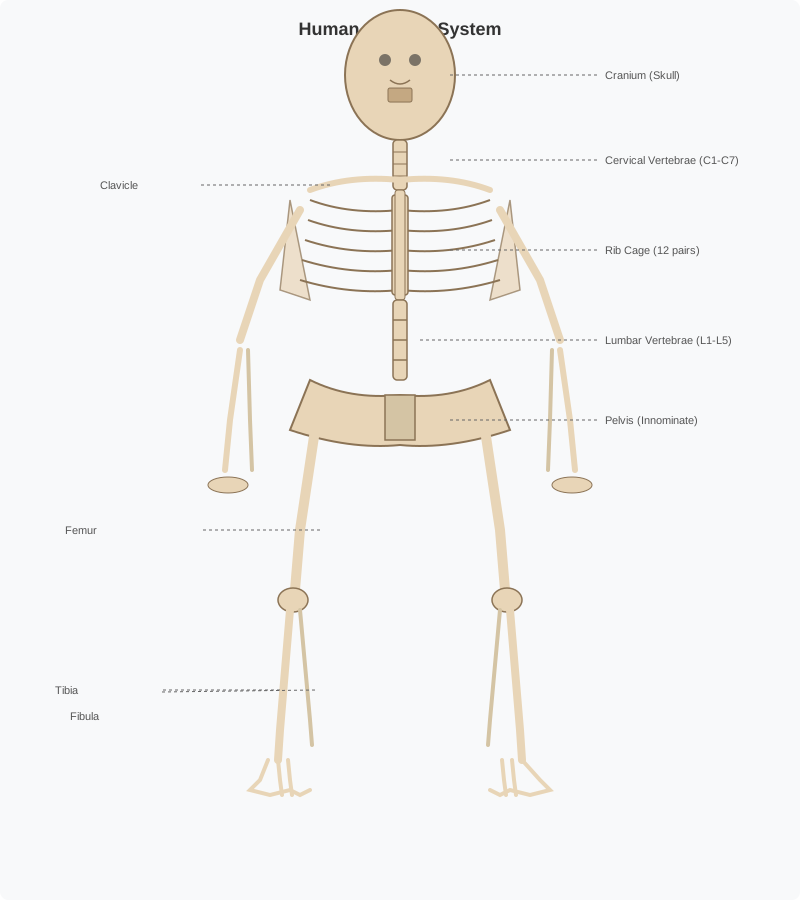
Skeletal landmarks for orthopaedic examination of the spine, hip, knee, and ankle with dermatomal distribution.
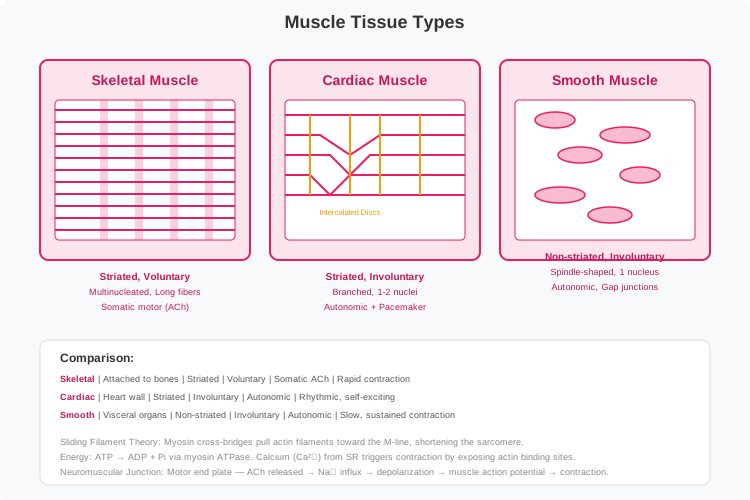
Muscle groups relevant to orthopaedic examination and myotomal testing for nerve root assessment.
Paediatric Orthopaedics: DDH and CTEV
Developmental Dysplasia of the Hip (DDH)
DDH encompasses a spectrum of hip abnormalities from acetabular dysplasia (shallow acetabulum) to hip subluxation and frank dislocation.
Screening: universal clinical examination (Ortolani and Barlow tests) at birth and 6-8 week check; selective ultrasound (Graf classification) for risk factors (breech presentation, family history, female sex, first-born, oligohydramnios).
Risk Factor
Relative Risk
Mechanism
Breech presentation
5-10x
Reduced hip flexion in utero → posterior capsule laxity
Female sex
4-6x
Increased ligamentous laxity (maternal relaxin)
Family history
10-12x (first-degree)
Genetic predisposition (autosomal dominant)
First-born
2x
Primigravida uterus — tighter intrauterine space
Oligohydramnios
4x
Reduced amniotic fluid → restricted fetal movement
Congenital muscular torticollis
8-20% concurrence
Intrauterine packaging disorder
Ortolani test
: reduction of a dislocated hip — a "clunk" is felt as the femoral head reduces into the acetabulum with abduction and forward pressure.
Barlow test
: provocation test — adduction and backward pressure displaces the femoral head posteriorly out of the socket. After 3 months, both become negative — clinical signs change to Galeazzi sign (asymmetric thigh creases, apparent shortening), limited abduction (<45deg in dislocated hip), and Trendelenburg gait once walking.
Treatment by Age
0-6 weeks
: Pavlik harness (dynamic flexion-abduction brace) — success rate 85-95%. Monitor with weekly ultrasound. If not reduced by 3 weeks, abandon Pavlik
6 weeks-6 months
: Closed reduction + hip spica cast (human position: 100deg flexion, 50deg abduction) — adductor tenotomy often needed. MRI/arthrogram to confirm concentric reduction
6-18 months
: Open reduction + hip spica +/- femoral shortening osteotomy +/- Salter or Pemberton acetabuloplasty
>18 months
: Open reduction + combined femoral and pelvic osteotomy
Graf Classification (Ultrasound)
Alpha Angle
Description
Type I
>60deg
Mature, normal hip
Type IIa
50-59deg
Physiologically immature (<3 months) — observe
Type IIb
50-59deg
Delayed ossification (>3 months) — treat
Type IIc
43-49deg
Critical zone — unstable, needs treatment
Type D
43-49deg
Decentred — everted labrum, needs reduction
Type III
<43deg
Dislocated — cartilaginous roof pushed cranially
Type IV
<43deg
Dislocated — labrum interposed, worst prognosis
Complications of DDH treatment: AVN of the femoral head (most feared — risk factors: forceful reduction, extreme abduction >60deg in spica), redislocation, residual dysplasia, and OA in adult life.
Never force abduction >60deg in spica cast — the "frog-leg" position compromises the MCFA leading to AVN. The "human position" (100deg flexion, 50deg abduction) is safe.
DDH risk factors: "BFFO" — Breech, Female, Family history, Oligohydramnios. Left hip more common (60%) due to left occiput anterior position in utero.
Q: A 3-month-old infant has limited hip abduction on examination. What is the next best investigation? A: Hip ultrasound (Graf method). X-ray is unreliable before 4-6 months because the femoral head is not yet ossified (appears at 4-6 months).
Quick-Revise One-Liners: DDH
Ortolani
reduces a dislocated hip;
Barlow
dislocates a reduced hip. After 3 months, both become negative.
Pavlik harness
is contraindicated if hip is not reducible — abandon after 3 weeks.
Galeazzi sign
: hips and knees flexed 90deg, one knee is lower = apparent femoral shortening = dislocated hip.
is used intraoperatively to confirm concentric reduction after closed reduction.
Salter osteotomy
(innominate) and
Pemberton osteotomy
(pericapsular) are pelvic osteotomies for acetabular dysplasia.
Congenital Talipes Equinovarus (CTEV / Clubfoot)
CTEV is a congenital deformity consisting of four components:
Cavus (high arch), Adduction of forefoot, Varus of hindfoot, Equinus of ankle.
The mnemonic is CAVE: Cavus, Adductus, Varus, Equinus.
Incidence: 1/1,000 live births. Bilateral in 50%. Associated with DDH (2%) and arthrogryposis.
CTEV Type
Features
Treatment Response
Idiopathic (positional)
Flexible, correctable passively at birth. No calf atrophy.
Excellent with Ponseti. Resolves quickly.
Idiopathic (rigid)
Fixed deformity. Calf muscle atrophy. Small heel. Deep creases.
Ponseti successful in 90%. May need repeat tenotomy.
Syndromic CTEV
Associated with arthrogryposis, spina bifida, Larsen syndrome.
Resistant to Ponseti. Often requires extensive surgery.
The
Ponseti method
is the gold standard treatment. Serial manipulation and casting (long-leg plaster) weekly for 5-8 weeks, correcting sequentially: (1) cavus, (2) adductus, (3) varus (abduction of foot in supination using head of talus as fulcrum), and finally (4) equinus (percutaneous Achilles tenotomy in 80-90%). Foot is held in foot abduction brace (FAB — Denis Browne bar) full-time for 3 months, then night-time until age 4-5 years. Relapse is common if bracing protocol not followed.
Ponseti correction sequence: "CAVE corrected top to bottom" — Cavus first (elevate first metatarsal), Adductus, Varus (evert hindfoot), finally Equinus (tenotomy). Never correct equinus before varus — risk of rocker-bottom deformity.
Q: What is the main cause of relapse in Ponseti-treated clubfoot? A: Non-compliance with foot abduction bracing. Relapse treated with repeat casting +/- repeat tenotomy, or in older children, with tendon transfers (TATT) for dynamic supination.
Q: Differentiate CTEV from congenital vertical talus (CVT). A: CTEV — heel varus, plantarflexed (equinus), rigid cavus, responds to Ponseti. CVT — heel valgus, dorsiflexed, rigid rocker-bottom foot, requires surgical reduction (reverse Ponseti then open reduction and talonavicular pinning). CVT associated with trisomy 18 and myelomeningocele.
Congenital talipes equinovarus showing the four deformity components: CAVE
Fracture Classification and Principles of Management
Fracture Classification
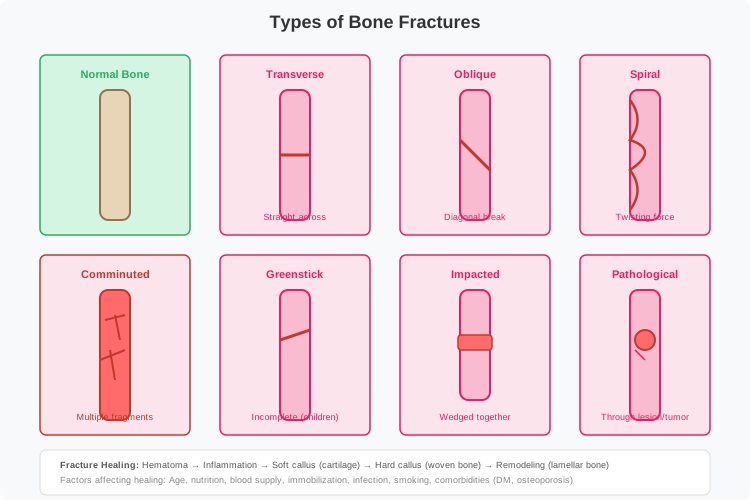
A fracture is a break in the structural continuity of bone.
The AO/OTA classification is the universal system, coding: bone, segment (proximal, diaphyseal, distal), and morphology (type A — simple, type B — wedge, type C — complex).
For paediatric fractures, the Salter-Harris classification of physeal injuries is critical, as growth disturbance can lead to progressive deformity.
Salter-Harris Classification
Type I
: slipped through the physis (5% growth arrest risk)
Type II
: through physis and metaphysis — most common (75%, 10% risk)
Type III
: through physis and epiphysis — into joint (25% risk)
Type IV
: through metaphysis, physis, and epiphysis (40% risk)
Type V
: crush injury to physis — worst prognosis (90% risk)
: good prognosis, treat with cast. May be radiographically occult.
SH II
: most common (75%). Thurston-Holland fragment is pathognomonic (metaphyseal fragment).
SH III
: Tillaux fracture (anterolateral distal tibia) and Triplane fracture are classic examples. Intra-articular — needs anatomic reduction.
SH IV
: medial malleolus fracture in children. Risk of growth arrest and angular deformity.
SH V
: rare, diagnosed retrospectively when growth arrest occurs. No specific acute treatment.
SH VI
(Rang): perichondral ring injury → peripheral physeal bar formation.
Growth arrest risk by grade
: SH I (5%), SH II (10%), SH III (25%), SH IV (40%), SH V (90%).
Principles of Fracture Management
The management of fractures follows the principles of
reduction, immobilisation, and rehabilitation
.
In children, due to remodelling potential (greatest in the metaphysis, in the plane of joint motion, and in younger children), up to 30deg of angulation may be acceptable in the midshaft femur of a 2-year-old.
Factor Favoring Remodelling
Factor Limiting Remodelling
Young age (greatest <8 years)
Adolescent age (limited growth remaining)
Metaphyseal location
Diaphyseal location
Angulation in plane of joint motion
Angulation perpendicular to joint motion
Translation deformities
Rotational deformities (DO NOT remodel)
Acceptable reduction: "2-by-age" rule — a 6-year-old can accept up to 12deg angulation.
Compartment Syndrome
The six Ps: pain out of proportion, paraesthesia, pallor, poikilothermia, paralysis, pulselessness.
Pulselessness is a LATE sign — do not wait for it!
Compartment syndrome is pressure within an osteofascial compartment exceeding capillary perfusion pressure (30 mmHg), causing muscle and nerve ischaemia and necrosis.
Quick-Revise One-Liners: Compartment Syndrome
Most common site
: anterior compartment of leg (tibial shaft fractures).
Pain out of proportion
and
pain on passive stretch
are earliest and most reliable signs.
Delta pressure
= diastolic BP minus compartment pressure. Delta p <30 mmHg = fasciotomy.
Irreversible muscle necrosis
begins after 4-6 hours of ischaemia. Nerve damage after 2 hours.
Intramedullary nailing is the treatment of choice for most diaphyseal fractures of the femur and tibia in adults.
External fixation is used for open fractures with significant contamination, polytrauma (damage control orthopaedics — DCO), and periarticular fractures with compromised soft tissue.
Principles of lag screw fixation: the screw must glide through the near cortex (overdrilled to screw outer diameter) and engage the far cortex (drilled to core diameter). This creates inter-fragmentary compression. A screw placed perpendicular to the fracture line maximises compression; perpendicular to the bone axis maximises shear resistance.
Damage Control Orthopaedics (DCO)
DCO is a staged approach: initial temporary stabilisation (external fixator, traction, splint) followed by delayed definitive fixation after physiological stabilisation (days 4-14).
Indications: haemodynamic instability, severe chest injury (AIS >2), severe head injury (GCS <8), coagulopathy, hypothermia (<35degC), metabolic acidosis (pH <7.2, lactate >5), multiple long bone fractures.
The alternative — early total care (ETC) — is safe in stable polytrauma patients. The
lethal triad
of trauma (hypothermia, acidosis, coagulopathy) is the key driver for DCO.
Timing of definitive fixation: avoid the inflammatory peak (days 2-4) when patient is most vulnerable to a "second hit" — secondary inflammatory surge from major surgery.
Open Fracture Management
Open fractures are orthopaedic emergencies:
IV antibiotics ASAP (co-amoxiclav 1.2 g or cefuroxime 1.5 g + metronidazole 500 mg)
Wound culture + tetanus prophylaxis
Thorough surgical debridement (excision of non-viable tissue, removal of foreign material)
Irrigation: 3 L (Type I), 6 L (Type II), 9 L (Type III)
Skeletal stabilisation
BOAST guidelines: definitive soft tissue cover within 72 hours for Type IIIB fractures
The traditional 6-hour rule for debridement is less important than the QUALITY of the debridement.
Q: What antibiotic regimen for a Type IIIB open tibial fracture with farmyard contamination? A: Cefazolin/cefuroxime (gram-positive) + aminoglycoside (gram-negative) + high-dose penicillin (clostridial cover for soil/fecal). Tetanus prophylaxis mandatory. Duration: 24-72 hours post-debridement, not prolonged.
AO/OTA fracture classification showing the systematic categorisation of fracture morphology and severity.
Skeletal anatomy demonstrating reduction techniques and fixation methods for common fracture patterns.