Baltimore classification of viruses — memorize each group
Most common trap:
Mycoplasma pneumoniae has no cell wall — not stained by Gram stain, not killed by beta-lactams. It incorporates cholesterol into its membrane, unique among bacteria.
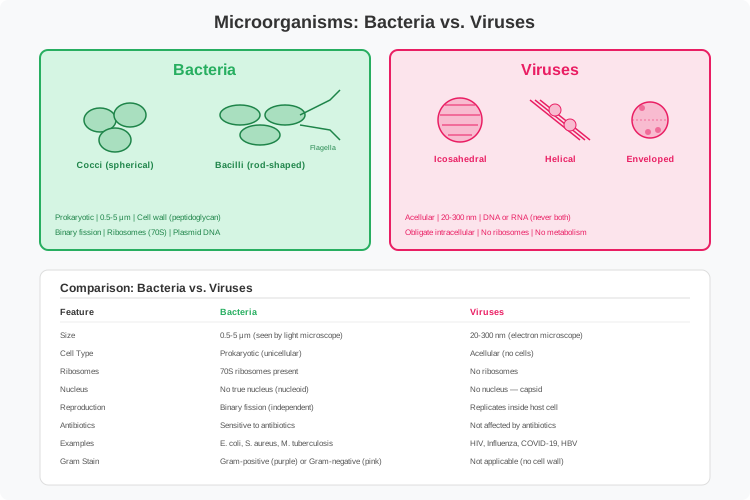
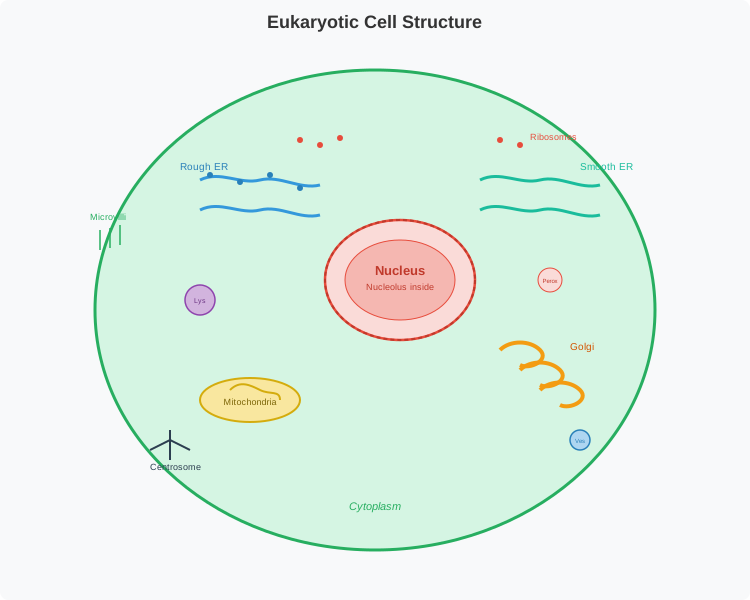
So here's the deal: microorganisms come in two broad flavors — prokaryotes (bacteria, archaea) and eukaryotes (fungi, protozoa, helminths) — plus viruses that sit in their own weird acellular category because they don't play by the rules.
Bacteria are primarily classified by Gram stain: Gram-positive bugs retain crystal violet thanks to a thick peptidoglycan layer, while Gram-negative ones lose the stain and pick up safranin (pink).
Beyond Gram stain, we sort them by shape (cocci, bacilli, spirilla, vibrios, spirochetes), oxygen needs (obligate aerobes, obligate anaerobes, facultative anaerobes, microaerophiles), and metabolic properties.
Bacterial Cell Structure
The cytoplasm contains the nucleoid (single circular chromosome, no nuclear membrane), ribosomes (70S, with 50S and 30S subunits, the target of many antibiotics — tetracyclines bind 30S, macrolides bind 50S, aminoglycosides bind 30S), plasmids (extrachromosomal circular DNA carrying antibiotic resistance genes, transmissible via conjugation), and inclusion bodies. The cytoplasmic membrane is a phospholipid bilayer with embedded proteins, lacking sterols (except mycoplasmas, which incorporate cholesterol for membrane stability).
(polysaccharide, antiphagocytic, basis for serotyping of S. pneumoniae — 90 serotypes; K1 capsule of E. coli associated with neonatal meningitis; poly-D-glutamic acid capsule of B. anthracis)
Flagella
(filament, hook, basal body; H antigen for serotyping — E. coli O157:H7; peritrichous=all around [E. coli, Salmonella, Proteus], monotrichous=single polar [Vibrio], lophotrichous=tuft at one end, amphitrichous=both ends, atrichous=none [Shigella])
Pili (fimbriae)
(adherence — P pili/pyelonephritis-associated pili of E. coli for UTIs, type IV pili of Neisseria and Pseudomonas for twitching motility; sex pilus for conjugation encoded by F plasmid)
Spores
(endospores in Bacillus and Clostridium — highly resistant to heat, radiation, chemicals, drying; dipicolinic acid chelates Ca2+ and stabilizes DNA; SASPs [small acid-soluble proteins] protect DNA from UV and chemicals; terminal spore=C. tetani [drumstick], subterminal=C. botulinum, central=B. anthracis)
Glycocalyx
(slime layer — loosely attached, biofilm formation in Pseudomonas aeruginosa, Staphylococcus epidermidis, Streptococcus mutans; facilitates adherence to catheters, prosthetics, and teeth)
Biofilm
(structured community of bacteria embedded in self-produced EPS [extracellular polymeric substance]; quorum sensing via autoinducers regulates biofilm formation; clinically significant in CF [P. aeruginosa], prosthetic joint infections [CoNS], and catheter-related bloodstream infections; 1000x more resistant to antibiotics than planktonic cells)
Viruses and Subviral Agents
Viruses are classified by nucleic acid type (DNA or RNA, single or double stranded, segmented or nonsegmented), capsid symmetry (icosahedral, helical, complex), presence of envelope, and genome organization (Baltimore classification).
Baltimore classification: Group I (dsDNA — Adenovirus, Herpesvirus, Poxvirus), Group II (ssDNA — Parvovirus B19), Group III (dsRNA — Rotavirus), Group IV (+ssRNA — Picornavirus, Flavivirus, Coronavirus), Group V (-ssRNA — Orthomyxovirus, Paramyxovirus, Rhabdovirus), Group VI (ssRNA-RT — Retrovirus [HIV]), Group VII (dsDNA-RT — Hepadnavirus [HBV]).
Viroids are small circular RNA molecules (infect plants, no protein coat). Prions are infectious proteins (PrPSc, misfolded form of normal cellular PrPC, causing transmissible spongiform encephalopathies — kuru, Creutzfeldt-Jakob disease, variant CJD).
NEET PG trap: Mycoplasma pneumoniae has no cell wall (not stained by Gram stain, not susceptible to penicillins/cephalosporins/glycopeptides). Mycoplasma has sterols (cholesterol) in its membrane — unique among bacteria. Ureaplasma urealyticum also lacks cell wall and requires urea for growth.
Bacterial shapes mnemonic: "Cocci = C (round/curved), Bacilli = B (rod-shaped)." Remember: "S-S-S-V-S" — Staphylococci, Streptococci, Spirochetes, Vibrios, Spirilla.
Clinical pearl: Capsular polysaccharide vaccines (PPSV23, MCV4, Hib conjugate) rely on T-cell-independent B-cell response thus poor response in children <2 years, solved by conjugating to protein carrier (CRM197, TT, DT).
PYQ: Gram staining differentiates bacteria based on? Answer: Peptidoglycan thickness — thick peptidoglycan in G+ve retains crystal violet-iodine complex after decolorization with acetone/alcohol; thin peptidoglycan in G-ve allows decolorization, cells counterstain pink with safranin.
1. Gram-positive: thick peptidoglycan, teichoic acids, no OM, no LPS, no porins
2. Gram-negative: thin PG, no teichoic acids, OM with LPS, porins present, periplasmic space
3. Mycoplasma: no cell wall (resistant to beta-lactams), membrane has cholesterol
4. Spores: Bacillus and Clostridium only; dipicolinic acid + SASPs = resistance
5. Capsule: antiphagocytic, polysaccharide (except B. anthracis — poly-D-glutamic acid)
6. Biofilm: EPS matrix, quorum sensing, 1000x more antibiotic tolerant than planktonic cells
7. All DNA viruses are dsDNA except Parvovirus (ssDNA); all RNA viruses are ssRNA except Reovirus/Rotavirus (dsRNA)
8. Flagella types: Monotrichous (Vibrio), Lophotrichous, Amphitrichous, Peritrichous (E. coli), Atrichous (Shigella)
Comparative structure of Gram-positive, Gram-negative bacteria and enveloped viruses
Microbial Growth, Metabolism, and Genetics
Bacterial Growth Curve
Bacterial growth follows a characteristic curve in batch culture:
Lag phase
— adaptation, synthesis of enzymes and metabolites (no increase in cell number)
Log (exponential) phase
— exponential growth, doubling at constant rate (E. coli: 20 min, M. tuberculosis: 15-24 hours, S. aureus: 30 min); most susceptible to antibiotics (cell wall synthesis inhibitors, fluoroquinolones)
Stationary phase
— nutrient depletion, growth rate = death rate, accumulation of toxic metabolites, sporulation in Bacillus and Clostridium
Death (decline) phase
— exponential decline in viable cell count; autolytic enzymes released
NEET PG Trap: Obligate anaerobes lack SOD and catalase thus cannot detoxify reactive oxygen species. Aminoglycosides are inactive against anaerobes because their uptake requires oxygen-dependent transport.
Bacterial Genetics
Horizontal gene transfer mechanisms:
Transformation
— uptake of free DNA from environment; natural competence in Neisseria, Haemophilus, S. pneumoniae, B. subtilis; Griffith's experiment (1928) with S. pneumoniae — R strain transformed to S strain by heat-killed S strain DNA = "transforming principle"
Conjugation
— direct cell-to-cell transfer via F (fertility) pilus; F+ donor to F- recipient; transfer of R plasmids carrying antibiotic resistance genes; Hfr when F plasmid integrates into chromosome; interrupted mating experiment by Lederberg and Tatum
Transduction
— transfer of bacterial DNA by bacteriophages. Generalized: any bacterial gene can be transferred by lytic phage during assembly (random packaging error). Specialized: only genes adjacent to prophage integration site (lambda phage transfers gal and bio genes in E. coli)
Transposons
— jumping genes capable of translocation within genome. IS elements: simplest, only transposase gene. Composite transposons: two IS elements flanking resistance genes (Tn5-kanamycin, Tn10-tetracycline, Tn3-ampicillin). Conjugative transposons (Tn916-tetM in Enterococcus)
Integrons
— gene capture systems: integrase (intI) + attachment site (attI) + promoter + gene cassettes. Class 1 integrons most common in clinical isolates; carry multiple resistance gene cassettes (aadA-aminoglycosides, dfr-trimethoprim, bla-beta-lactams). NDM-1, KPC carbapenemase genes often linked to integrons on MDR plasmids
Mechanisms of Genetic Variation
Mechanism
Description
Clinical Significance
Mutation
Spontaneous point mutation (~10^-6 to 10^-9 per gene per generation)
Reversible on-off switching of gene expression by slipped-strand mispairing/inversion
Flagellin phase variation in Salmonella; pili/PilE in N. gonorrhoeae; type 1 fimbriae in E. coli
Antigenic variation
Alteration of surface antigens via gene conversion from silent cassettes
Relapsing fever Borrelia (Vmp/Vsp); N. gonorrhoeae pilin variation
Cassette switching
SCCmec acquisition and replacement
mecA in different SCCmec types (I-XIII); SCCmec IV (smaller) in CA-MRSA; SCCmec II (larger, multi-R) in HA-MRSA
NDM-1 (New Delhi metallo-beta-lactamase) confers resistance to all beta-lactams including carbapenems, often carried on plasmids with multiple other resistance genes — truly pan-resistant Gram-negative infections are emerging. Ceftazidime-avibactam, meropenem-vaborbactam, imipenem-relebactam, cefiderocol are newer options for CRE.
Ribosomal antibiotic targets: "30S = TA (Tetracyclines, Aminoglycosides); 50S = MaChLiN (Macrolides, Chloramphenicol, Lincosamides/clindamycin, oxazolidiNones/linezolid, streptogramiNs)." Think: 30S is smaller, only two letters fit (TA); 50S is larger, fits MaChLiN.
PYQ: Which of the following is NOT a mechanism of horizontal gene transfer in bacteria? (a) Transformation (b) Conjugation (c) Transduction (d) Transcription. Answer: (d) Transcription — this is gene expression, not gene transfer between bacteria.
1. Lag phase: adaptation; Log phase: exponential growth, most antibiotic-susceptible
2. Obligate aerobes: Mycobacterium, Pseudomonas, Bacillus, Nocardia (SOD + catalase present)
3. Obligate anaerobes: Clostridium, Bacteroides, Fusobacterium (no SOD/catalase; AGs ineffective)
4. Microaerophiles: Campylobacter (42C), Helicobacter (37C)
5. Transformation: Griffith (1928) — S. pneumoniae capsule switching, "transforming principle"
6. Conjugation: F plasmid via F pilus; Hfr strains transfer chromosomal genes
7. Generalized transduction: any gene; Specialized transduction: only adjacent genes
8. Integrons: gene capture + integrase + attI site + gene cassettes (Class 1 most clinically important)
9. 30S: Aminoglycosides (bactericidal), Tetracyclines (bacteriostatic)
10. 50S: Macrolides, Chloramphenicol, Clindamycin, Linezolid, Streptogramins
Bacterial growth phases and mechanisms of horizontal gene transfer
Special Culture Media and Antibiotic Classes
Special Culture Media — NEET PG High-Yield
Culture media provide nutrients for growth; selective media suppress unwanted organisms, differential media help distinguish organisms by biochemical reactions, and enrichment media favour growth of a target organism from a mixed specimen.
Medium
Organism
Type
Key Feature
Lowenstein-Jensen (LJ)
Mycobacterium tuberculosis
Selective (egg-based)
Malachite green inhibits contaminants; growth in 6-8 weeks; buff-coloured, rough ("breadcrumb") colonies
Thayer-Martin (MTM)
Neisseria (gonorrhoeae, meningitidis)
Selective
Chocolate agar + VCN (Vancomycin, Colistin, Nystatin) or VCNT (adds Trimethoprim); Martin-Lewis = MTM + anisomycin
Bordet-Gengou
Bordetella pertussis
Selective
Potato-glycerol-blood agar; "mercury drop" colonies after 3-7 days
MacConkey agar
Gram-negative rods
Selective + Differential
Bile salts + crystal violet inhibit G+ve; lactose fermenters=pink (E. coli, Klebsiella); non-fermenters=colourless (Salmonella, Shigella)
Tellurite medium (CTBA)
Corynebacterium diphtheriae
Selective
Potassium tellurite reduced to black tellurium; three colony types: gravis, intermedius, mitis
BCYE agar
Legionella pneumophila
Enriched
Buffered Charcoal Yeast Extract; L-cysteine + iron + alpha-ketoglutarate required
Alkaline peptone water (APW)
Vibrio cholerae
Enrichment
pH 8.6; Vibrio grows within 6h at surface pellicle; subculture to TCBS
TCBS agar
Vibrio species
Selective + Differential
V. cholerae=yellow (sucrose+); V. parahaemolyticus=blue-green (sucrose-); V. vulnificus=green
Chocolate agar
Haemophilus influenzae, Neisseria
Enriched
Heated blood releases X (hemin) and V (NAD) factors; satellite phenomenon near S. aureus
Inserts into G+ve membrane → depolarization; bactericidal
G+ve only; inactivated by surfactant → NEVER for pneumonia
Myopathy (CPK, rhabdo with statins), eosinophilic pneumonia
Bacteriostatic antibiotics "SECKT-Li": Sulphonamides, Erythromycin, Chloramphenicol, Ketolides, Tetracyclines, Linezolid. All others are generally bactericidal.
NEET PG Trap: Daptomycin is inactivated by pulmonary surfactant — NEVER use for pneumonia even if organism is susceptible in vitro. Vancomycin: bactericidal for Staph, bacteriostatic for Enterococcus.
Antibiotic-associated diarrhea (AAD) and C. difficile colitis: Most common with clindamycin (highest risk), 2nd/3rd gen cephalosporins, FQ. Always ask about recent antibiotic use (within 8 weeks) in diarrhea. Mild-moderate: oral metronidazole. Severe: oral vancomycin/fidaxomicin. Recurrent: fidaxomicin, bezlotoxumab, FMT.
Which antibiotic inhibits DNA gyrase? (a) Metronidazole (b) Ciprofloxacin (c) Rifampicin (d) Linezolid — Answer: (b) Ciprofloxacin — fluoroquinolones target DNA gyrase in G-ve and topoisomerase IV in G+ve.
PYQ: Which antibiotic acts by binding to D-Ala-D-Ala terminus? Answer: Vancomycin — binds D-Ala-D-Ala of peptidoglycan pentapeptide precursor blocking transglycosylation. VRE modify to D-Ala-D-Lac (vanA/B high-level) or D-Ala-D-Ser (vanC low-level).
Destroys item completely; toxic emissions (dioxins from PVC)
Moist vs Dry Heat Comparison
Feature
Moist Heat (Autoclaving)
Dry Heat (Hot Air Oven)
Temperature
121C
160C (or 170C)
Time
15-20 min
60 min (or 40 min at 170C)
Mechanism
Protein coagulation
Protein oxidation + charring
Efficacy
More effective (lower temp, shorter time)
Less effective
Corrosion
Corrosive (moisture)
No moisture → safe for sharps
Materials
Media, linen, rubber, glass
Glassware, oils, powders, sharps
Biological indicator
Geobacillus stearothermophilus
Bacillus subtilis var. niger
Chemical indicator
Browne tube (green→brown at 121C/15min)
Browne tube type 3
NEET PG Trap: Prions (PrPSc) are NOT killed by standard autoclaving (121C, 15 psi, 15 min)! Prion sterilization requires 134C at 30 psi for 3-5 minutes OR 1N NaOH for 1 hour OR sodium hypochlorite (20,000 ppm chlorine) for 1 hour. Common MCQ!
Biochemical ID: catalase (Staph vs Strep), coagulase (S. aureus vs CoNS), oxidase (Pseudomonas/Neisseria+; Enterobacteriaceae-), IMViC (E. coli=++--, Klebsiella=--++, Enterobacter=--++), urease (Proteus+, H. pylori+ — urea breath test/CLO test basis), TSI (glucose/lactose/sucrose ferment, gas, H2S).
Molecular diagnostics: PCR (conventional, real-time qPCR, multiplex, nested, RT-PCR for RNA viruses), 16S rRNA sequencing (universal bacterial ID; V1-V9 hypervariable regions; gold standard for non-culturable/novel bacteria), MALDI-TOF MS (protein spectral fingerprint — identifies bacteria/fungi in minutes from colonies).
: ATCC reference strains with each batch (E. coli ATCC 25922, S. aureus ATCC 25923, P. aeruginosa ATCC 27853); daily temp monitoring of incubators (35-37C), refrigerators (2-8C), freezers (-20C, -70C); sterility checks of media; antibiotic disc potency testing; pH testing of media
External QC (Proficiency testing/EQAS)
: periodic unknown samples from external agencies (IAMM EQAS in India, CAP in USA, NEQAS in UK); mandatory for NABL accreditation
Laboratory biosafety levels
: BSL-1 (non-pathogenic E. coli K-12 — open bench, sink), BSL-2 (S. aureus, HBV, HIV, Salmonella — BSC Class II, restricted access, autoclave), BSL-3 (M. tuberculosis, SARS-CoV-2, Coccidioides, Brucella, Rickettsia — BSC II/III, negative pressure, HEPA exhaust, respiratory protection), BSL-4 (Ebola, Marburg, Nipah, Lassa, CCHF — BSC III or positive pressure suit, complete isolation, chemical shower, dedicated air)
Q: Why is moist heat more effective than dry heat for sterilization? A: Moist heat is more effective because steam has higher heat capacity and releases latent heat of vaporization upon condensation → rapid protein denaturation. Standard: 121C, 15 psi, 15-20 min. Dry heat requires 160C for 60 min or 170C for 40 min. Prion sterilization: 134C at 30 psi for 3-5 min or 1N NaOH.
PYQ: Which medical device class requires sterilization per Spaulding? (a) Critical (b) Semi-critical (c) Non-critical (d) Environmental surfaces. Answer: (a) Critical items — enter sterile tissue/vascular system. Semi-critical items require minimum HLD.
1. Autoclave: 121C, 15 psi, 15-20 min — most reliable; prions need 134C, 30 psi, 3-5 min
2. Hot air oven: 160C, 60 min — glassware, oils, powders, sharps; no corrosion
3. Pasteurization: HTST 72C/15sec; NOT sterilization (spores survive)
4. Filtration: 0.22um removes bacteria; HEPA 0.3um for BSC; viruses pass through 0.22um
5. Gamma irradiation: 25 kGy; disposable plastics, sutures, pharmaceuticals
6. UV: 254 nm → thymine dimers; surface only, poor penetration
7. Biological indicators: Geobacillus stearothermophilus (autoclave); B. subtilis (dry heat)
8. Glutaraldehyde 2%: HLD at 20min; sterilant at 10h; alkaline pH
9. OPA: 12min HLD; stains protein gray; anaphylaxis in bladder Ca patients
10. Spaulding: Critical=sterilization; Semi-critical=HLD; Non-critical=LLD
11. BSL-3: M. tuberculosis, SARS-CoV-2; negative pressure, HEPA, respiratory protection
12. BSL-4: Ebola, Marburg, Nipah; positive pressure suits or BSC Class III
13. 70% alcohol > 100%: water needed for protein denaturation and penetration
14. Chlorhexidine: avoid in ear (ototoxic if TM perf) and eye (keratitis)
Physical and chemical sterilization, culture media, and laboratory diagnostic techniques