So your patient comes in with crushing chest pain — is it a heart attack? This chapter walks you through the entire ACS spectrum, how to read an ECG like a pro, and the reperfusion decisions that save lives.
In 30 seconds:
Ischemic heart disease is a blockbuster topic — expect 4-5 questions. Master the ACS spectrum, ECG localisation, MONA protocol, and post-MI secondary prevention.
Key exam topics:
MONA management & Killip classification
ECG localisation of MI (LAD vs RCA vs LCx)
Complications by timing: arrhythmia → rupture → Dressler
Most common trap:
Prinzmetal angina shows ST elevation mimicking STEMI — do NOT thrombolyse. Posterior MI (ST depression V1-V3) is a STEMI equivalent needing urgent reperfusion.
Ischemic heart disease (IHD) is myocardial ischemia due to imbalance between oxygen supply and demand, most commonly from atherosclerotic coronary artery disease (CAD).
Epidemiology: Leading cause of death worldwide. Accounts for ~30% of all medicine PG exam questions in cardiology.
NEET PG 2022: "Which coronary artery is most commonly occluded in inferior wall MI?" → RCA (Right Coronary Artery)
Predictable with exertion/emotion; relieved by rest/NTG
Unpredictable, progressive, or at rest; may not relieve with NTG
Duration
<5-10 minutes
>20 minutes or persistent
ECG
ST depression during pain, normal between episodes
ST changes ± T inversion or ST elevation; may persist
Biomarkers
Normal
Normal (UA) or elevated (MI)
Management
Medical therapy ± elective revascularization
Urgent revascularization + DAPT + anticoagulation
Plaque type
Stable fibrous plaque
Vulnerable/ruptured plaque
Vasospastic (Prinzmetal) Angina
Coronary artery vasospasm → transient transmural ischemia; typically occurs at rest (often midnight to early morning)
ECG: Transient ST elevation during pain that resolves with NTG
Diagnosis: Provocative testing (acetylcholine/ergonovine) during coronary angiography
Treatment: Calcium channel blockers (diltiazem/verapamil) and long-acting nitrates; avoid β-blockers (may worsen spasm via unopposed α-adrenergic activity)
Prinzmetal angina presents with ST elevation (mimicking STEMI) but pain resolves spontaneously and biomarkers are normal. Do NOT thrombolyse — it is vasospasm, not thrombotic occlusion.
Microvascular Angina (Cardiac Syndrome X)
Angina-like chest pain with normal epicardial coronaries on angiography; due to microvascular endothelial dysfunction and impaired coronary flow reserve
More common in women; associated with DM, HTN, and chronic inflammation
Diagnosis: Invasive coronary function testing (CFR <2.0, IMR ≥25)
Treatment: Statins, ACEi, CCBs, β-blockers, nitrates; consider ivabradine, ranolazine, or tricyclic antidepressants for refractory symptoms
Clinical Presentation
Classic: Severe crushing retrosternal chest pain (heaviness/pressure), radiating to left arm/neck/jaw/epigastrium
Atypical presentations (women, elderly, diabetics): Epigastric discomfort, dyspepsia, isolated dyspnea, syncope, confusion — do NOT rule out MI without ECG + troponin
MONA: Morphine, Oxygen, Nitrates, Aspirin — "MONA should be given to every MI patient"
A 55-year-old male with crushing chest pain for 2 hours, ECG shows STEMI. Door-to-balloon time must be <90 min for primary PCI. If transfer to PCI-capable center will take >120 min, give fibrinolytic therapy (tenecteplase) within 30 min of arrival.
Reperfusion: Primary PCI within 90 min (gold standard) OR Fibrinolysis within 30 min (if PCI unavailable within 120 min)
Absolute contraindications to fibrinolysis: Prior ICH, known structural cerebrovascular lesion, ischemic stroke within 3 months, active bleeding, recent major trauma/surgery
NEET PG 2021: "Absolute contraindication to thrombolysis in STEMI?" → Prior stroke within 3 months
DAPT: Aspirin + Ticagrelor/Prasugrel (loading dose followed by maintenance)
Time is muscle: Total ischemic time = patient delay + door-to-balloon time. Every 30-minute delay increases 1-year mortality by ~7.5%.
NEET PG 2021: "Which of the following is NOT a component of the TIMI risk score for UA/NSTEMI?" → Prior coronary stenosis ≥50% (Components: Age ≥65, ≥3 CAD risk factors, known CAD ≥50%, aspirin use past 7 days, ≥2 anginal events in 24h, ST deviation, elevated cardiac biomarkers)
NEET PG 2023: "In a patient with inferior wall STEMI and right ventricular involvement, which additional ECG leads must be obtained?" → Right precordial leads V3R and V4R — ST elevation ≥1mm in V4R is most sensitive and specific for RV infarction
Autoimmune pericarditis; NSAIDs/colchicine/steroids — now less common with early reperfusion era
A 60-year-old male with inferoposterior STEMI develops sudden hypotension 6 hours post-PCI. JVP is 14 cm H2O, lungs are clear. BP 80/50. ECG shows ST elevation in II, III, aVF and V4R. Diagnosis: RV infarction complicating inferior STEMI. Management: IV fluids (aggressive volume resuscitation) and inotropic support; avoid nitrates and diuretics.
"Persistent ST elevation post-MI" → think LV aneurysm, NOT recurrent ischemia. Confirm with echocardiography showing dyskinetic segment.
Wellens syndrome (critical LAD stenosis): Deeply inverted or biphasic T waves (≥2 mm) in V2-V3 with isoelectric/minimally elevated ST, normal/mildly elevated troponin, and chest pain-free interval. This is a HIGH-RISK pattern for impending anterior STEMI — do NOT perform stress testing; send for urgent coronary angiography.
A 50-year-old male with chest pain that resolved spontaneously. ECG shows deep symmetrical T-wave inversions in V2-V4 with isoelectric ST segments. Troponin is mildly elevated at 0.5 ng/mL. He is pain-free at presentation. This is Wellens syndrome type B (critical LAD stenosis, 95% occlusion). Urgent coronary angiography confirmed the diagnosis; successful PCI was performed.
ECG localization of MI: "LAD = Septal (V1-V2) + Anterior (V3-V4); LCx = Lateral (I, aVL, V5-V6); RCA = Inferior (II, III, aVF)." Posterior MI (dominant R wave, ST depression in V1-V2) → suspect LCx or RCA occlusion. RV MI → add right precordial leads V3R, V4R.
"New holosystolic murmur post-MI" → Differential: Papillary muscle rupture (MR, apex radiation) vs Ventricular septal rupture (VSR, LLSB, thrill + step-up in O2 from RA to RV). Echo is diagnostic — do NOT wait for hemodynamic collapse before imaging.
A 42-year-old male with anterior STEMI, BP 140/90, HR 100, at a PCI-capable center at 10:00 AM (onset 9:00 AM). Door-to-balloon target <90 minutes → taken for primary PCI — successful DES to proximal LAD. DAPT started (aspirin + ticagrelor). LVEF 45% post-PCI. Started on atorvastatin 80 mg, bisoprolol 5 mg, ramipril 2.5 mg. Discharged day 3. Plan: DAPT × 12 months, lifelong statin + ACEi + BB.
NEET PG 2023: "Pharmacoinvasive strategy for STEMI?" --> Fibrinolysis at non-PCI center followed by routine early coronary angiography within 3-24 hours, with PCI if indicated (TRANSFER-AMI trial).
ECG Localization of MI -- Expanded
Territory
Artery
ECG Leads
Reciprocal
Septal
LAD (septal)
V1-V2
None
Anterior
LAD
V3-V4
Inf leads
Anteroseptal
LAD
V1-V4
Inf leads
Anterolateral
LAD/LCx
V3-V6, I, aVL
II, III, aVF
Inferior
RCA (80%)/LCx
II, III, aVF
I, aVL
Posterior
RCA/LCx
Tall R V1-V3, ST↓ V1-V3
Ant ST↓
RV Infarction
Prox RCA
V3R, V4R (ST↑ >=1mm)
--
Antiplatelet Therapy Comparison
Feature
Ticagrelor
Prasugrel
Clopidogrel
Class
Reversible P2Y12 antag
Irreversible P2Y12 antag
Irreversible P2Y12 antag
Onset
Rapid (30 min)
Rapid (30 min)
Slow (2-6h, prodrug)
Dyspnea
Yes (~14%)
No
No
Contraindication
Severe hepatic impair
>75yr, <60kg, prior stroke/TIA
CYP2C19 poor metabolizer
Cardiac Biomarkers Timeline
Biomarker
Rise
Peak
Normalizes
Use
Troponin (hs-cTn)
1-3h
12-24h
7-14 days
Most sensitive & specific
CK-MB
3-6h
12-24h
48-72h
Reinfarction detection
Myoglobin
0.5-2h
6-9h
12-24h
Earliest, low specificity
TIMI risk score: "ABCD-STE" -- Age >=65 (1), >=3 CAD risk factors (1), CAD >=50% prior (1), Aspirin use 7d (1), >=2 angina events 24h (1), ST deviation >=0.5mm (1), Elevated biomarkers (1). Score >=3 = high risk.
DAPT score for prolonged DAPT: Age >=75 (-2), 65-74 (-1), <65 (0); Smoking (1); DM (1); Prior PCI/MI (1); Index PCI of MI (1); Paclitaxel-eluting stent (1); Stent diameter <3mm (1); CHF/LVEF <30% (2); SVG PCI (2). Score >=2 = benefit >12 months DAPT.
A 62F diabetic with indigestion x 6h. No chest pain. ECG: ST depression V4-V6. Troponin 1.8. Dx: NSTEMI with atypical presentation. Treat: DAPT + enoxaparin + statin + early invasive strategy within 24h.
Posterior MI (ST depression V1-V3 + tall R) is STEMI EQUIVALENT -- needs emergent reperfusion. Obtain V7-V9. Do NOT misclassify as NSTEMI.
Coronary artery anatomy showing territories supplied by LAD, LCx, and RCA with corresponding infarct locations.
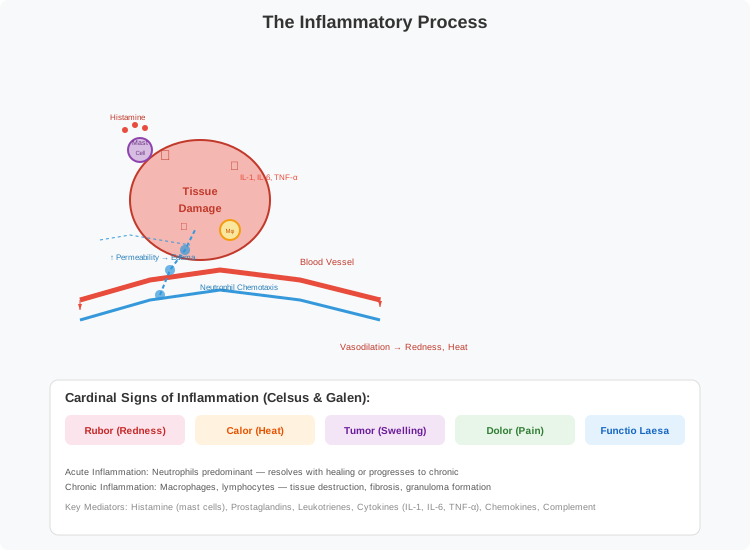
Inflammatory cascade in atherosclerosis: endothelial activation, monocyte infiltration, foam cell formation, and plaque progression.
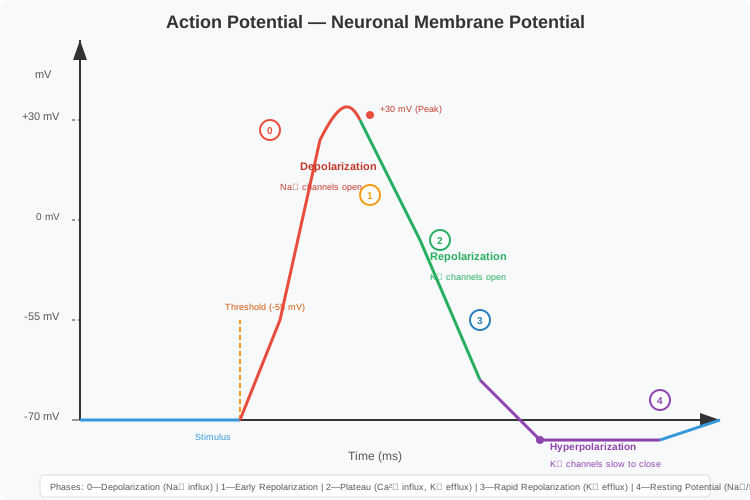
Cardiac action potential phases and how ischemia leads to electrical instability (VT/VF).
Heart Failure and Cardiomyopathies
Heart failure (HF) is a clinical syndrome of dyspnea, fatigue, and fluid retention due to structural/functional cardiac impairment affecting ventricular filling or ejection.
HF affects ~2% of adults, rising to >10% in those >70 years. High-yield topic with 3-4 questions in every PG exam.
Classification by LVEF
Type
LVEF
Key Features
HF with reduced EF (HFrEF)
≤40%
Systolic dysfunction; responds to neurohormonal blockade; ICD/CRT indicated
HF with mildly reduced EF (HFmrEF)
41-49%
Intermediate; treat like HFrEF (likely benefit from same therapies)
NYHA class is about symptom severity; ACC/AHA stage is about disease progression. Do NOT confuse them. A patient with mild symptoms but severe structural disease = NYHA II + Stage C.
HFpEF is NOT simply diastolic dysfunction — it is a systemic syndrome driven by comorbidities (obesity, HTN, DM, aging) → systemic inflammation → coronary microvascular dysfunction → myocardial stiffening
Key mechanisms: ↑ oxidative stress, ↓ NO bioavailability → impaired cGMP-PKG signaling → hypophosphorylation of titin → increased passive tension of cardiomyocytes
Myocardial fibrosis (collagen deposition) due to TGF-β activation → further diastolic stiffness
Pulmonary hypertension and RV dysfunction are common and worsen prognosis
HFpEF patients often have normal resting diastolic parameters on echo (especially if mild). Diagnosis requires elevated filling pressures on exercise or invasive hemodynamics (PCWP at rest >15 mmHg or exercise >25 mmHg).
Acute Decompensated HF Management
Hemodynamic profiles guide therapy:
"Wet and Warm" (congested, perfused) → IV Diuretics (furosemide 2× oral dose)
"Wet and Cold" (congested, hypoperfused) → Inotropes (dobutamine) ± diuretics
"Dry and Warm" → No congestion, optimize oral therapy
"Dry and Cold" → Rare; cautious volume expansion
IV Furosemide: Starting dose = 2× oral dose; continuous infusion if high dose required
Vasodilators: Nitroglycerin or Nitroprusside for hypertensive patients
Five drug classes proven to reduce mortality in HFrEF:
Drug Class
Examples
Mechanism
Mortality Benefit
β-blocker
Bisoprolol, Carvedilol, Metoprolol succinate
↓ HR, ↓ contractility, ↓ remodeling
+++ (3-6 months to see benefit)
ACEi/ARB
Ramipril, Lisinopril; Valsartan, Losartan
↓ Angiotensin II + aldosterone
+++ (start early, titrate to target)
MRA
Spironolactone, Eplerenone
Aldosterone receptor antagonist
++ (monitor K+ and renal function)
ARNI
Sacubitril/Valsartan
Neprilysin inhibitor + ARB
+++ (superior to ACEi; replace ACEi when symptoms persist)
SGLT2i
Dapagliflozin, Empagliflozin
↓ HF hospitalization + CV mortality
++ (independent of diabetes)
A 62-year-old with HFrEF (LVEF 30%) on bisoprolol, ramipril, and spironolactone: still NYHA III. Add dapagliflozin AND switch ramipril to sacubitril/valsartan. His EF rises to 40% over 6 months.
NEET PG 2022: "Which drug class provides the greatest mortality reduction in chronic HFrEF?" → Beta-blockers (approximately 35% relative risk reduction in all-cause mortality when combined with ACEi — CIBIS-II, MERIT-HF, COPERNICUS trials)
H2FPEF score for HFpEF diagnosis: Heavy (BMI >30) = 2 pts, Hypertensive (≥2 antihypertensives) = 1 pt, atrial Fibrillation = 3 pts, Pulmonary hypertension (echo PAP >35) = 1 pt, Elderly (age >60) = 1 pt, Filling pressure (E/e' >9) = 1 pt. Total ≥6 = high probability of HFpEF.
Beta-blockers reduce mortality in chronic stable HFrEF but are contraindicated in acute decompensated HF with cardiogenic shock or significant volume overload. Initiate beta-blockers only AFTER the patient is euvolemic and off IV inotropes. However, do NOT abruptly stop chronic beta-blocker therapy in acute HF unless absolutely necessary (shock, bradycardia, severe bronchospasm).
Device Therapy
ICD (Implantable Cardioverter-Defibrillator): Primary prevention of SCD when LVEF ≤35%, NYHA II-III, on optimal medical therapy
CRT (Cardiac Resynchronization Therapy): Biventricular pacing for LBBB + QRS >150 ms + LVEF ≤35%
CRT-P vs CRT-D: CRT with defibrillator (CRT-D) if life expectancy >1 year; CRT-P (pacemaker only) if advanced age/comorbidities
NEET PG 2020: "Indication for ICD in HFrEF?" → LVEF ≤35%, NYHA II-III, optimal medical therapy
Post-MI ICD timing: Must wait ≥40 days after MI and ≥3 months after revascularization before ICD implantation (LVEF may improve)
Advanced HF Therapies — LVAD and Transplant
Indications for advanced HF referral: Persistent NYHA III-IV despite optimal therapy, frequent hospitalizations, progressive end-organ dysfunction, inability to wean inotropes
LVAD (Left Ventricular Assist Device): Bridge to transplant (BTT) or Destination therapy (DT). Durable LVAD (HeartMate 3) improves survival and QoL in end-stage HF
LVAD complications: Pump thrombosis (↑ LDH, ↑ power spikes, hemolysis → treat with anticoagulation +/- pump exchange), GI bleeding (AV malformations from ↓ pulsatility), Driveline infection, RV failure, Stroke
Heart transplantation: Gold standard for end-stage HF. 1-year survival ~90%, 5-year ~75%
Contraindications: Fixed pulmonary HTN (PVR >5 WU), active infection, active malignancy, irreversible renal/hepatic failure, psychosocial instability
Rhythm/rate control → EF normalizes in weeks-months
Stress cardiomyopathy (Takotsubo)
Severe emotional/physical stress → catecholamine surge
Apical ballooning, mimics STEMI but coronaries normal; postmenopausal women
Supportive care, β-blockers; LV function normalizes in weeks
Noncompaction cardiomyopathy
Genetic (arrested myocardial compaction)
Prominent LV trabeculae, deep intertrabecular recesses; presents with HF, arrhythmia, emboli
HF therapy, anticoagulation, ICD
A 32-year-old female, 2 months postpartum, presents with dyspnea and bilateral pedal edema. Echo shows LVEF 30%. She is breastfeeding. Diagnosis: Peripartum cardiomyopathy. Start β-blocker (metoprolol XL), consider hydralazine + nitrates (instead of ACEi during lactation), and oral anticoagulation (LV thrombus risk). Advise against future pregnancies.
A 55-year-old man with chronic AF (HR 140-160 for months), LVEF 35%. Rhythm control with amiodarone + electrical cardioversion. Follow-up echo 3 months later: LVEF 55%. Diagnosis: Tachycardia-induced cardiomyopathy — fully reversible.
A 70-year-old hypertensive female with obesity presents with progressive exertional dyspnea and pedal edema. LVEF 60%, E/e' 14, left atrial volume index 40 mL/m², BNP 250 pg/mL. H2FPEF score = 7 (BMI 34 + HTN on 2 drugs + age >60 + E/e' >9). Diagnosis: HFpEF. Management: Empagliflozin (EMPEROR-Preserved trial), diuretics for congestion, BP control, and lifestyle modification including weight loss.
HCM vs Athlete's heart: HCM has LV wall thickness >15mm, small LV cavity, abnormal diastolic function, family history. Athlete's heart has wall thickness <15mm, large LV cavity, normal diastology, regresses with detraining.
Takotsubo vs Anterior STEMI: Both present with chest pain, ST elevation, and troponin elevation. Takotsubo has no coronary obstruction on angiography, shows apical ballooning on LV gram, and LV function recovers spontaneously. Do NOT thrombolyse if angiography is available.
1. HFpEF (≥50%) vs HFrEF (≤40%) — treat differently
2. "Wet and Warm" = Diuretics; "Wet and Cold" = Inotropes
3. Pillars of HFrEF: β-blocker, ACEi/ARB, MRA, ARNI, SGLT2i — all improve survival
4. ICD: LVEF ≤35%, NYHA II-III, on optimal therapy (>40 days post-MI)
5. HCM = autosomal dominant (sarcomere), β-blockers first-line, ICD for high SCD risk
6. ARNI superior to ACEi — switch when symptoms persist on optimal therapy
7. Peripartum CM: avoid ACEi/ARB during pregnancy; use hydralazine + nitrates
8. Takotsubo: apical ballooning, normal coronaries, reversible, postmenopausal women
9. LVAD: Bridge to transplant or destination therapy; watch for pump thrombosis and GI bleeding
10. HFpEF: systemic inflammation → microvascular disease → titin hypophosphorylation → LV stiffness
11. Amyloid CM: low voltage + LVH; technetium-PYP scan for ATTR; tafamidis treatment
12. HCM vs AS: Valsalva increases in HCM, decreases in AS; squatting decreases in HCM
13. HCM SCD risk: FHx SCD <50yr, syncope, NSVT, LVH >30mm, LGE on CMR, apical aneurysm
14. CRT: LBBB + QRS >150ms + LVEF <=35% -> biventricular pacing
15. Tachycardia-induced CM: fully reversible with rhythm/rate control
HFrEF vs HFpEF -- Comparison
Feature
HFrEF
HFpEF
LVEF
<=40%
>=50%
Demographics
Younger, male
Older, female, obese, HTN
LV geometry
Eccentric hypertrophy, dilated LV
Concentric hypertrophy, small LV
BNP/NT-proBNP
Markedly elevated
Mildly elevated (may be normal)
Response to neurohormonal Rx
Strong mortality benefit
No mortality benefit from ACEi/ARB/BB/MRA
SGLT2i benefit
Proven (DAPA-HF, EMPEROR-Reduced)
Proven (EMPEROR-Preserved, DELIVER)
HCM vs AS -- Murmur Maneuvers
Maneuver
HCM
Aortic Stenosis
Valsalva
Increase murmur
Decrease murmur
Standing
Increase murmur
Decrease murmur
Squatting
Decrease murmur
Increase or no change
Handgrip
Decrease murmur
No change or slight decrease
HCM SCD risk (ESC 2023): "FUNSML" -- Family hx SCD <50yr, Unexplained syncope, NSVT on Holter, Severe LVH >30mm, Massive LGE on CMR, LV apical aneurysm. >=1 major -> ICD.
Amyloid CM clues: "LORE" -- Low voltage on ECG (despite LVH on echo), Orthostatic hypotension, Restrictive physiology, Elevated BNP disproportionate. AL vs ATTR: AL = lambda LC + chemo; ATTR = Tc-PYP scan + tafamidis.
NEET PG 2023: "Athlete's heart vs HCM?" --> Regression of LVH with detraining in athlete's heart; no regression in HCM.
Amyloid CM: Low voltage + LVH on echo is pathognomonic. But 20% have normal voltage. HFpEF + thick LV + disproportionately high BNP -> screen with serum/urine IFE + free light chains.
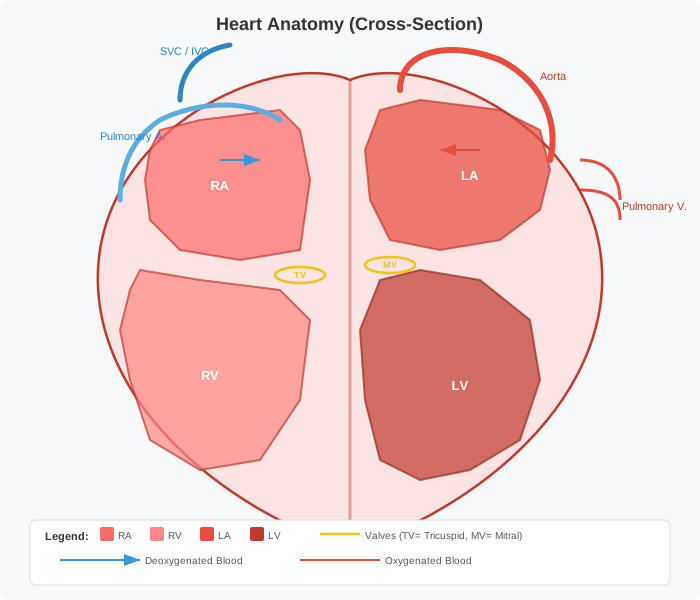
Cardiac anatomy with pathophysiologic mechanisms of heart failure and cardiomyopathy subtypes.
Cellular changes in heart failure: myocyte hypertrophy, fibrosis, titin isoform shifts, and impaired calcium handling.
Valvular heart disease: Stenosis (failure to open → pressure overload) or Regurgitation (failure to close → volume overload) of cardiac valves.
Aortic Stenosis (AS)
Most common valvular disease in elderly (degenerative calcific AS) — risk factors: age, HTN, DM, smoking, hyperlipidemia
Classic triad: Angina, Syncope (exertional), Dyspnea (HF) — onset of symptoms = poor prognosis (average survival: 2-3 years after symptom onset)
Murmur: Late-peaking crescendo-decrescendo systolic ejection murmur at RUSB radiating to carotids
Pulsus parvus et tardus: Delayed and weakened carotid upstroke
Severe AS: Valve area <1.0 cm², mean gradient >40 mmHg, jet velocity >4 m/s
Low-flow low-gradient AS (LVEF <50%, AVA <1.0 but mean gradient <40): Dobutamine stress echo to distinguish true severe AS (↑ gradient, fixed AVA) from pseudosevere AS (↑ AVA)
Treatment: SAVR or TAVR for symptomatic severe AS —
TAVR is first-line in elderly + intermediate-risk; SAVR preferred for young, bicuspid, or complex anatomy
AS murmur intensity does NOT correlate with severity. A soft murmur with a late-peaking contour can indicate severe AS. Listen for the carotid upstroke — parvus et tardus is the clinical clue.
Aortic Stenosis Severity Grading: "3-4-5 Rule" — Mild: AVA >1.5 cm², mean gradient <20 mmHg, jet velocity <3 m/s; Moderate: AVA 1.0-1.5, mean gradient 20-40, jet velocity 3-4; Severe: AVA <1.0 cm², mean gradient >40 mmHg, jet velocity >4 m/s. "Severe = Less than 1, More than 40, Faster than 4."
NEET PG 2023: "Which of the following is an indication for TAVR over SAVR in severe aortic stenosis?" → Age ≥75 years, Prior cardiac surgery, Porcelain aorta, Hostile chest wall, Frailty (STS predicted risk of mortality >8%)
Low-flow low-gradient AS: Do NOT assume the AS is not severe just because gradient is low. Perform dobutamine stress echo — if stroke volume increases but AVA stays <1.0, it is true severe AS needing intervention.
Chronic AR: Volume overload → LV dilation → eventually LV dysfunction. Vasodilators (nifedipine) delay surgery. AVR indicated when symptoms or LVEF ≤55% or LVESD >50 mm
Acute AR (aortic dissection, IE): Sudden severe LV volume overload → acute pulmonary edema, hypotension; surgical emergency
A 60-year-old with acute type A aortic dissection presents with severe tearing chest pain radiating to the back, differential BP between arms, and acute pulmonary edema. A new early diastolic decrescendo murmur is heard at LUSB. TEE shows severe aortic regurgitation with an intimal flap and aortic root dilation. This is acute severe AR from aortic dissection — immediate operative repair is required.
Prosthetic valve obstruction: Pannus (fibrous tissue ingrowth) vs Thrombus. Pannus is chronic, progressive, and more common on mechanical aortic valves — requires reoperation. Thrombus is acute, more common on mechanical mitral valves with subtherapeutic INR — may respond to slow-infusion fibrinolysis. Cine-fluoroscopy + TEE differentiate. DOACs are contraindicated in mechanical valves (RE-ALIGN trial showed increased thromboembolic and bleeding events).
Mitral Stenosis (MS)
Nearly always rheumatic (in developing countries) or degenerative calcification (elderly)
Murmur: Mid-diastolic opening snap + rumbling at apex; pre-systolic accentuation in sinus rhythm; opening snap closer to S2 = more severe stenosis
Complications: AF (30-40%), thromboembolism, pulmonary HTN, hemoptysis
Severe MS: Valve area <1.5 cm², mean gradient >5-10 mmHg
Anticoagulation indicated if: AF, prior embolic event, or left atrial thrombus (target INR 2-3 for mechanical valve or AF)
Mitral Regurgitation (MR)
Feature
Primary MR
Secondary (Functional) MR
Cause
MVP, Rheumatic, IE, Chordal rupture
LV dilation (ischemic/DCM)
Murmur
Holosystolic, high-pitched, apex → axilla
Holosystolic, apical
Treatment
Mitral valve repair (preferred over replacement)
Treat underlying LV disease (GDMT ± TEER)
Acute severe MR from papillary muscle rupture 4 days post-STEMI: patient develops sudden pulmonary edema, hypotension, and a new holosystolic murmur. This is a surgical emergency — emergency mitral valve repair.
Prosthetic valve selection: Mechanical if <50-60 years (lifetime anticoagulation acceptable); Bioprosthetic if >65-70 years or contraindication to warfarin
Pregnancy: Bioprosthetic preferred (warfarin is teratogenic — can use LMWH in 1st trimester if mechanical valve)
Prosthetic valve thrombosis: Treat with IV heparin → if obstructive, consider fibrinolysis or reoperation
IE Prophylaxis Guidelines
IE prophylaxis is indicated ONLY for HIGH-RISK patients undergoing HIGH-RISK procedures:
High-risk patients: Prosthetic valve, prior IE, unrepaired cyanotic CHD, repaired CHD with residual defect, cardiac transplant with valvulopathy
Prophylaxis: Amoxicillin 2 g PO 30-60 min before procedure (or ampicillin 2 g IV/IM). Penicillin allergy: Clindamycin 600 mg PO/IV or Azithromycin 500 mg PO
NOT indicated for: GI/GU procedures (even in high-risk patients), routine dental cleaning, injections, tattoos, piercings
Autoimmune sequel of Group A Streptococcus pharyngitis (M-protein molecular mimicry → cross-reactive antibodies attack cardiac tissue)
Jones Criteria (updated): Major = Carditis (pancarditis), Polyarthritis, Chorea (Sydenham), Erythema marginatum, Subcutaneous nodules; Minor = Fever, Arthralgia, ↑ ESR/CRP, prolonged PR interval
Diagnosis requires: 2 major OR 1 major + 2 minor + evidence of antecedent GAS infection (↑ASO titer, positive throat culture, or rapid Strep test)
Most commonly affects mitral valve (MS >> MR), then aortic valve; tricuspid and pulmonic rarely affected
Chronic RHD: progressive scarring → valve stenosis (MS most classic); prophylaxis with benzathine penicillin G 1.2 million U IM q3-4 weeks until age 40 (or longer if high-risk)
Multivalvular Disease
Combined AS + AR from bicuspid valve or rheumatic disease — LV faces both pressure and volume overload → earlier symptom onset
Combined MS + MR (rheumatic): Heterogeneous hemodynamics — valve surgery (MVR) is definitive
In combined AS + AR, the AR jet velocity may overestimate AS gradient. The diastolic runoff lowers mean gradient — use valve area (continuity equation) to assess true AS severity.
A 28-year-old IVDU presents with fever, back pain, and hematuria. HR 110, Temp 39.5°C, JVP elevated, loud holosystolic murmur at LLSB. Blood cultures grow S. aureus. TEE shows a 1.5 cm vegetation on the tricuspid valve. This is right-sided IE (tricuspid) — treat with IV nafcillin for 6 weeks. Consider surgery if persistent bacteremia or recurrent septic emboli.
A 65-year-old with a prosthetic aortic valve (placed 2 years ago) presents with fever × 3 weeks, new murmur, and splinter hemorrhages. Blood cultures grow S. bovis. Do colonoscopy — S. bovis bacteremia is associated with colorectal malignancy.
Janeway lesions (non-tender, palms/soles) vs Osler nodes (tender, fingers/toes): Students always confuse these. Janeway = embolic/vascular; Osler = immunologic. Both are minor Duke criteria but distinct.
Duke Major Criteria: "VEGETATION"
- Valve echo evidence (Vegetation, Abscess, Dehiscence)
- Organisms (2 positive blood cultures: S. viridans, S. bovis, HACEK, S. aureus, Enterococcus)
A 35-year-old IV drug user presents with fever, Janeway lesions, and a new murmur. Blood cultures grow S. aureus. Which valve is most commonly affected in IVDU? → Tricuspid valve (right-sided IE)
NEET PG 2022: "Which organism causes culture-negative IE in patients with colon cancer?" → Streptococcus bovis (now Streptococcus gallolyticus) — associated with colonic malignancy
Indications for Surgery in IE
Heart failure from valve dysfunction (most common indication)
Perivalvular abscess
Uncontrolled infection (persistent bacteremia after 7-10 days of appropriate antibiotics)
Recurrent emboli despite antibiotics
Large mobile vegetation >10 mm (especially on mitral valve)