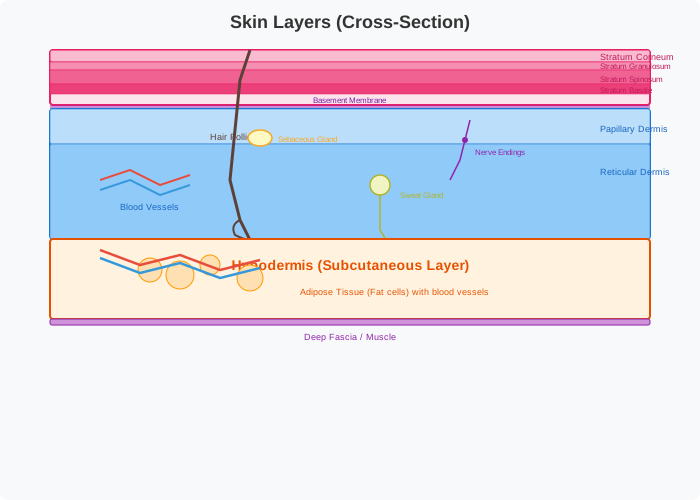
The skin is your body's largest organ — three layers (epidermis, dermis, hypodermis), five epidermal strata, and four key cell types working as a barrier, immune sentinel, and sensory interface.
Epidermal turnover: normal 28-30d, psoriasis 3-5d (silvery scale pile-up)
Desmoglein compensation theory explains blister depth in pemphigus subtypes
Most common trap:
Stratum lucidum is ONLY in thick skin (palms/soles); melanocytes are neural crest-derived (NOT keratinocytes); Langerhans cells are bone marrow-derived (NOT ectodermal).
Think of the skin as your body's largest organ — roughly 15% of your total body weight. It's built in three layers: the epidermis (that tough outer armor), the dermis (the structural scaffold underneath), and the hypodermis (the subcutaneous fat cushion). Each layer has a distinct job, and together they keep pathogens out, temperature regulated, and sensation online.
The skin is the largest organ of the body, accounting for approximately 15% of total body weight. It consists of three layers: the epidermis (keratinized stratified squamous epithelium), the dermis (connective tissue layer providing structural support), and the hypodermis (subcutaneous fat layer).
The epidermis is further divided into five strata: stratum basale (germinativum), stratum spinosum, stratum granulosum, stratum lucidum (present only in thick skin of palms and soles), and stratum corneum.
The key cell types of the epidermis: keratinocytes (90% of epidermal cells), melanocytes (derived from neural crest, produce melanin and transfer it to keratinocytes), Langerhans cells (bone marrow-derived dendritic cells, function as antigen-presenting cells), and Merkel cells (neuroendocrine cells involved in light touch sensation).
Filaggrin mutations cause ichthyosis vulgaris and are a major risk factor for atopic dermatitis.
PG-level PYQ: A 2-year-old child presents with generalized dry skin and fine scaling since infancy. Examination reveals hyperlinear palms and flexural eczema. Skin biopsy shows retention hyperkeratosis with a normal granular layer. Mutation in which gene is most likely responsible?
Options: (a) FLG, (b) KRT1, (c) STS, (d) ABCA12
Answer: (a) FLG
Explanation: Filaggrin (FLG) loss-of-function mutations cause ichthyosis vulgaris — the most common inherited ichthyosis. FLG is critical for keratin filament aggregation and stratum corneum barrier formation. STS mutations cause X-linked ichthyosis (steroid sulfatase deficiency, seen in males, dark scale), ABCA12 causes harlequin/lamellar ichthyosis, and KRT1/KRT10 cause epidermolytic ichthyosis with blistering.
Dermoepidermal Junction
Key components: hemidesmosomes (connect keratinocyte intermediate filaments to laminin 332), lamina lucida, lamina densa (type IV collagen), anchoring fibrils (type VII collagen). Defects in these underlie blistering disorders such as epidermolysis bullosa.
Cutaneous Microcirculation and Innervation
The cutaneous microcirculation is organized into two horizontal plexuses: the superficial plexus in the papillary dermis and the deep plexus at the dermal-hypodermal junction. Arteriovenous anastomoses (glomus bodies) in the acral skin regulate temperature.
Neural components: sensory nerves (A-delta and C fibers for pain, itch, temperature), autonomic nerves (sympathetic cholinergic for eccrine sweating, sympathetic adrenergic for piloerection and vasoconstriction), and specialized sensory structures (Meissner corpuscles for light touch, Pacinian corpuscles for pressure, Ruffini endings for stretch).
Epidermal Layers — Comparison Table
Layer
Key Features
Key Proteins
Clinical Relevance
Stratum basale
Single layer of columnar cells, mitotically active, attached to basal lamina via hemidesmosomes
Retention hyperkeratosis — corneocytes fail to shed properly
Lamellar ichthyosis
4-5 days (hyperproliferative)
Hyperproliferation with increased mitotic rate
Clinical Pearls — Skin Structure
Desmoglein compensation theory: In pemphigus vulgaris (anti-Dsg3), blisters occur in deep epidermis (suprabasal) because Dsg1 compensates for lost Dsg3 in superficial layers. In pemphigus foliaceus (anti-Dsg1), blisters are superficial (subcorneal) because Dsg3 compensates in deep layers. This explains the different cleavage planes.
Common traps: (1) Stratum lucidum is found ONLY in thick skin (palms/soles) — not in thin skin. (2) Melanocytes are present in the basal layer but are NOT keratinocytes — they are neural crest-derived. (3) Langerhans cells are bone marrow-derived (mesenchymal), NOT ectodermal like keratinocytes. (4) Merkel cells are the ONLY epidermal cells that are not dendritic — they are oval/round neuroendocrine cells.
Epidermal layers mnemonic (superficial to deep): "Come Let's Get Sun Burnt" — Corneum, Lucidum, Granulosum, Spinosum, Basale.
1. Epidermal turnover: normal 28-30 days → psoriasis 3-5 days (silvery scale pile-up)
2. Keratins 5/14 = basal layer; Keratins 1/10 = suprabasal/spinous layer
3. Filaggrin aggregates keratin filaments; FLG mutation = ichthyosis vulgaris + atopic dermatitis
4. Lamellar bodies (Odland bodies) = stratum granulosum → secrete ceramides, cholesterol, FFAs (barrier lipids)
5. Hemidesmosomes anchor basal keratinocytes to basal lamina via laminin 332 and integrin alpha-6-beta-4
6. Desmosomes connect adjacent keratinocytes via desmogleins and desmocollins (cadherin family)
7. Stratum lucidum = only in thick skin of palms and soles — high-yield exam fact
8. Corneocyte envelope = cross-linked proteins (loricrin 70%, involucrin, SPRs) + covalently bound lipids (ceramides)
9. UVB absorbed mainly by stratum corneum and upper spinosum; UVA penetrates deeper to dermis
10. Skin pH = 4.5-5.5 (acid mantle) — maintained by filaggrin breakdown products (urocanic acid, PCA), sebum, sweat
Cross-sectional anatomy of human skin showing all three layers and appendageal structures
Skin Immunology and Inflammation
Innate Immune System of Skin
The skin is a critical immunological organ with both innate and adaptive immune functions.
The innate immune system includes: the physical barrier (stratum corneum), antimicrobial peptides (cathelicidins, defensins, dermcidin), toll-like receptors (TLRs 1-10 expressed on keratinocytes and dendritic cells), and innate immune cells (NK cells, gamma-delta T cells, macrophages, mast cells).
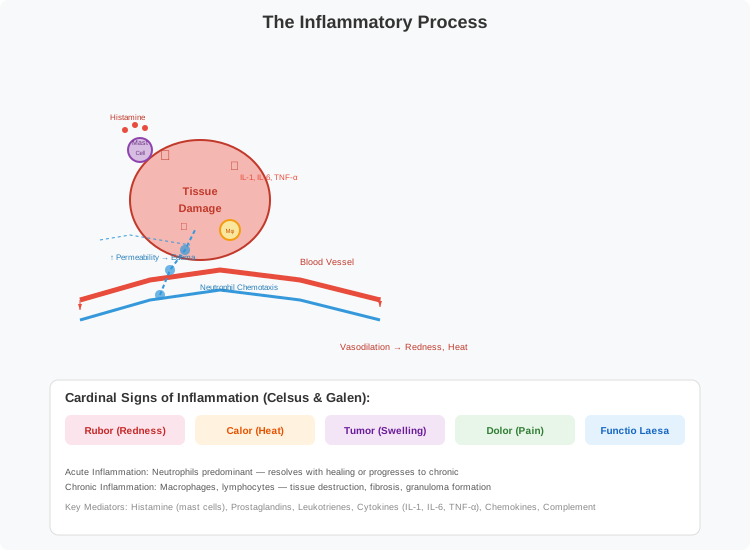
Keratinocytes express functional TLRs that recognize PAMPs and DAMPs, triggering NF-kB activation and production of pro-inflammatory cytokines (IL-1, IL-6, TNF-alpha, CXCL8).
Adaptive Immune System in Skin
Cutaneous lymphocyte-associated antigen (CLA) directs T cell homing to the skin.
T Cell Subset
Cytokines
Associated Disease
Th1
IFN-gamma, IL-2
Psoriasis, lichen planus
Th2
IL-4, IL-5, IL-13
Atopic dermatitis
Th17
IL-17, IL-22
Psoriasis (targeted by biologics)
The IL-23/Th17 axis is a central pathway in chronic plaque psoriasis targeted by: ustekinumab (anti-IL-12/23), secukinumab (anti-IL-17A), ixekizumab (anti-IL-17A), guselkumab (anti-IL-23p19).
Dendritic Cell Function
Langerhans cells reside in the suprabasal epidermis, capture antigens, migrate to draining lymph nodes, and present processed antigens to naive T cells. Plasmacytoid dendritic cells produce type I interferons (IFN-alpha, IFN-beta) and are involved in lupus erythematosus pathogenesis.
hBD-2 strongly induced in psoriasis by IL-17; deficient in AD
Dermcidin
Eccrine sweat glands
Antibacterial (S. aureus, E. coli)
Constitutively secreted in sweat; reduced in hidradenitis suppurativa
Psoriasin (S100A7)
Keratinocytes
Kills E. coli by zinc chelation
Highly overexpressed in psoriasis; absent in normal skin
RNase 7
Keratinocytes
Potent anti-staphylococcal activity
Deficient in AD skin — explains S. aureus colonization >90%
Atopic dermatitis paradox: Despite being a Th2-driven inflammatory disease, AD skin is characterized by REDUCED AMP production (cathelicidin, beta-defensins, RNase 7) — explaining why >90% of AD patients are colonized with S. aureus vs <5% of normal individuals. Th2 cytokines (IL-4, IL-13) suppress AMP induction. This is different from psoriasis where AMPs are UPREGULATED.
Th subsets and transcription factors: "T-bet rules Th1, GATA-3 drives Th2, ROR-gamma-t makes Th17, FoxP3 fixes Treg."
Cytokine cascade in psoriasis: "IL-23 lights the fire, IL-17 fans the flames, TNF keeps it burning." — IL-23 from DCs activates Th17; IL-17 drives keratinocyte hyperproliferation; TNF amplifies the loop.
1. CLA (cutaneous lymphocyte-associated antigen) = skin-homing receptor on T cells — binds E-selectin on dermal venules
2. Langerhans cells = bone marrow-derived, CD1a+, langerin (CD207)+, Birbeck granules on EM (tennis-racket shape)
3. Plasmacytoid dendritic cells = major source of type I IFN in lupus — produce IFN-alpha signature
4. Cathelicidin LL-37: processed by kallikrein 5 in rosacea → pro-inflammatory fragments
5. Th1/Th17 dominate psoriasis; Th2 dominates atopic dermatitis; Th17 defects → mucocutaneous candidiasis
6. NF-kB pathway: activated by TLRs, IL-1, TNF → keratinocyte cytokine production — central inflammatory hub
7. IL-31 = "pruritus cytokine" from Th2 cells — drives itch in AD, prurigo nodularis (targeted by nemolizumab)
8. IL-33, TSLP (thymic stromal lymphopoietin) = epithelial alarmins — trigger Th2 response in AD
9. Dermal DCs (CD11c+) are distinct from Langerhans cells and more important for psoriasis pathogenesis
10. JAK-STAT pathway: IFN-gamma → JAK1/JAK2 → STAT1; IL-4/IL-13 → JAK1/JAK3 → STAT6; IL-17 → STAT3
AIIMS pattern: Which antimicrobial peptide is selectively deficient in atopic dermatitis skin, predisposing to Staphylococcus aureus colonization?
Options: (a) Cathelicidin LL-37 (b) Beta-defensin-2 (c) Dermcidin (d) Both a and b
Answer: (d) Both a and b — cathelicidin and beta-defensins are reduced in AD due to Th2 cytokine (IL-4, IL-13) suppression of AMP induction. Dermcidin is produced by eccrine glands and not cytokine-regulated.
Cytokine pathways and inflammatory cell recruitment in cutaneous inflammation
Dermatopathology: Basic Patterns
Patterns of Cutaneous Inflammation
Dermatopathology is the study of histopathological changes in skin diseases. The basic patterns of inflammation include spongiotic, psoriasiform, lichenoid, vesiculobullous, granulomatous, and vasculopathic patterns.
Spongiotic Dermatitis
Characterized by intercellular edema (spongiosis) between keratinocytes, often with exocytosis of lymphocytes. Hallmark of eczematous dermatoses (atopic dermatitis, allergic contact dermatitis, nummular dermatitis).
In acute eczema, spongiosis produces intraepidermal vesicles (spongiotic vesicles); in chronic eczema, there is acanthosis, hyperkeratosis, and parakeratosis.
Psoriasiform Dermatitis
Shows regular elongation of rete ridges with suprapapillary thinning of the epidermis, neutrophils in the stratum corneum (Munro microabscesses), and dilated, tortuous capillaries in the dermal papillae.
Spongiform pustules of Kogoj represent neutrophils within the spinous layer, characteristic of pustular psoriasis.
Lichenoid Dermatitis
Characterized by a band-like lymphocytic infiltrate along the dermoepidermal junction, with basal cell vacuolization and necrotic keratinocytes (apoptotic Civatte bodies, also called colloid bodies).
Seen in lichen planus, lupus erythematosus, GVHD, and lichenoid drug eruptions.
In lichen planus: wedge-shaped hypergranulosis, "saw-tooth" rete ridges, dense band-like lymphohistiocytic infiltrate. Direct immunofluorescence: shaggy fibrinogen at DEJ and IgM-positive cytoid bodies.
Granulomatous Dermatitis
Type
Features
Example
Tuberculoid
Well-formed granulomas with surrounding lymphocytes
Thickened collagen bundles, loss of adnexal structures
Morphoea, systemic sclerosis
Punch biopsy must extend to subcutaneous fat for morphoea diagnosis
Direct Immunofluorescence (DIF) Patterns — Must-Know for NEET PG
Disease
DIF Pattern
Key Immunoreactants
Location
Pemphigus vulgaris
Intercellular IgG and C3
IgG (mainly IgG4), C3
Fishnet pattern throughout epidermis
Bullous pemphigoid
Linear IgG and C3 at BMZ
IgG, C3
Along DEJ — n-serrated pattern
Linear IgA disease
Linear IgA at BMZ
IgA (monomeric)
Along DEJ — u-serrated pattern
Dermatitis herpetiformis
Granular IgA in dermal papillae
IgA, C3
Tips of dermal papillae (pathognomonic)
Lupus erythematosus
Granular IgG, IgM, IgA, C3 at BMZ
IgG, IgM, IgA, C3 ("full house")
Granular band at DEJ — lupus band test
Lichen planus
Shaggy fibrinogen at BMZ, IgM cytoid bodies
Fibrinogen, IgM
Shaggy fibrinogen at DEJ + cytoid bodies
Henoch-Schonlein purpura
Granular IgA in vessel walls
IgA, C3
IgA in superficial dermal vessels
Epidermolysis bullosa acquisita
Linear IgG at BMZ (u-serrated)
IgG
DEJ; salt-split skin: IgG on DERMAL side
Porphyria cutanea tarda
IgG and C3 in vessel walls + BMZ
IgG, C3, IgA
Thick-walled superficial dermal vessels
Salt-split skin technique (SSS): Incubating perilesional skin in 1M NaCl separates epidermis from dermis through lamina lucida. If IgG binds to the ROOF (epidermal side) → bullous pemphigoid (BP180/BP230). If IgG binds to the FLOOR (dermal side) → epidermolysis bullosa acquisita (type VII collagen). HIGH-YIELD NEET PG concept.
DIF false negatives: (1) Biopsy from blister roof instead of perilesional skin. (2) Specimen placed in formalin instead of Michel's medium/Zeus fixative or fresh-frozen. (3) Prolonged systemic steroids before biopsy. (4) Old lesions (>24-48 hours). Always take DIF from PERILESIONAL skin (within 1 cm of active blister edge).
DIF patterns: "PIGS FLy" — Pemphigus = Intercellular IgG; Granular IgA in dermal papillae = Dermatitis herpetiformis; Shaggy Fibrinogen = Lichen planus; Linear IgG = Bullous Pemphigoid.